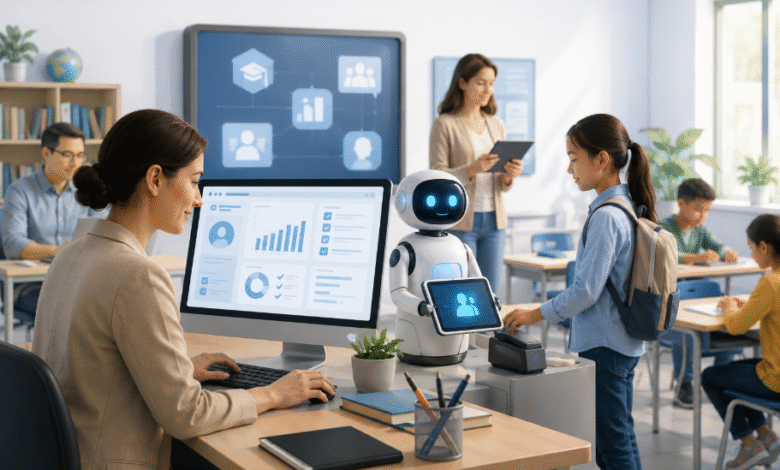
A school leader starts each morning with many small problems. Attendance needs review, reports need updates, and parents need answers. A smart student information system helps teams find the right data faster.
Schools now handle more work than ever before. Teachers manage classes, grades, behavior notes, and parent messages. Admin teams manage admissions, fees, staff records, and daily requests.
Artificial intelligence can support these tasks in useful ways. It can help schools reduce delays and improve routine work. It can also help staff make better choices.
AI does not replace teachers or school leaders. It helps them work with more clarity. It can support faster action, better planning, and stronger student care.
What AI Means for School Operations
AI means using technology that can learn from data. It can find patterns, suggest actions, and support simple decisions.
In schools, AI can help with many daily tasks. It can sort records, prepare reports, flag risks, and answer common questions.
This does not mean that a school becomes fully automatic. People still make the final decisions. AI only gives support.
For example, an AI tool can show students with falling attendance. A teacher or leader can then check the reason.
AI can also help prepare summaries. It can turn long reports into short notes. This saves time for busy staff.
Schools can use AI in classrooms and offices. It can support both learning and administration.
The main goal is simple. AI should reduce manual effort and improve daily school life.
Why Schools Are Paying Attention to AI
Schools are becoming more digital. They now collect more data during the day.
This data comes from attendance, marks, fees, admissions, and parent communication. It can become hard to manage without support.
AI helps schools make sense of this data. It can highlight trends that staff may miss.
For example, a school may see that late arrivals increase on certain days. Leaders can then review transport or morning routines.
A teacher may see that many students struggle with one topic. The teacher can then revise the lesson plan.
This makes AI useful for planning. It helps schools act early instead of waiting for problems.
Parents also expect faster responses today. They want quick updates about progress and attendance.
AI can help schools respond with better speed. It can support staff without increasing workload.
How AI Reduces Manual Work
School teams spend many hours on repeated tasks. These tasks are important, but they take time.
AI can reduce this pressure by handling routine work. It can support tasks that follow clear patterns.
Common examples include:
- Sorting student records
- Checking missing attendance
- Preparing simple summaries
- Drafting reminders
- Finding repeated issues
- Reviewing basic forms
- Organizing reports
- Highlighting pending tasks
These tasks still need human review. But AI can complete the first step faster.
For example, an admin officer may receive many admission forms. AI can help organize them by missing documents.
A teacher may need to review class performance. AI can show students who need extra help.
This does not remove responsibility from staff. It only makes their work easier.
When routine work becomes faster, staff can focus on people. They can spend more time helping students and parents.
Better Attendance Tracking
Attendance is one of the most important daily tasks. It helps schools know whether students are safe and present.
Manual attendance can create delays. Teachers may mark records late. Admin staff may spend time checking missing entries.
AI can improve this process. It can detect patterns in attendance records.
For example, it can show students who miss school often. It can also show classes with repeated late arrivals.
This helps leaders respond early. They can contact parents before the problem grows.
AI can also support alerts. It can suggest when a student needs attention based on absence patterns.
Schools should use these alerts with care. A low attendance record may have many reasons.
A student may face transport issues. Another student may have health concerns. A family may need support.
AI can point out the pattern. Staff must understand the story behind it.
This balance makes attendance tracking more useful and more human.
Faster Reports and Clearer Insights
Reports are a major part of school management. Leaders need reports for attendance, results, fees, staff, and admissions.
Preparing these reports can take time. Staff may collect data from different places. They may also check figures many times.
AI can help create faster reports. It can summarize data and highlight important points.
For example, it can show which grades need academic support. It can also show which classes have strong attendance.
These insights help leaders make better plans. They do not need to search through long spreadsheets.
AI can also make reports easier to understand. It can turn complex data into simple language.
This helps school leaders explain progress to teams. It also helps them share clear updates with parents.
Good reporting supports good decisions. Schools can plan with facts, not guesses.
AI makes this process quicker. It gives leaders more time to act.
Supporting Teachers in Daily Tasks
Teachers do much more than teach lessons. They prepare plans, check work, write comments, and track student progress.
AI can support teachers with many small tasks. It can help them organize information and prepare learning support.
For example, AI can help draft class summaries. It can also suggest areas where students need practice.
Teachers can use these insights to guide lessons. They can give more support to students who need it.
AI can also help with routine comments. Teachers can review and edit suggested remarks.
This saves time, but the teacher still controls the final message. The teacher knows the student better than any tool.
AI can also support lesson planning. It can suggest activities based on learning goals.
Teachers should treat AI as an assistant. It should not replace professional judgment.
When used well, AI gives teachers more time. They can focus on teaching, care, and student growth.
Improving Parent Communication
Parents want quick and clear communication. They want to know what happens at school.
Many schools struggle with this. Teachers and office staff receive many calls and messages.
AI can help manage common questions. It can support simple replies about schedules, events, and general notices.
It can also help staff draft messages. Staff can then review them before sending.
This improves speed and keeps communication consistent. Parents receive updates without long delays.
AI can also help identify urgent matters. For example, it can flag repeated parent concerns.
This helps schools respond with better care. Leaders can see which issues need attention.
Still, schools should use AI carefully in communication. Sensitive matters need human handling.
A concern about a student’s behavior should not feel automatic. Parents need empathy and respect.
AI can support communication, but people must lead it.
Early Support for Student Progress
Every student learns at a different pace. Some students need extra support early.
AI can help schools find learning gaps sooner. It can review marks, attendance, and progress trends.
A reliable school management software helps schools keep these records organized. It gives teachers a clearer view of each student’s progress and support needs.
For example, a student may perform well, then suddenly drop. AI can flag this change.
A teacher can then speak with the student. The school can also involve parents when needed.
This early support can prevent bigger problems. It helps students recover before they fall too far behind.
AI can also help identify class-wide gaps. If many students struggle with one topic, the teacher can adjust lessons.
This supports better learning. It also helps teachers plan more focused support.
Schools must use these insights with care. A score does not tell the full story.
Teachers should combine AI insights with classroom observation. This gives a more complete view.
Helping School Leaders Make Better Decisions
School leaders manage many areas at once. They look after students, staff, parents, finance, and quality.
AI can support leadership by showing useful patterns. It can turn daily data into simple insights.
For example, leaders can see which departments need support. They can also track common issues across the school.
This helps leaders act faster. They can solve problems before they affect more people.
AI can also support resource planning. Leaders can see where staff, rooms, or support services are needed.
It can also help with admissions trends. Schools can plan class sizes and staffing more clearly.
Better data helps leaders avoid guesswork. It also makes decisions more fair.
A leader still needs experience and judgment. AI only supports the decision process.
The best decisions combine data, experience, and care.
Making Admin Work Smoother
Admin teams are the backbone of school operations. They handle many requests every day.
They manage records, forms, fees, documents, and parent queries. Small delays can affect the whole school.
AI can make admin work smoother. It can help sort requests and highlight urgent tasks.
For example, it can show pending admission forms. It can also identify missing documents.
It can help staff find records faster. This reduces time spent searching through files.
AI can also support fee reminders. It can help prepare polite and timely messages.
Admin teams still need to review all actions. Human control remains important.
When admin work becomes faster, parents receive better service. Teachers also get better support.
This improves the school’s overall image. It also reduces stress for office staff.
AI and Student Safety
Student safety is a top priority for every school. AI can support safety in many ways.
It can help detect attendance concerns. It can also flag unusual patterns in student behavior records.
For example, repeated absence may need quick follow-up. A sudden change in behavior may need support.
AI can help staff notice these changes early. It can create alerts for review.
However, schools must avoid overreliance on AI. Safety concerns need human care and judgment.
A system may show a pattern. But staff must speak with the student and family.
Schools should also protect privacy. Safety alerts should only reach approved staff.
Sensitive information must remain secure. Students should not feel watched or judged unfairly.
AI can support safety when schools use it with care. It should help protect students, not create fear.
Managing Staff Workload
Teacher and staff workload is a common concern. Many school employees work under constant pressure.
AI can reduce some of this pressure. It can support tasks that take time but follow patterns.
For example, it can help prepare summaries, reminders, and task lists. It can also help organize large records.
This allows staff to focus on work that needs human attention. They can support students and parents better.
AI can also help leaders understand workload trends. They can see which teams face repeated pressure.
This supports better planning. Leaders can adjust duties or provide support.
Workload management improves staff morale. It also helps schools keep good employees.
AI should not create more work. Schools must choose tools that are simple and useful.
A good AI process should save time. It should not add confusion.
Challenges of Using AI in Schools
AI brings many benefits, but it also creates challenges. Schools must plan before using it.
Common challenges include:
- Poor data quality
- Lack of staff training
- Privacy concerns
- High expectations
- Wrong tool selection
- Weak access control
- Limited budget
- Staff resistance
These challenges are normal. Schools can manage them with clear planning.
Data quality is one major issue. AI works better when records are accurate and complete.
If attendance or marks are entered wrongly, AI may give weak results.
Training also matters. Staff need to understand how to use AI safely.
Schools should also manage expectations. AI will not solve every problem.
It should support school teams, not replace them. Leaders must explain this clearly.
How Schools Can Start Using AI
Schools should start with simple use cases. They should not try to change everything at once.
A good first step is to identify repeated tasks. These are often the best areas for AI support.
Schools can begin with:
- Attendance alerts
- Report summaries
- Parent message drafts
- Admission document checks
- Academic progress trends
- Helpdesk query sorting
- Staff task reminders
These areas are practical. They also show quick value.
Schools should test AI with a small group first. This helps teams learn and improve.
Teachers and admin staff should give feedback. They know where the real problems happen.
Leaders should also set clear rules. They should decide who can use AI and for what purpose.
Schools must review results often. They should check whether AI improves work.
A careful start creates better long-term success.
Data Quality Matters
AI depends on data. If the data is poor, the results may be poor.
Schools must keep records accurate and updated. This includes attendance, grades, student profiles, and contact details.
A small mistake can affect reports. It can also lead to wrong alerts.
For example, a wrong absence record may worry parents. A wrong grade entry may affect student support.
This is why staff should follow clear data entry rules. Schools should also review records often.
Data quality is not only an IT issue. Teachers, admin staff, and leaders all play a role.
Good data creates better insights. It also improves trust in digital tools.
AI works best when schools build strong data habits. Clean records help everyone.
Keeping AI Use Safe and Fair
Schools must use AI in a fair way. They should not let tools make final decisions alone.
AI can support decisions, but humans must review them. This is very important in education.
Students should not face unfair treatment because of data patterns. A low score or absence record needs context.
Schools should also protect student privacy. AI tools should not access more data than needed.
Leaders should check vendor rules carefully. They should know how tools store and use information.
Staff should not upload sensitive data into unapproved tools. This can create privacy risks.
Schools should also explain AI use when needed. Parents may want to know how data supports decisions.
Clear rules build trust. They help schools use AI safely and responsibly.
The Future of AI in Schools
AI will become more common in education. It will support classrooms, offices, and leadership teams.
In the future, schools may use AI for smarter planning. They may use it for early alerts and better reports.
Teachers may get more support with lesson planning. Admin teams may handle requests faster.
Parents may receive clearer updates. Leaders may get stronger insights from school data.
Still, schools must keep people at the center. Education depends on trust, care, and human connection.
AI should improve these values. It should not weaken them.
The best schools will use AI with balance. They will combine technology with strong leadership.
They will also train staff and protect student data. This will help them grow with confidence.
Conclusion
AI can improve daily school operations in many practical ways. It can reduce manual work and support faster decisions.
It can help with attendance, reports, communication, planning, and student support. It can also reduce pressure on staff.
Schools should start with clear goals. They should choose simple use cases and train staff properly.
They must also protect privacy and review AI results with care. Human judgment should always guide important decisions.
AI works best when schools use it as a support tool. It should help teachers, leaders, and admin teams serve students better.
As schools plan for the future, they need systems that connect people, data, and daily work. The right school management software can help them use AI in a safe, useful, and meaningful way.