Popular 3D Printing Materials Known for Durability: PLA, ABS, PETG, Nylon, Polycarbonate, Resin, and High-Performance Engineering Filaments Compared

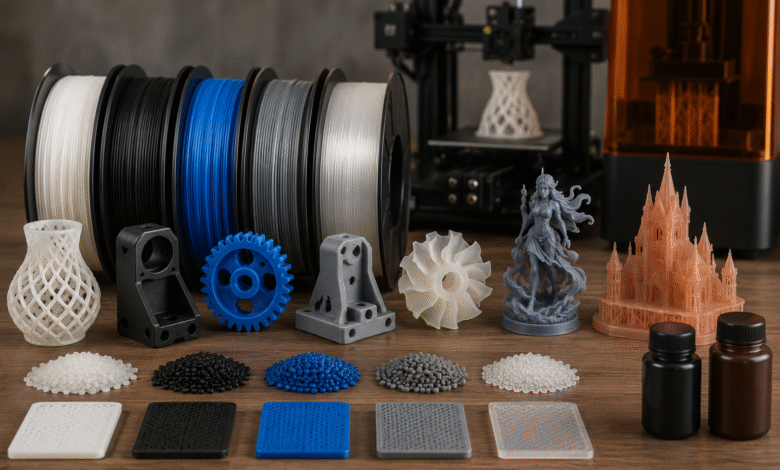
Among the most popular 3D printing materials known for durability, PLA, ABS, and PETG each offer distinct advantages. PLA remains the easiest material to print, ABS delivers industrial-grade toughness, and PETG provides an excellent balance between strength and convenience.
PLA vs ABS vs PETG: Which Popular 3D Printing Materials Are Known for Durability?
As desktop 3D printing becomes increasingly common, users are paying more attention to the long-term performance of printed parts rather than simply focusing on print quality. Durability has become one of the most important factors when selecting a material, especially for functional components, prototypes, tools, and products intended for years of use. Among all available options, PLA, ABS, and PETG remain the three most widely used materials.
Why Material Durability Matters in 3D Printing
Durability is a combination of several mechanical properties, including impact resistance, tensile strength, flexibility, wear resistance, and thermal stability. A material that performs well in one category may not necessarily excel in another. For example, a material with high stiffness might crack under sudden impact, while a flexible material may withstand stress better but sacrifice rigidity.
For hobbyists and businesses alike, choosing the right material affects product lifespan, maintenance costs, and customer satisfaction. In industrial prototyping and consumer products, material selection often determines whether a printed component survives months or years of use.
PLA: Easy to Print but Limited in Harsh Conditions
PLA remains the most popular filament worldwide because of its ease of use, affordability, and excellent dimensional accuracy. With tensile strengths typically ranging from 50 to 70 MPa, PLA provides enough rigidity for decorative models and low-stress applications.
However, PLA’s durability is limited when exposed to heat and mechanical shock. Its heat deflection temperature is generally around 55–60°C, meaning components left inside a hot vehicle or under direct sunlight can deform. PLA is also relatively brittle compared with other materials. Sudden impacts may lead to cracking rather than bending.
Because of these characteristics, PLA performs best for display pieces, prototypes, educational projects, and figurines rather than heavily stressed mechanical parts. Collectors and creators of custom models often favor PLA for its excellent surface quality and ease of finishing.
ABS: A Long-Time Industrial Standard
ABS has been used in manufacturing for decades and remains one of the most recognized engineering plastics. It combines good impact resistance with higher heat tolerance than PLA. Typical heat resistance reaches approximately 90–100°C, making ABS suitable for automotive components, electronic enclosures, and consumer products.
The material’s ability to absorb shock gives it a significant advantage in functional applications. Instead of breaking suddenly, ABS tends to flex slightly before failure, which increases its lifespan under repeated stress.
Another advantage of ABS is its post-processing capability. Acetone vapor smoothing allows manufacturers to create polished surfaces, improving appearance and reducing layer visibility.
Despite these strengths, ABS is more difficult to print. Warping and shrinkage are common challenges, often requiring heated chambers and controlled environments. For beginners, achieving consistent results with ABS may involve additional equipment and experience.
PETG: Balancing Strength and Ease of Printing
Over the past several years, PETG has become one of the fastest-growing materials in the desktop 3D printing market. Many users consider it a compromise between PLA and ABS because it combines strong mechanical properties with relatively simple printing requirements.
PETG typically offers tensile strengths similar to PLA while providing far superior impact resistance. Unlike PLA, PETG is less likely to crack under stress. Its heat resistance generally reaches 70–80°C, placing it between PLA and ABS.
One of PETG’s biggest advantages is chemical resistance and moisture tolerance. These characteristics make it suitable for outdoor products, containers, and functional parts exposed to humidity. PETG also experiences less warping than ABS, making it easier for hobbyists and small businesses to use.
As a result, PETG has become increasingly popular for drone parts, brackets, protective covers, and mechanical prototypes where both strength and reliability are required.
Which Material Offers the Best Overall Durability?
There is no single material that dominates every category. PLA provides excellent stiffness and printability but struggles under heat and impact. ABS delivers superior thermal performance and toughness but demands more advanced printing conditions. PETG offers a balanced combination of strength, flexibility, and ease of use, making it one of the most versatile choices for everyday applications.
For users seeking maximum durability without investing in industrial equipment, PETG often represents the most practical solution. ABS remains attractive for demanding environments, while PLA continues to excel in aesthetic and low-stress applications.
Material Selection Depends on the Final Product
Durability requirements vary significantly depending on the purpose of the printed object. Decorative figures prioritize surface finish, while engineering components require mechanical strength and heat resistance. In the custom collectible market, many creators combine multiple materials and post-processing techniques to achieve both appearance and longevity.
Companies specializing in custom figures, such as Wooxic Figure, often select materials according to the intended use of the product. Display models may prioritize fine details, while premium collectibles designed for long-term preservation require materials capable of maintaining structural integrity over many years.
Nylon and Polycarbonate: The Strongest Popular 3D Printing Materials Known for Durability
As 3D printing moves beyond prototypes and decorative objects, demand for stronger and more durable materials continues to grow. While PLA, ABS, and PETG dominate the consumer market, engineers and professional users increasingly turn to high-performance materials such as Nylon and Polycarbonate (PC). These materials are widely regarded as some of the strongest popular 3D printing materials known for durability because they provide exceptional impact resistance, wear resistance, and long-term mechanical stability.
For functional components that must survive repeated stress, elevated temperatures, and harsh environments, Nylon and Polycarbonate often outperform conventional filaments. Although they are more difficult to print and generally more expensive, their superior properties make them attractive for industrial applications and demanding consumer products.
Why High-Performance Materials Matter
Durability is not solely defined by tensile strength. Real-world applications expose printed parts to bending, impacts, friction, moisture, and temperature fluctuations. Materials that can maintain their structural integrity under these conditions are considered true engineering-grade plastics.
As additive manufacturing becomes increasingly integrated into automotive, aerospace, robotics, and consumer electronics industries, stronger materials are becoming essential. Market research shows that engineering polymers are among the fastest-growing segments within the global 3D printing materials market, driven by the increasing need for functional parts rather than simple visual prototypes.
Among these materials, Nylon and Polycarbonate have emerged as two of the most reliable solutions.
Nylon Offers Exceptional Toughness and Wear Resistance
Nylon has long been used in traditional manufacturing because of its excellent combination of flexibility and strength. In the 3D printing world, Nylon is valued for its ability to withstand repeated mechanical stress without breaking.
Unlike brittle materials, Nylon can absorb impacts and deform slightly before failure. This characteristic makes it highly suitable for gears, hinges, bearings, and moving mechanical components. The material also possesses outstanding wear resistance, allowing parts to maintain performance even after thousands of cycles.
Another major advantage of Nylon is its fatigue resistance. Components subjected to constant motion or vibration often last considerably longer when manufactured with Nylon compared with PLA or ABS.
However, Nylon presents several challenges during printing. It absorbs moisture rapidly from the air, and excessive humidity can negatively affect print quality. Users typically need filament dryers and enclosed printers to achieve consistent results. Despite these requirements, the material’s durability often justifies the additional effort.
Polycarbonate Provides Industrial-Level Strength
Polycarbonate, commonly referred to as PC, is one of the strongest materials available for desktop FDM printing. It is widely recognized for its combination of high tensile strength, impact resistance, and heat tolerance.
Many industrial products, including safety helmets, protective shields, and automotive components, rely on Polycarbonate because of its remarkable toughness. The material can tolerate temperatures exceeding 110°C, making it significantly more heat resistant than PLA, PETG, or ABS.
Polycarbonate also demonstrates excellent dimensional stability. Components maintain their shape and mechanical properties even when exposed to demanding operating conditions. This capability explains why PC is frequently used for structural parts, machine brackets, and engineering prototypes.
The downside is that Polycarbonate is difficult to print. High nozzle temperatures, heated chambers, and strong bed adhesion are often necessary. Warping can become problematic if printing conditions are not carefully controlled.
Nevertheless, for users seeking maximum durability, Polycarbonate remains one of the best available options.
Comparing Nylon and Polycarbonate
Although both materials belong to the engineering-grade category, they excel in different areas.
Nylon offers greater flexibility and superior wear resistance. Components experiencing continuous movement, vibration, or friction often benefit from Nylon’s toughness. It is particularly suitable for gears, bushings, and mechanical joints.
Polycarbonate, on the other hand, provides higher rigidity and better heat resistance. Structural parts exposed to elevated temperatures or heavy loads frequently perform better when manufactured from PC.
From a printing perspective, Nylon is more susceptible to moisture, while Polycarbonate demands higher temperatures and stricter environmental control. Users should therefore select materials based on the specific requirements of the final product rather than simply pursuing maximum strength.
Applications Continue to Expand
As 3D printers become more advanced, the use of Nylon and Polycarbonate is expanding beyond industrial sectors. High-end consumer products, robotics projects, drone components, and custom manufacturing services increasingly rely on these materials to improve reliability and product lifespan.
Even in the collectibles industry, stronger materials are gaining attention. Companies specializing in custom figures and personalized keycaps, including Wooxic, may combine different materials depending on the balance between visual detail and structural durability. While display models often prioritize appearance, premium pieces intended for long-term preservation can benefit from engineering-grade materials and advanced post-processing techniques.
Resin vs Filament: Which Popular 3D Printing Materials Offer Better Durability?
As 3D printing technology continues to evolve, users are no longer limited to choosing between different filament types. Resin printing and filament-based FDM printing have developed into two major manufacturing approaches, each offering distinct advantages. While resin printers are widely praised for their exceptional detail and surface finish, FDM materials dominate functional applications because of their strength and versatility.
For hobbyists, engineers, and collectors, one common question remains: which popular 3D printing materials offer better durability? The answer depends not only on the material itself but also on the intended application and the type of stress the printed object is expected to endure.
Durability Means More Than High Strength
Many people associate durability solely with tensile strength, but real-world performance involves several factors. Impact resistance, fatigue resistance, flexibility, heat stability, and long-term aging all contribute to how well a printed object survives over time.
An object designed for display faces very different requirements from a mechanical part subjected to repeated stress. Therefore, comparing resin and filament technologies requires understanding the strengths and limitations of each approach.
In recent years, advances in both resin chemistry and filament development have significantly improved the overall durability of 3D printed products, making the comparison more complex than it was a decade ago.
Standard Resin Prioritizes Precision Over Toughness
One of the biggest advantages of resin printing is its ability to produce extremely fine details. Layer heights as low as 25 microns allow resin printers to create surfaces and textures that are difficult to achieve with FDM technology.
However, standard photopolymer resins are generally brittle. Although they can maintain excellent dimensional accuracy, they are less capable of absorbing impacts. Sudden drops or excessive stress may cause cracks or fractures.
Ultraviolet exposure and aging can also affect certain resins over time. Without proper post-curing and storage conditions, some models may become increasingly fragile after several years.
For this reason, standard resin is often preferred for display pieces, miniatures, jewelry prototypes, and highly detailed figurines where appearance is more important than mechanical performance.
Tough Resins Have Narrowed the Gap
Material manufacturers have invested heavily in improving resin formulations. Tough Resin, ABS-like Resin, and Engineering Resin have emerged as alternatives that provide significantly better impact resistance and flexibility.
Modern tough resins can withstand considerably more stress than traditional formulations. Some premium engineering resins even approach the mechanical properties of ABS or PETG. These materials are increasingly used in functional prototypes, enclosures, and specialized industrial applications.
Nevertheless, resin components generally remain more sensitive to long-term environmental exposure compared with many thermoplastic filaments. Although the performance gap has narrowed, resin still tends to prioritize precision over maximum durability.
FDM Filaments Offer Superior Mechanical Reliability
Filament-based printing technologies benefit from decades of polymer development. Materials such as PETG, ABS, Nylon, Polycarbonate, and carbon fiber composites provide excellent mechanical properties and long-term stability.
Unlike standard resin, thermoplastics can absorb stress more effectively. Materials such as Nylon and PETG bend slightly under impact rather than fracturing immediately. This characteristic allows functional parts to survive repeated use over long periods.
Heat resistance also favors certain filaments. Polycarbonate, for example, can tolerate temperatures exceeding 110°C, while engineering-grade Nylon composites are widely used for gears, brackets, and industrial components.
These advantages explain why FDM printing remains the dominant choice for manufacturing durable tools, automotive parts, and mechanical assemblies.
Surface Quality and Durability Often Require Compromise
The choice between resin and filament is often a trade-off between aesthetics and strength. Resin excels at producing smooth surfaces and intricate details, making it ideal for artistic applications. Filament printing, meanwhile, offers greater toughness and environmental resistance.
For many projects, combining both technologies delivers the best results. Designers frequently use resin printing for decorative elements and FDM materials for structural components. This hybrid approach is becoming increasingly common among professionals and advanced hobbyists.
As materials continue to improve, the distinction between visual quality and durability is becoming less pronounced, allowing users to optimize both characteristics simultaneously.
Collectibles and Figures Require a Different Perspective
Durability requirements vary greatly within the collectibles market. A mechanical component may need to survive continuous movement, whereas a display figure primarily requires dimensional stability and resistance to aging.
Custom figure manufacturers often prioritize surface quality while ensuring that products maintain their appearance over many years. Companies such as Wooxic, which specialize in personalized figures and custom collectibles, may utilize different material combinations depending on the balance between detail, strength, and long-term preservation. High-resolution resin technologies are frequently paired with careful post-processing to maximize both aesthetics and durability.
This approach highlights an important principle: the best material is not necessarily the strongest one, but the one most suitable for the product’s intended purpose.
Best Popular 3D Printing Materials Known for Durability for Figures and Collectibles
In the world of collectibles and custom figures, durability is often evaluated differently compared to engineering or industrial applications. While mechanical parts prioritize load-bearing strength and heat resistance, figures and collectibles must balance visual fidelity, surface quality, and long-term structural stability. As a result, selecting the right materials becomes a critical decision for creators and manufacturers working with popular 3D printing materials known for durability.
From display models and anime figures to limited-edition collectibles, material choice directly influences how a product ages, resists damage, and maintains its appearance over time.
Durability in Collectibles Is More Than Physical Strength
For figurines and collectibles, durability is not only about how much force a model can withstand. It also includes resistance to discoloration, brittleness over time, and micro-cracking caused by environmental stress.
Unlike functional components, figures are often stored indoors but may still face risks such as accidental drops, temperature changes, and long-term UV exposure from sunlight. Over time, even small material weaknesses can become visible, especially in thin parts like hair strands, weapons, or fine accessories.
This makes material selection especially important for both hobby creators and commercial producers.
PLA: The Standard Choice for Entry-Level Figures
PLA is widely used in figure prototyping due to its affordability, ease of printing, and high level of detail reproduction. It captures sharp edges and smooth surfaces, making it suitable for non-functional collectibles and display models.
However, PLA’s long-term durability is limited. Its relatively low heat resistance means figures may deform if exposed to high temperatures, and its brittle nature increases the risk of breakage in thin or delicate parts. Over time, PLA can also become more fragile depending on environmental conditions.
Despite these limitations, PLA remains a popular choice for concept models, prototypes, and display-only figures where cost and visual accuracy are priorities.
Resin: The Industry Standard for High-Detail Collectibles
Resin printing dominates the collectibles industry because of its unmatched surface quality and precision. It can reproduce extremely fine details such as facial expressions, fabric textures, and miniature accessories with exceptional clarity.
Standard resin, however, tends to be brittle. This makes it more suitable for display figures rather than toys or frequently handled objects. Without proper formulation, resin models may crack under impact or become more fragile over time due to UV exposure.
To address these issues, manufacturers have developed tougher resin variants such as ABS-like resin and engineering-grade resin. These materials significantly improve impact resistance and flexibility while maintaining high detail quality.
As a result, resin has become the preferred material for anime figures, statues, busts, and high-end collectible models.
Tough Resin: Bridging Detail and Durability
Tough resin formulations represent a major improvement in collectible manufacturing. These materials are designed to reduce brittleness while preserving fine surface detail.
Compared with standard resin, tough resin can better withstand accidental drops and minor impacts, making it more suitable for premium collectibles that require both aesthetics and longevity. Some advanced formulations even approach the durability of thermoplastics like ABS, though they still generally lag behind FDM materials in long-term mechanical resilience.
This balance makes tough resin an increasingly popular choice in the custom figure industry.
PETG and ABS: Functional Options for Structural Parts
While resin dominates visual components, thermoplastic filaments such as PETG and ABS are often used for internal structures, bases, or support frames in collectible designs.
PETG offers a strong combination of flexibility and impact resistance, making it suitable for components that require durability without sacrificing ease of printing. ABS provides higher heat resistance and better structural stability, especially for larger models or reinforced parts.
In many professional workflows, hybrid construction methods are used, combining resin for visible surfaces and filaments for hidden structural elements.
Nylon and Composite Materials for Long-Term Stability
For higher-end or functional collectible designs, Nylon and carbon fiber composites can be used to enhance structural integrity. These materials provide excellent toughness and resistance to repeated stress, making them suitable for articulated figures or modular collectible systems.
However, their lower surface finish quality means they are less commonly used for visible components. Instead, they are typically reserved for internal mechanisms or structural reinforcement.
Material Selection in Custom Figure Manufacturing
The choice of material in collectible production depends heavily on the balance between aesthetics, durability, and cost. High-end figures often prioritize resin for detail accuracy, while functional or modular designs incorporate stronger thermoplastics for stability.
Companies such as Wooxic, which focus on custom figure production and personalized collectibles, typically select materials based on intended use cases. Display-oriented pieces emphasize visual realism and fine detailing, while premium or long-term collectible products may integrate multiple materials to ensure both durability and presentation quality over time.
This multi-material approach reflects the evolving standards of modern collectible manufacturing, where durability and artistry must coexist.