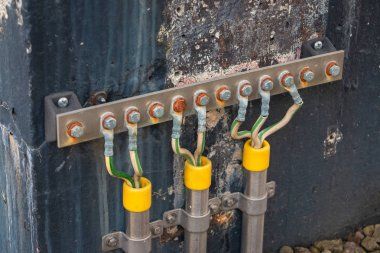
Electrical safety is a critical consideration in every installation, whether it is a residential distribution board, a commercial building, or a large industrial facility. While power distribution components receive much of the attention, effective grounding is equally important for protecting people, equipment, and electrical systems from fault currents.
A well-designed grounding system provides a controlled path for electrical faults, helping protective devices operate correctly and reducing the risk of electric shock. One of the key components that supports this function is the earth busbar, which serves as a central connection point for protective conductors within an electrical installation.
For engineers, electricians, and panel builders selecting an earth busbar, understanding its purpose, construction, and applications helps ensure safe and reliable grounding across a wide range of electrical systems. An earth busbar, also known as a ground bar, provides a common termination point for protective conductors, allowing fault currents to be safely directed to earth while supporting organised electrical installations.
What Is an Earth Busbar?
An earth busbar is a conductive metal bar, typically manufactured from copper or tinned copper, that connects multiple protective earth conductors to a single grounding point.
Instead of terminating each grounding conductor individually, all protective connections are brought together on the busbar before connecting to the main grounding system.
This arrangement creates a structured and reliable earthing network while simplifying installation and maintenance.
Why Proper Earthing Is Essential
Grounding systems are designed to protect both people and electrical equipment.
A properly installed earth busbar helps:
- Provide a low-resistance path for fault current.
- Support the operation of protective devices.
- Reduce the risk of electric shock.
- Protect electrical equipment from fault conditions.
- Improve system reliability.
- Simplify inspection and maintenance.
Without effective grounding, fault currents may not be safely diverted, increasing the potential for equipment damage and safety hazards.
How an Earth Busbar Works
Under normal operating conditions, the earth busbar carries little or no current.
However, if an electrical fault occurs, fault current flows through the protective conductor and into the earth busbar before being directed safely to the grounding system.
This controlled fault path allows devices such as circuit breakers and protective relays to disconnect the faulty circuit quickly, helping minimise potential damage.
Common Materials Used
Earth busbars are manufactured using materials that provide excellent electrical conductivity and long-term durability.
Copper
Copper is the most widely used material because it offers:
- High electrical conductivity.
- Excellent corrosion resistance.
- Strong mechanical properties.
- Long service life.
Tinned Copper
Tinned copper busbars provide additional protection against corrosion, making them suitable for installations exposed to moisture or harsh environmental conditions.
Aluminium
Although less common for grounding applications, aluminium busbars may be used where weight reduction or lower material costs are important.
The choice of material depends on the installation environment, current capacity, and applicable electrical standards.
Typical Applications
Earth busbars are installed in many different electrical environments.
Distribution Boards
Ground conductors from multiple circuits terminate at a dedicated earth busbar within the distribution board.
Switchgear
Industrial switchgear uses earth busbars to connect protective conductors throughout the electrical assembly.
Control Panels
Panel builders install earth busbars to provide organised grounding connections for electrical components and enclosures.
Data Centres
Reliable grounding protects sensitive networking and server equipment while supporting electrical safety.
Manufacturing Facilities
Industrial machinery and production equipment depend on effective grounding to reduce the risk of electrical faults.
Earth busbars are commonly installed in switchgear, control panels, distribution boards, motor control centres, and other power distribution systems where they provide a central grounding connection for protective conductors.
Factors to Consider When Choosing an Earth Busbar
Selecting the right busbar involves evaluating several technical requirements.
Important considerations include:
- Material type.
- Current carrying capacity.
- Busbar dimensions.
- Number of connection points.
- Corrosion resistance.
- Mounting method.
- Installation environment.
- Applicable electrical standards.
Matching these characteristics to the application helps ensure reliable long-term performance.
Installation Best Practices
Proper installation contributes significantly to the effectiveness of the grounding system.
Recommended practices include:
- Tightening all terminals securely.
- Using appropriately sized conductors.
- Preventing corrosion at connection points.
- Clearly identifying grounding conductors.
- Following local electrical regulations.
Routine inspection should also be carried out to verify that all connections remain secure throughout the life of the installation.
Benefits of a Structured Grounding System
Using a dedicated earth busbar offers several operational advantages.
These include:
- Improved electrical safety.
- Organised cable management.
- Simplified fault tracing.
- Easier maintenance.
- Reliable protective grounding.
- Reduced installation complexity.
- Greater system reliability.
These benefits become increasingly important as electrical installations grow in size and complexity.
Supporting Modern Electrical Infrastructure
Today’s electrical systems often include automation equipment, communication networks, renewable energy systems, and sensitive electronic devices.
As these systems become more sophisticated, effective grounding remains essential for maintaining operational reliability and protecting valuable equipment.
A properly designed grounding system helps minimise the impact of electrical faults while supporting safe operation across residential, commercial, and industrial environments.
Conclusion
Grounding is one of the most important aspects of electrical system design, and the earth busbar plays a central role in creating a safe and organised earthing network. By providing a common connection point for protective conductors, it helps ensure fault currents are safely diverted while supporting reliable operation of protective devices.
Whether installed in switchgear, distribution boards, industrial control panels, or commercial electrical systems, selecting the right earth busbar contributes to improved electrical safety, easier maintenance, and dependable long-term performance. RS Hong Kong supplies a wide range of copper, aluminium, flexible, insulated, and grounding busbar solutions from manufacturers including Schneider Electric, Siemens, ABB, Eaton, Legrand, and RS PRO for a variety of power distribution applications.