Electronic devices often require different voltage levels to operate efficiently. A battery, solar panel, or other DC power source may not always provide the exact voltage needed by a circuit or component. Instead of replacing the power source, engineers commonly use voltage conversion technologies to regulate and adjust the available power.
Among the various DC power management solutions available today, step-up voltage conversion plays an important role in powering equipment that requires a higher operating voltage than the source can provide. This technology is widely used across consumer electronics, industrial automation, renewable energy systems, and portable devices.
For engineers and designers selecting a boost converter dc solution, understanding how these devices operate and where they are commonly applied helps ensure efficient power management and reliable circuit performance. Boost converters are DC-to-DC power conversion devices that increase input voltage to a higher output voltage while reducing output current accordingly, making them suitable for applications powered by batteries, solar panels, rectifiers, and other DC sources.
What Is a DC to DC Boost Converter?
A boost converter is a type of switched-mode power converter that increases the voltage supplied by a DC source.
Rather than generating additional electrical power, the converter transfers energy efficiently by increasing voltage while proportionally reducing current, allowing the overall power balance to remain nearly constant apart from normal conversion losses.
These converters are widely used whenever the available input voltage is lower than the voltage required by the load.
How Voltage Step Up Conversion Works
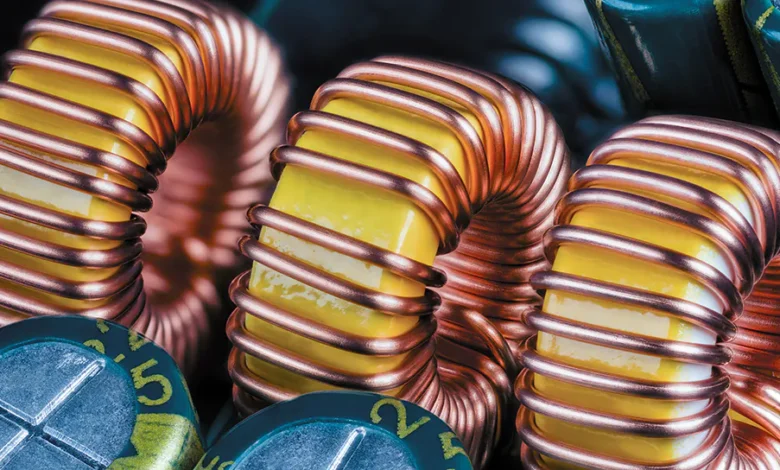
A boost converter operates by rapidly switching current through an inductor.
During operation:
- Energy is stored in the inductor.
- The switching device periodically opens and closes.
- Stored energy is transferred to the output.
- The output capacitor smooths voltage fluctuations.
- Feedback circuitry regulates the output voltage.
By controlling the switching cycle, the converter maintains a stable output even when the input voltage changes.
Modern integrated circuits combine switching control, protection features, and feedback regulation into compact packages that simplify circuit design.
Common Applications
Step-up voltage converters are found in many industries where reliable DC voltage conversion is required.
Portable Electronics
Battery-powered products often require voltages higher than the battery itself can supply.
Typical examples include:
- Handheld instruments.
- Barcode scanners.
- Wireless communication devices.
- Portable medical equipment.
- Consumer electronics.
LED Lighting
Many LED systems require higher operating voltages than their power source provides.
Voltage conversion helps maintain:
- Stable brightness.
- Efficient operation.
- Consistent illumination.
- Improved energy efficiency.
Renewable Energy Systems
Solar panels frequently produce varying output voltages depending on weather conditions.
Boost converters help increase panel voltage for:
- Battery charging.
- Energy storage systems.
- DC power distribution.
- Maximum Power Point Tracking (MPPT).
Industrial Automation
Factories use voltage conversion for powering:
- Industrial sensors.
- Control circuits.
- PLC systems.
- Signal conditioning equipment.
- Monitoring devices.
Telecommunications
Communication equipment often requires multiple regulated voltage rails within a single system, making voltage conversion an important part of power management.
Advantages of Step Up Conversion
Compared with traditional linear voltage regulation, switched-mode boost converters provide several benefits.
These include:
- High energy efficiency.
- Compact circuit design.
- Lower heat generation.
- Wide input voltage range.
- Stable regulated output.
- Reduced power loss.
- Longer battery operating time.
These characteristics make them suitable for applications where energy efficiency is important.
Key Design Considerations
Selecting an appropriate converter involves evaluating several electrical requirements.
Important factors include:
- Input voltage range.
- Required output voltage.
- Output current.
- Switching frequency.
- Conversion efficiency.
- Thermal performance.
- Package size.
- Protection features.
Matching these specifications to the application’s requirements helps achieve stable and reliable operation.
Continuous and Discontinuous Operation
Boost converters generally operate in one of two modes.
Continuous Conduction Mode
In this operating mode, current flowing through the inductor never falls to zero during a switching cycle.
Advantages include:
- Lower output ripple.
- Higher efficiency.
- Better voltage regulation.
- Stable operation under heavier loads.
Discontinuous Conduction Mode
In this mode, the inductor fully discharges before the next switching cycle begins.
This approach may offer:
- Smaller inductors.
- Simpler circuit design.
- Improved efficiency at lighter loads.
The most appropriate operating mode depends on the intended application and expected load conditions.
Protection Features
Modern boost converter ICs often include integrated protection mechanisms to improve reliability.
Common features include:
- Overcurrent protection.
- Thermal shutdown.
- Short-circuit protection.
- Undervoltage lockout.
- Soft-start functionality.
- Output voltage regulation.
These safeguards help protect both the converter and the connected load during abnormal operating conditions.
Selecting the Right Converter
Before choosing a converter, engineers should consider the complete operating environment rather than focusing only on voltage requirements.
Questions worth evaluating include:
- What is the minimum input voltage?
- How much output current is required?
- Will the device operate continuously?
- Is efficiency a priority?
- What ambient temperatures will be encountered?
- Is PCB space limited?
Answering these questions early in the design process helps avoid unnecessary redesigns later.
Supporting Efficient Electronic Systems
As electronic products become smaller and more energy efficient, power management continues to play a critical role in system design.
Modern boost converter ICs support:
- Compact portable devices.
- Renewable energy equipment.
- Industrial automation.
- IoT applications.
- Communication systems.
- Medical electronics.
Advances in semiconductor technology continue to improve conversion efficiency while reducing component size and power loss.
Conclusion
Efficient voltage conversion is fundamental to the performance of many modern electronic systems. By increasing DC voltage while maintaining high efficiency, boost converters enable reliable operation across a wide range of portable, industrial, and renewable energy applications.
When selecting a boost converter dc, it is important to evaluate input voltage, output requirements, efficiency, protection features, and operating conditions to ensure the converter delivers stable performance throughout the life of the application. RS Australia offers a wide selection of boost converter ICs from manufacturers including Texas Instruments, Analog Devices, Maxim Integrated, ROHM, and Microchip, supporting everything from portable electronics to industrial power management designs.