How to Choose the Right 16 Concrete Diamond Blade for Reinforced Slabs, Pavers, and Asphalt

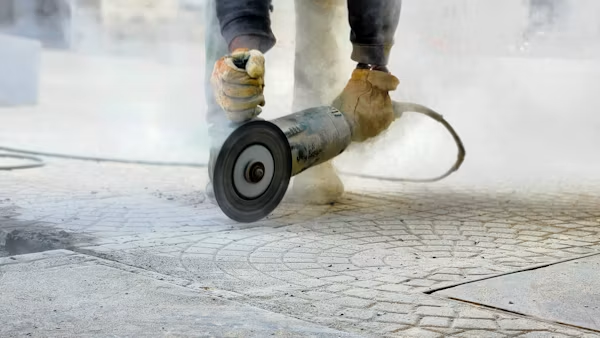
Cutting through reinforced concrete, dense pavers, or layered asphalt is not a task where rough estimates serve you well. The wrong blade selection leads to accelerated wear, heat-related segment damage, uneven cuts, and in some cases, blade failure mid-operation. For contractors managing tight project timelines, these outcomes carry real cost not just in replacement blades, but in labor delays, surface rework, and equipment downtime.
The decision about which blade to use becomes more consequential as project specifications tighten. A blade that performs adequately on clean, unreinforced slabs may degrade rapidly when steel rebar enters the cutting path. Similarly, a blade designed for wet cutting will behave unpredictably if the site requires dry operation. Understanding what separates a well-matched blade from a poorly matched one — before the first cut is made — is what keeps projects on schedule and equipment running without interruption.
This guide covers the key factors that determine blade compatibility across three of the most common cutting environments: reinforced concrete slabs, concrete pavers, and asphalt. The focus is practical and decision-oriented, aimed at those who are selecting and operating blades in real field conditions.
Understanding What a 16-Inch Diamond Blade Is Actually Designed to Do
A diamond blade does not cut in the way a conventional saw blade does. It grinds. The diamonds embedded in the blade’s segments act as abrasive particles, wearing away material through friction rather than through mechanical tooth engagement. This distinction matters because it means the blade’s performance is inseparable from the material it contacts, the speed at which it operates, and the method by which heat is managed during the cut.
When sourcing 16 concrete diamond blades for site operations, the specifications on the packaging or product listing describe the blade’s design parameters — not a guarantee of performance across all concrete types. A blade rated for general concrete will behave differently when the aggregate hardness changes, when steel reinforcement is present, or when curing age affects material density. These variables must be considered in advance, not after the blade has begun to show premature wear.
The 16-inch diameter is a working classification that determines reach, depth capacity, and the type of equipment the blade requires. This size is used predominantly in large floor saws and high-powered walk-behind cut-off machines. It is not interchangeable with smaller diameter blades in terms of application range or cutting depth, and the power demands of the equipment must align with the blade’s operational requirements for consistent results.
Segment Design and Its Role in Material Compatibility
The segment — the raised portion of the blade that carries the diamonds — is the primary factor in determining what a blade can cut effectively and for how long. Segments vary in height, width, diamond concentration, and bond hardness. These variables are calibrated by manufacturers to match specific material characteristics.
A harder bond in the segment matrix holds diamonds in place longer, which is appropriate for softer or abrasive materials like green concrete or asphalt. In harder materials, a hard bond can be counterproductive — the diamonds wear flat before the bond releases them, which reduces cutting efficiency and generates excess heat. Softer bonds release worn diamonds more readily, exposing fresh cutting edges, which is why they perform better in dense, cured concrete.
Segment height determines the blade’s total cutting life. Taller segments provide more material to wear through before the blade reaches its core and becomes unusable. For heavy-volume cutting operations or projects where the same blade will be used across multiple days, segment height is a cost-efficiency consideration beyond the initial blade price.
Cutting Reinforced Concrete Slabs: Where Most Blade Failures Begin
Reinforced concrete presents a compound cutting challenge. The concrete matrix itself must be ground through consistently, but the steel reinforcement embedded within it creates interruptions in that process. Each time the blade contacts rebar, the stress on the segment changes character — from abrasive grinding to a brief, high-impact strike against a hard metal surface.
Blades not designed for reinforced concrete can experience segment cracking, segment loss, or core warping when rebar contact is frequent. The bond hardness must balance the needs of both materials: soft enough to cut efficiently through cured concrete, but durable enough to withstand periodic steel contact without segment fracture.
Wet Versus Dry Operation in Reinforced Slabs
Heat management is the central challenge in reinforced slab cutting. Diamond blades generate significant heat during operation, and without adequate cooling, the bond between the diamond particles and the segment matrix begins to break down. Wet cutting addresses this by directing water to the blade continuously, which removes heat and also clears debris from the cutting path.
Dry cutting is common on sites where water use is restricted or impractical. In these cases, the blade design must compensate through different means — typically through gullet design, which refers to the spaces between segments that allow air to circulate and debris to exit the cut. Blades intended for dry operation will have deeper or more frequent gullets than those designed for wet cutting. Using a wet-rated blade in dry conditions leads to overheating, which degrades the segments and can cause the blade core to lose its tensile integrity.
Aggregate Type and Concrete Age
Concrete age significantly affects cutting behavior. Fresh or green concrete is softer and more abrasive. Older, well-cured concrete is harder and less abrasive. A blade selected for cutting recently poured slabs will wear differently on a twenty-year-old industrial floor. Aggregate composition adds another layer — harder aggregates like granite require a different segment bond than softer aggregates like limestone.
When aggregate type is unknown or mixed across a project, contractors typically select a blade positioned toward the middle of the hardness range and monitor performance during the first cuts. Reduced cutting speed and excessive heat generation are early indicators that the bond is too hard for the material. Rapid segment wear without corresponding cutting depth signals the opposite — a bond that is releasing diamonds too quickly for the material’s characteristics.
Selecting the Right Blade for Concrete Pavers
Concrete pavers present a different set of variables than poured slabs. They are pre-cast, which means curing is controlled and consistent, but they are also typically harder and denser than site-poured concrete. The cutting environment often involves short, repetitive cuts rather than long continuous runs, which affects blade temperature cycles differently than slab work.
Because pavers are uniform in composition, blade selection is somewhat more predictable. The primary concerns shift toward dimensional accuracy and surface finish. Pavers are often cut to fit specific patterns, meaning the cut edge is visible in the finished installation. A blade that produces chipping or surface cracking along the cut line creates a visible defect in the final work product.
Controlling Chipping on Decorative and Exposed Surfaces
Chipping during paver cutting is usually a function of blade condition, operating speed, or blade tension. A worn or improperly tensioned blade will deflect during the cut, producing irregular cut edges. For applications where the paver cut is exposed in the finished work, a continuous-rim blade or a turbo-rim blade with fine segment transition may be appropriate, as these designs reduce the chipping that segmented blades can produce at lower operating speeds.
According to standards maintained by organizations such as the American National Standards Institute, blade operating speed must match the equipment’s rated RPM — running a blade below its rated speed reduces efficiency and increases the risk of surface defects, while running it above rated speed creates safety and blade integrity risks.
Asphalt Cutting: A Chemically Different Material Environment
Asphalt is fundamentally different from concrete in its composition and behavior under a cutting blade. It contains bitumen, a petroleum-based binder that becomes soft and adhesive at higher temperatures. When a blade heats up during asphalt cutting, the bitumen can coat the segments, reducing their abrasive effectiveness and causing the blade to ride rather than grind through the material.
Blades designed for asphalt typically use a harder bond than those used for concrete, which allows the segments to resist the clogging effect of the bitumen. The aggregate within asphalt is also typically softer than concrete aggregate, which means the bond must be calibrated to prevent over-rapid diamond release in a material that would otherwise wear through segments quickly.
Recognizing When a Concrete Blade Is Being Misused on Asphalt
Using a blade configured for concrete on asphalt is a common source of premature blade failure. The signs are recognizable: the blade bogs down during cutting, generates excessive heat, and cuts slowly despite adequate equipment power. These are indicators that the segment bond is too soft for the material’s abrasive characteristics and that the bitumen is interfering with the cutting action.
Some contractors working across mixed-surface projects attempt to use a single blade for both concrete and asphalt. While combination blades exist for this purpose, they represent a compromise in performance on both materials. For projects where one material type is dominant, a purpose-specific blade will consistently outperform a general-purpose option in both longevity and cutting efficiency.
Operational Factors That Affect Blade Life Across All Applications
Blade selection is only one part of the performance equation. How the blade is used, maintained, and monitored during operation determines whether it reaches its full service life or fails early. Several operational factors consistently affect blade longevity across all material types.
• Feed pressure that is too aggressive causes the blade to deflect and the segments to overheat, accelerating wear and increasing the risk of segment loss.
• Allowing the blade to sit stationary while rotating in the cut, rather than maintaining steady forward movement, concentrates heat in one area of the segment and degrades the bond matrix.
• Cutting material with excessive surface debris or embedded foreign objects creates unpredictable stress on the segments, particularly in demolition or repaving environments.
• Failing to dress a glazed blade — one whose segments have become polished and lost their cutting edge — results in continued heat buildup without productive cutting, which damages the core over time.
• Operating the blade on equipment that does not meet its minimum power requirements causes inconsistent RPM, which leads to inefficient cutting and uneven segment wear patterns.
Conclusion
Choosing the right blade for reinforced slabs, pavers, or asphalt is not a matter of selecting the highest-priced option or defaulting to a general-purpose blade that appears to cover multiple applications. It requires matching segment design, bond hardness, and operating method to the specific material conditions present on the project.
The consequences of a mismatch are measurable — in blade replacement frequency, in labor time lost to slow or failed cuts, and in the quality of finished surfaces. Contractors who take the time to evaluate material type, aggregate characteristics, reinforcement presence, and cutting environment before selecting a blade consistently achieve better results than those who treat blade selection as a secondary concern.
The 16-inch format serves heavy-duty, high-volume applications where cutting depth and machine compatibility are fixed requirements. Within that format, the variation in blade design is substantial, and the performance difference between a well-matched blade and a poorly matched one becomes apparent within the first few cuts. Understanding the principles behind that variation is the foundation of a consistent, cost-effective cutting operation.