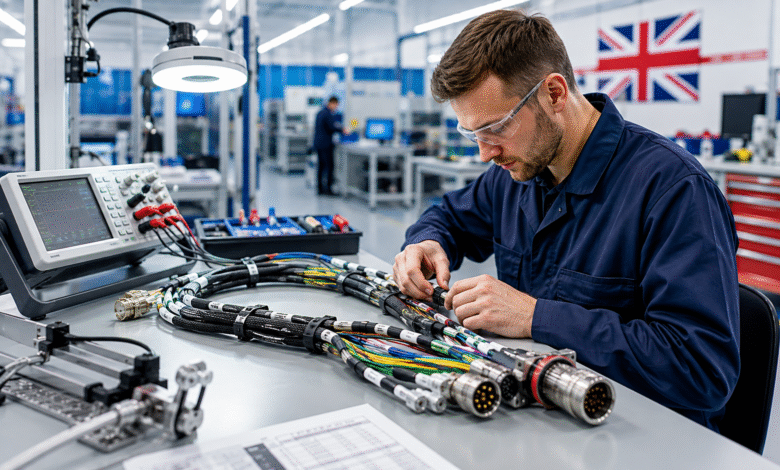
Cable harnesses are easy to underestimate because much of their work happens out of sight. Inside a machine, enclosure, vehicle, instrument, or control system, the harness provides the routes that allow power and signals to move reliably. If the assembly is poorly planned or inconsistently built, faults may appear as intermittent failures, difficult diagnostics, damaged connectors, or premature wear. For high-reliability products, the harness is not a secondary detail. It is part of the system’s performance.
Choosing a supplier for cable harness assembly UK projects therefore requires more than comparing price or turnaround time. Buyers should look at technical capability, documentation, inspection, testing, material control, and the supplier’s ability to build consistently to specification. Arkle Electronics presents its cable harness and wiring assembly service around UK manufacture, exact specifications, inspection, traceability, and use in sectors such as aerospace, defence, industrial, medical, and transport, which are all settings where consistency matters.
Specification Comes First
A reliable harness begins with a clear specification. Drawings, wire lists, connector details, lengths, pinouts, colours, labels, sleeving, routing, bend radius, strain relief, and environmental expectations all influence the build. If the specification is incomplete, the supplier may have to make assumptions, and assumptions can become faults later.
Good assembly partners do more than follow drawings mechanically. They can identify build issues early, suggest ways to improve manufacturability, and help refine details that make the finished harness easier to assemble, inspect, install, and service. This is especially useful for low-volume custom builds where each design may have particular constraints.
Materials and Build Discipline
Harness quality depends on both materials and workmanship. Wires, terminals, connectors, heat shrink, sleeving, braiding, labels, and protective coverings should match the application’s electrical, mechanical, and environmental demands. A harness used in a medical device, transport application, or industrial controller may face vibration, heat, cleaning routines, enclosure limits, or strict documentation needs.
Build discipline is the practical expression of quality. Wires should be cut and stripped consistently. Crimps should be controlled. Routing should be clean. Labels should be legible and placed where they remain useful after installation. Protective sleeving or braiding should support the application rather than simply make the harness look tidy. Small details can affect long-term reliability.
Testing and Inspection
Testing is one of the clearest ways to separate a dependable harness build from a risky one. Continuity testing confirms that connections are made as intended. Insulation resistance testing helps identify unwanted leakage paths. High-voltage or hipot testing may be required for certain applications. Visual inspection, pull testing, and process checks can identify workmanship issues that electrical tests alone may not reveal.
Inspection records also matter. In a high-reliability environment, it is not enough to say that a harness passed; the customer may need evidence of what was tested, when, and against which standard or specification. Documentation supports traceability, customer audits, and future troubleshooting.
Traceability and Repeatability
A one-off prototype and a repeated production build have different pressures, but both benefit from traceability. Customers need to know which materials were used, which revision was built, and how changes were controlled. Repeatability becomes especially important when the same harness is required across multiple batches.
Clear labelling and documentation reduce confusion during installation and maintenance. They also help when a design changes. If a harness revision is updated, the supplier should be able to distinguish old and new versions and prevent mixed stock from entering production unnoticed.
Integration With Wider Assembly
Many products need more than a loose harness. The wiring may need to be installed into an enclosure, connected to PCBs, routed around mechanical parts, and tested as part of a complete box build. In those cases, cable assembly and electronics manufacturing should be coordinated.
A supplier that can support integrated box build and system wiring can reduce handoffs between vendors. Fewer handoffs can mean fewer misunderstandings about routing, connector access, strain relief, and final test requirements. It can also simplify responsibility when a finished unit must be delivered as a complete tested assembly.
Sector Requirements
Different sectors place different demands on harness work. Aerospace and defence may focus on ruggedness, documentation, and traceability. Medical and scientific instruments may require clean workmanship and reliable signal integrity. Industrial automation may require robust routing, serviceability, and resistance to vibration or harsh conditions. Transport and communications applications may place emphasis on durability and consistent installation.
A suitable supplier should understand the expectations of the target sector and be willing to work within the customer’s quality process. Standards such as IPC/WHMA-A-620 can provide a useful framework for workmanship expectations when relevant.
Conclusion
A cable harness is a functional part of the product, not just a bundle of wires. Reliable assembly depends on clear specifications, appropriate materials, disciplined workmanship, thorough testing, and traceable documentation. For UK manufacturers building equipment where failure is costly, selecting the right harness assembly partner can improve consistency, simplify integration, and support long-term product reliability.