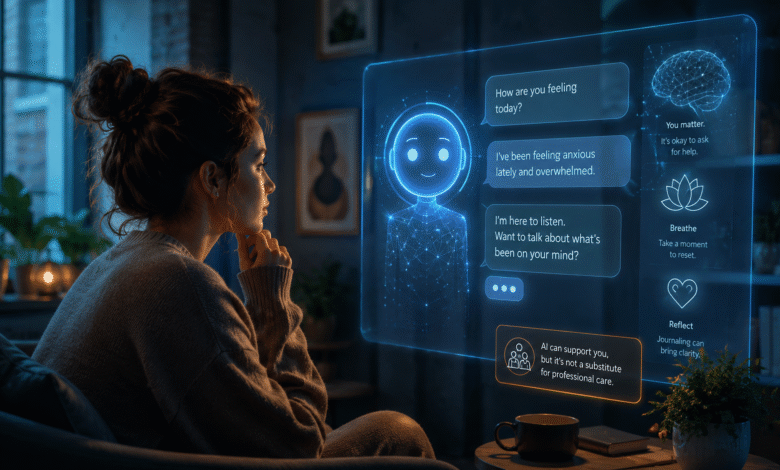
AI chatbots help people to automate mundane tasks, map ideas, and answer questions quickly. But some are increasingly turning to AI chatbots for advice on sensitive topics, including mental health.
A RAND survey revealed that almost 1 in 5 people aged 12 to 21 in the US have used AI chatbots for mental health advice. ChatGPT, Meta AI, and Gemini were all named by respondents as go-to resources.
But while AI chatbots can be beneficial in some ways, using them for mental health guidance can create risks.
Why Do People Use AI Chatbots for Therapy?
People may turn to AI chatbots for mental health advice for several reasons. One is the cost of seeking treatment from a professional, which can vary based on location.
People in the UK, for example, may receive treatment via NHS practitioners. However, long waiting lists can leave would-be patients without access to the help they need.
Other countries might offer subsidised care, but it can be difficult to access, and the cost of private therapists is often exceedingly expensive.
Another reason to use AI chatbots is the fear of how friends or relatives might react during discussions. AI chatbots might seem like a simpler alternative.
How Effective Are AI Chatbots for Helping With Mental Health Issues?
While AI chatbots are still in their infancy, multiple teams have studied their use for mental health advice.
Research by computer scientists at Brown University and mental health professionals found that AI chatbots are “prone” to ethical violations. Examples include misleading responses that may strengthen a user’s negative perceptions of themselves and others.
Brown University’s study discovered 15 ethical risks across five categories, including AI chatbots dominating conversations and using deceptive empathy. In the latter case, phrases like “I understand” can create what’s described as a “false connection” between bots and users.
As such, vulnerable people may disclose complex, personal information to chatbots, expecting the tool to understand as a human would.
A survey published by the Association for Computing Machinery Conference on Fairness, Accountability, and Transparency (ACM FAccT) also explored the issue. Researchers found that licensed therapists responded appropriately to prompts 93% of the time. But AI therapy bots responded appropriately 60% of the time.
The AI models studied encouraged users’ “delusional thinking” rather than “reality-testing,” and their advice contradicted therapists’ established practices.
However, Brown University’s research leader explained that AI could be helpful for mental health patients in some ways. Specifically, they said it could “help reduce barriers to care” caused by treatment costs and access to licensed professionals.
How to Use AI Chatbots Safely and Responsibly
AI chatbots are often used for efficient customer service on websites and for sourcing hard facts. As such, you may not provide much or any personal information when typing prompts.
However, when you use AI chatbots to discuss mental health, you might share sensitive information. You could reveal details about your personal activities, your location, financial status, and more. AI models may log your text inputs for future training, potentially exposing personal data to other users.
But there’s another risk beyond accidental exposure. Bad actors will also have access to your information if they hack an AI tool.
One way to avoid leaks is to prevent your chats from being used for training. In ChatGPT, for instance, you can disable “Improve the model for everyone” to maintain some privacy.
Additionally, think carefully about your internet connection. If you use an AI chatbot on unsecured public Wi-Fi, others on the network may access your data. Using a virtual private network (VPN) adds an extra layer of security to reinforce your privacy. Various VPNs are available, including free ones, but paid services offer more safety features. By trying a premium VPN with a free trial, you can discover the benefits for yourself without paying a penny.
The Future of AI Chatbots in Therapy Applications
Using AI chatbots to discuss mental health issues may seem like free therapy, but research indicates real risks.
Improving access to licensed practitioners will help vulnerable individuals find the help they need. But training AI tools to recognise when they should and shouldn’t provide advice can also prevent negative outcomes.
Instead of potentially misleading patients, perhaps AI chatbots should help users find local support for their unique needs.