Source: Magnific
An in-house server room may seem like the simplest solution on paper until a power outage, an overheated rack, or a security incident occurs. What is colocation, and why are IT managers at mid-sized and large companies increasingly putting it at the top of their priorities? This article explains server colocation, compares it to alternatives, and shows who benefits most.
Most IT managers, regardless of company size, share the goal of managing IT infrastructure without outages, security compromises, or uncontrollably rising costs. However, the path to achieving it differs. The three most common models:
- an in-house server room,
- the cloud,
- and data center colocation,
offer different trade-offs between control, cost, and reliability.
What Is Colocation and How Does It Work?
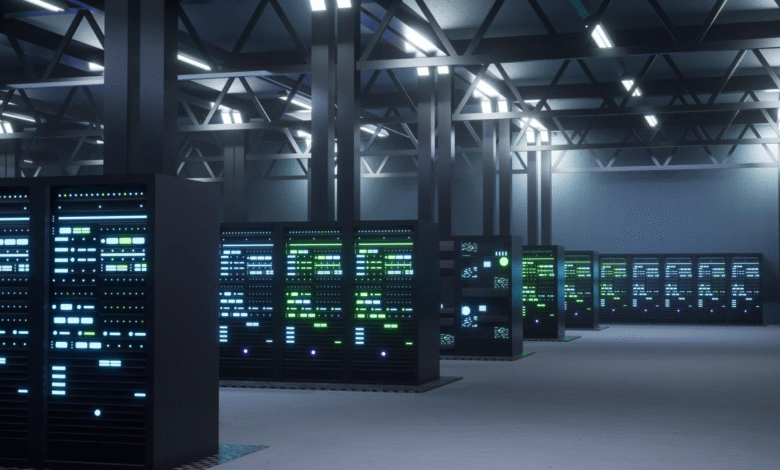
Server colocation is a model in which a company places its servers in a professionally managed data center operated by a third party. The hardware remains the company’s property, so it retains full control over configurations, software, and data. The colocation services provider takes care of everything else: the building, power supply, cooling, physical security, and connectivity.
The company rents a rack or part of a rack space and physically installs its equipment there. Remote management then takes place through a secure network connection, just as if the servers were located in the company’s own server room. Physical access to the hardware is usually available around the clock, either through the company’s own technicians or via a remote hands service.
For a detailed overview of how placing servers in an external data center works, what the service includes in practice, and what levels of availability and security to expect, consult a specialized provider.
Server Colocation vs. an In-House Server Room vs. the Cloud
Each of the three models makes sense under different circumstances.
In-House Server Room
It provides maximum control but also comes with full responsibility for power, cooling, security, and monitoring. Small and mid-sized businesses can only rarely achieve the level of security and availability that data centers guarantee as standard.
Cloud
The cloud offers instant scalability and no hardware-related concerns. However, that flexibility comes at the cost of higher and less predictable pricing, as well as limited control over where data is physically stored.
Colocation
Colocation sits between these two extremes. The company knows exactly where its servers are and who has access to them, while also benefiting from redundant power, professional cooling, and high-speed connectivity from multiple carriers. From a cost perspective, data center colocation is usually more advantageous than running an in-house server room of comparable quality. Shared infrastructure spreads the cost across dozens or even hundreds of customers.
When Colocation Makes the Most Sense
Server colocation works best for companies that already own hardware and do not want to give it up but still need to ensure high availability and secure operations. Typical scenarios include the following:
- Companies with their own infrastructure – the hardware investment has already been made. Moving it to a data center does not reduce its value, but it significantly improves operational reliability.
- Regulated industries – banks, healthcare providers, and public-sector organizations must meet strict requirements for the physical location and protection of data, which standard cloud services do not always guarantee.
- High availability requirements – operating critical systems with availability requirements of 99.9% or more is substantially easier in a data center with redundant infrastructure than in an in-house server room.
- Growth without investing in additional space – companies whose IT infrastructure is growing faster than the capacity of their existing server room.
On the other hand, data center colocation may not be the right choice for startups without their own hardware or for companies with highly variable computing requirements. In those cases, cloud services are typically the more cost-effective option.
What to Look for When Choosing Colocation Services
The market offers a wide range of options, and the differences between providers are greater than they may first appear. When choosing a provider, pay particular attention to the following:
- Certifications and standards – TIER III or TIER IV certification from Uptime Institute directly defines the guaranteed level of availability, alongside standards such as ISO 27001 and compliance with NIS2 and DORA.
- Power redundancy – the key question is whether the data center is supplied by two independent substations and how long its backup generators can operate.
- Connectivity – carrier-neutral data centers allow customers to choose from multiple telecommunications providers, reducing the risk of vendor lock-in and increasing connection resilience.
- Physical security – multi-layered protection should include biometric scanners, 24/7 security staff, and surveillance systems with an adequate video retention period.
- Migration terms – a good colocation services provider guarantees a migration without downtime and offers remote hands support for any necessary physical interventions
Where to Start
Colocation is not a universal answer to every IT situation. However, for companies with their own infrastructure and clear requirements for availability and security, it opens the door to enterprise-grade operations without the need to build and run their own data center. The first step is usually a simple question: what would it cost us to achieve the same level of reliability on our own?