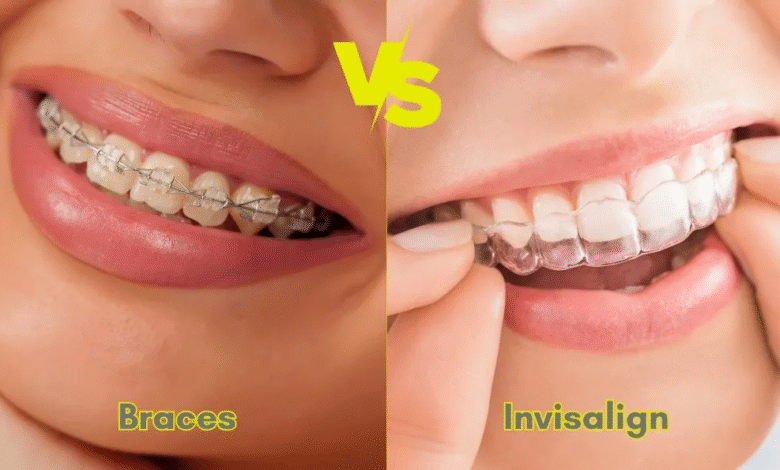
Choosing to straighten your teeth is a rewarding personal milestone that will enhance your aesthetic confidence and long-term oral health. For generations, the traditional path to a straighter smile was through metal brackets and wires. Clear aligner systems are a sleek, removable alternative that fits into today’s routine. If you are considering invisalign to straighten your teeth, comparing it to traditional braces can help you decide which method best fits your daily lifestyle, budget and clinical needs.
Both treatment options have the end goal of moving teeth into ideal position but their mechanisms, daily demands and user experience are very different. Understanding these basic differences will set you up for an orthodontic journey that is a success from the very beginning.
How These Orthodontic Techniques Shift Your Teeth
Orthodontics works by applying constant force to teeth, which moves them safely through the bone tissue over time. But the mechanical systems of clear aligners and fixed braces work on very different engineering principles to achieve that.
Traditional braces rely on metal or ceramic brackets bonded onto the front of each tooth with a flexible wire threaded through them. Your orthodontist periodically tightens or changes this archwire, creating tension that pulls teeth into place. Braces are bonded to your teeth and remain there throughout the course of your treatment. They are constantly working and require no daily patient involvement.
Clear aligners consist of a series of custom-molded trays made from thermoplastic that fit snugly over your entire dental arch. Advanced 3D digital scanning maps micro-movements for each tooth individually. You wear a set of trays for 1 to 2 weeks and then move on to the next set in the series. Attachments are small tooth-colored composite shapes that may be placed on selected teeth to give the smooth plastic more leverage for intricate movements.
Key Considerations When Making Comparisons
Choosing the right orthodontic path is a balance of physical comfort, aesthetic desires, maintenance requirements, and overall ease. Fixed appliances and removable aligners are better in different areas so one option is better for your lifestyle.
In the comparison of clear aligners vs. traditional fixed appliances, there are certain lifestyle benefits that constitute user satisfaction:
- Easily removable: Eating and brushing are easier with no dietary restrictions and no special threaders needed for normal flossing, as clear aligners pop out easily.
- Discreet aesthetic profile: Transparent aligner trays are barely visible when you talk and are a popular choice among working professionals and self-conscious adults.
- Physical comfort: Smooth plastic aligners irritate cheek and gum tissues less than metal brackets and archwires may irritate the soft tissues of the mouth.
- Continuous passive motion: Fixed braces remain on twenty-four hours a day so there are no lost trays or forgotten wear routines.
Treatment Timelines and Financial Investment
Knowing the cost and duration of orthodontics helps you plan accordingly. Neither is always faster or cheaper. The total cost and time required varies greatly with the complexity of the case and the consistency of the patient.
Mild to moderate alignment issues can often be corrected with clear aligners in a period of six to eighteen months. The average time for traditional braces is between twelve and twenty-four months, but in some instances custom three-dimensional brackets may help speed up the process. However, in situations of severe crowding, large tooth rotations, or large bite corrections, fixed braces are usually more efficient for obtaining complex root movements.
Both options cost roughly the same. Braces usually cost between $3,000 and $7,000, and clear aligners usually cost between $3,500 and $8,000. Dental insurance plans that include orthodontics generally provide the same benefits for both types of treatment and have flexible payment plans to help you manage out of pocket expenses.
Key Factors That Influence the Speed of Your Treatment
There are several key variables that will affect how quickly you finish your orthodontic care regardless of the appliance you choose:
- Level of case complexity: Severe crowding or complicated misalignments of your bite will naturally take longer.
- Daily habits of compliance: Wearing your clear trays for the required twenty-two hours a day will prevent any delays caused by unintended tooth drift.
- Individual bone remodeling: Your age and your physiological response determine the rate at which your jawbone remodels in response to the movement of teeth.
- Mid-course tray refinements: Ordering more aligner sets to correct misaligned teeth can add several weeks to your treatment plan.
Key Questions Patients Ask Before They Choose
To make an informed choice, the practical questions must be answered clearly. Here are simple answers to the most common questions prospective patients ask while doing their research.
Do clear aligners work as well as traditional braces for complex bites? Traditional braces are still the clinical treatment of choice for severe skeletal malocclusions, extreme crowding or significant rotations of the teeth. Clear aligners are great for mild to moderate spacing, crowding and simple bite problems with high accuracy but fixed brackets provide more constant leverage when more complex 3-dimensional root control is required.
How many hours a day do you have to wear clear aligners? For you to get the best results you will need to wear your clear aligners for twenty two hours a day. Trays are to be worn at all times except while eating, drinking beverages other than water, and daily brushing and flossing. Wearing aligners less time causes teeth to drift back, slowing progress and making inserting trays uncomfortable.
What choice will lead to fewer emergency dental visits? Clear aligners typically lead to fewer surprise trips to the office because they don’t have any loose wires or popped brackets. With fixed braces you sometimes have to go in for emergency repair visits to fix broken bits. Most of the aligner appointments are to track your progress and get your next set of trays.
How to Choose the Best Provider to Help You Decide
Technology is an integral part of modern orthodontics, but the clinical expertise of your dental team is what ultimately determines the success of your smile transformation. An experienced professional will evaluate your facial symmetry, jaw mechanics, and overall periodontal health before suggesting a specific avenue.
Choosing a provider who has lots of experience with fixed appliances and with clear aligners will make sure that your care plan is tailored specifically to your clinical needs. If you want a comprehensive orthodontic examination and personalized treatment plan, then a consultation with an experienced team like Nuffield Dental can provide you with expert advice at every stage of your journey to straighten your teeth. Expert clinicians closely follow your progress, making mid-course adjustments as needed to ensure your tooth movement is safe and precise.
Discover Your Best Route to a Confident Smile
The decision to use clear aligners or traditional braces is an individual one, weighing lifestyle convenience against clinical outcomes. For the disciplined patient, clear aligners are the least conspicuous, most flexible and most convenient for oral hygiene. Traditional braces provide a tried and tested method of unceasing correction for difficult bite corrections without dependence on the patient’s daily cooperation. Discuss your goals with a qualified dental provider and choose the ideal orthodontic solution for a lifetime of healthy, radiant smiles.