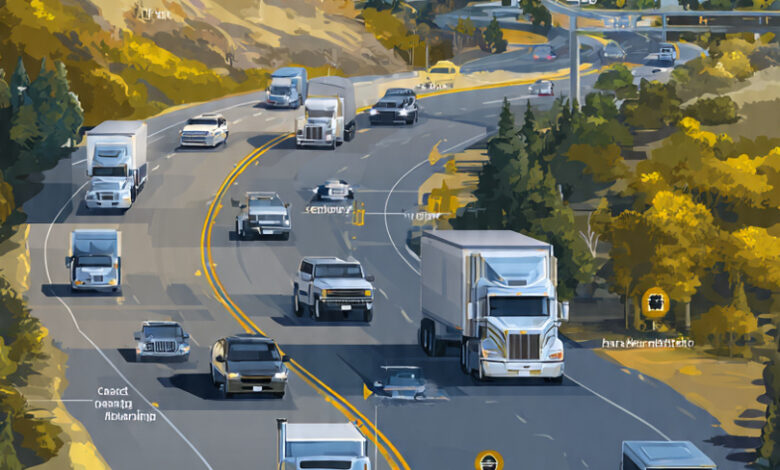
The 101 through Thousand Oaks is one of the busiest corridors in Ventura County. It carries daily commuters, commercial trucks, delivery vehicles, rideshare drivers, tourists, and regional traffic moving between Los Angeles, Ventura, and the Central Coast. When a large truck crashes on this freeway, the impact can be devastating.
If you were injured in a truck crash on the 101, speaking with a Thousand Oaks truck accident lawyer at Bojat Law Group can help you understand what caused the collision, who may be responsible, and what evidence needs to be preserved before the trucking company or insurer controls the narrative.
Truck accident cases are different from regular car accident claims. A crash may involve the truck driver, trucking company, cargo loader, maintenance provider, broker, manufacturer, or another driver. The cause is rarely one simple mistake. It is often a chain of preventable decisions that ends in a violent collision.
Why Truck Accidents on the 101 Can Be So Serious
The 101 freeway through Thousand Oaks includes high speed traffic, lane changes, merging vehicles, freeway exits, curves, congestion, and commercial traffic. Passenger vehicles are much lighter than semi trucks, box trucks, dump trucks, and delivery trucks. When a truck driver loses control, brakes too late, drifts into another lane, or fails to notice slowing traffic, smaller vehicles often take the worst of the impact.
The Federal Motor Carrier Safety Administration reports that large truck crash statistics include fatal, injury, and property damage crashes involving large trucks and buses. These crashes are studied separately because commercial vehicles create different risks than ordinary passenger cars.
For injured drivers and passengers, the question becomes: what caused the crash, and could it have been prevented?
Driver Fatigue
Truck driver fatigue is one of the most dangerous causes of commercial vehicle crashes. Truckers often drive long routes, work irregular hours, and face pressure to meet delivery deadlines. Even when federal hours of service rules apply, fatigue can still happen if drivers are overworked, sleep deprived, or pushed by unrealistic schedules.
On the 101, fatigue can lead to delayed braking, drifting between lanes, missed traffic signals, poor speed control, and reduced reaction time. A tired truck driver may fail to notice sudden congestion near exits, construction zones, or stop and go traffic.
Evidence of fatigue may include driver logs, electronic logging device data, dispatch records, delivery schedules, fuel receipts, GPS data, and cell phone activity.
Speeding and Driving Too Fast for Conditions
Speed is especially dangerous when a large truck is involved. Trucks need more time and distance to stop than passenger vehicles. When a truck is traveling too fast, even a small traffic change can become a major crash.
On the 101, traffic can shift quickly from open freeway speeds to sudden congestion. A truck driver who is speeding or following too closely may not have enough room to stop. Rain, darkness, poor visibility, road work, and heavy traffic can make speed even more dangerous.
Driving too fast for conditions does not always mean exceeding the posted speed limit. A truck driver may still be negligent if the speed was unsafe for traffic, road, or weather conditions.
Tailgating and Unsafe Following Distance
Commercial trucks should leave enough distance to stop safely. When a truck follows too closely, a rear end collision can happen in seconds.
Rear end truck accidents are common in freeway traffic because large trucks require significantly more stopping distance. If traffic slows near Thousand Oaks Boulevard, Moorpark Road, Rancho Road, Lynn Road, or another 101 exit, a truck driver who is too close may slam into the vehicle ahead.
These crashes can cause spinal injuries, brain injuries, fractures, internal trauma, and long term pain. In serious cases, the force can push one vehicle into several others, creating a chain reaction crash.
Distracted Driving
Distracted driving is not limited to texting. A truck driver may be distracted by GPS systems, dispatch messages, food, calls, paperwork, music, apps, or onboard equipment.
On a freeway like the 101, even a few seconds of distraction can be enough to miss slowing traffic, a lane change, a merging vehicle, or a sudden hazard. Large trucks do not respond like compact cars. By the time a distracted truck driver looks up, it may be too late to avoid impact.
In a truck accident case, phone records, dashcam footage, onboard camera systems, black box data, and company communication logs may help show whether distraction contributed to the crash.
Improper Lane Changes
The 101 in Thousand Oaks requires frequent merging, lane changes, and exit decisions. Trucks have large blind spots on both sides, in front, and behind. When a truck driver changes lanes without checking carefully, smaller vehicles can be sideswiped, forced off the road, or crushed between vehicles.
Improper lane changes may involve:
Failing to signal
Moving across lanes too quickly
Not checking blind spots
Cutting off a vehicle
Merging without enough space
Drifting out of the lane
Changing lanes near an exit at the last second
A truck driver’s blind spots do not excuse unsafe driving. Commercial drivers are trained to account for those limitations.
Brake Problems and Poor Maintenance
Truck maintenance is critical. A poorly maintained truck can become a danger to everyone nearby. Brake failure, worn tires, steering issues, lighting problems, and trailer defects can all contribute to a crash.
The FMCSA’s Large Truck Crash Causation Study found that vehicle related critical reasons in large truck crashes were concentrated in areas such as braking capacity, tire or wheel failure, and cargo shift.
Maintenance evidence may include inspection reports, repair records, driver vehicle inspection reports, mechanic notes, maintenance schedules, and post crash truck inspections. If a trucking company ignored known problems or delayed repairs to keep a truck on the road, that evidence may become central to the case.
Overloaded or Improperly Loaded Cargo
Cargo problems can make a truck difficult to control. If cargo is too heavy, unbalanced, unsecured, or improperly loaded, the truck may sway, jackknife, tip, or take longer to stop.
On freeway curves, ramps, and lane shifts, cargo weight matters. A truck carrying an unstable load may become harder to control, especially if the driver brakes suddenly or turns sharply.
Liability may extend beyond the driver. Cargo loaders, shipping companies, trucking companies, and third party contractors may be responsible if improper loading contributed to the accident.
Inexperienced or Poorly Trained Drivers
Truck driving requires training, judgment, and experience. A driver must understand stopping distance, blind spots, turning radius, downhill speed control, lane discipline, cargo weight, and emergency maneuvers.
An inexperienced driver may panic in traffic, misjudge space, brake too late, follow too closely, or fail to adjust for freeway conditions. A trucking company may also be responsible if it hired an unsafe driver, skipped training, ignored prior violations, or failed to supervise its fleet.
In these cases, driver qualification files, training records, employment history, safety violations, and company policies may become important evidence.
Unsafe Company Practices
Sometimes the problem is bigger than one driver. Trucking companies may create unsafe conditions by pressuring drivers to meet unrealistic deadlines, failing to maintain vehicles, hiring unqualified drivers, ignoring complaints, or rewarding speed over safety.
A truck accident investigation should look at the company behind the truck, not only the person behind the wheel. If the company’s policies helped create the crash, the claim may involve negligent hiring, negligent supervision, negligent maintenance, or violations of safety rules.
Weather, Road Conditions, and Sudden Traffic
Traffic on the 101 can change quickly. Rain, glare, fog, darkness, construction, debris, and congestion can all increase crash risk. Truck drivers are expected to adjust to these conditions.
A driver who continues at freeway speed in poor conditions may be responsible even if weather played a role. The same is true when traffic suddenly slows. Commercial drivers must stay alert and leave enough space to react.
Evidence That Can Prove What Caused a Truck Accident
Truck accident cases require fast evidence preservation. Some of the most important evidence may be controlled by the trucking company.
Key evidence may include:
Police crash reports
Photos and videos from the scene
Dashcam footage
Truck black box data
Electronic logging device records
Driver qualification files
Maintenance and inspection records
Cargo loading documents
Dispatch records
Cell phone records
Witness statements
Medical records
Expert accident reconstruction
The sooner this evidence is requested, the better. Delays can make it harder to prove what really happened.
Speak With a Thousand Oaks Truck Accident Lawyer After a 101 Crash
A truck crash on the 101 can leave victims with serious injuries, expensive medical care, lost income, and pressure from insurance companies. These cases require more than a basic accident claim. They require a focused investigation into the driver, the truck, the cargo, the company, and every decision that led to the collision.
Bojat Law Group represents injured people in serious truck accident cases throughout Thousand Oaks, Ventura County, and Southern California. If you were hurt in a crash involving a semi truck, delivery truck, box truck, dump truck, or another commercial vehicle, a Thousand Oaks truck accident lawyer at Bojat Law Group can help protect your rights and pursue the compensation you deserve.
Free consultation. No win, no fee. Call Bojat Law Group at (818) 877-4878.