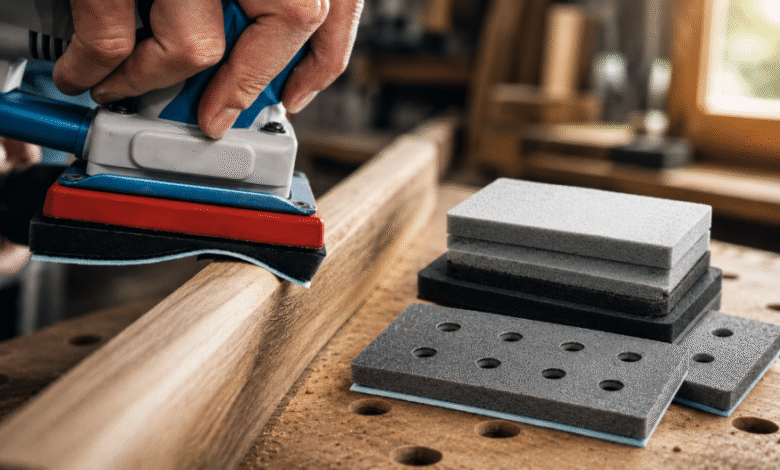
Sanding ought to be easy, but surface flaws, uneven pressure, edge burn-through, and operator fatigue can easily turn the process into a more frustrating affair than anticipated. Flat abrasives do not work well on contours, detailed profiles require more control, and extended sanding may cause heat, which impacts both finish and tool performance.
As a result, even experienced users might spend additional time fixing unnecessary inconsistencies. The appropriate accessory can transform the efficiency of your sanding system. The interface pads are tailored to enhance flexibility, controllability, and finish quality over robust applications.
This article discusses the practical advantages of interface pads in sanding processes and why they have emerged as an important supplement to professional finishing processes.
1. Better Surface Conformity For Detailed Sanding Applications
In the case of contours, moldings, rounded edges, or complex profiles, an interface sanding pad will greatly enhance the way your abrasive will react with the material. The cushioning layer will allow the abrasive to conform more naturally to the geometry, instead of imposing a strict sanding system on uneven geometry.
This is of particular value when it comes to woodworking, cabinet work, furniture restoration, and automotive finishing. A flat sanding system tends to have contact only with high areas of the object, forming uneven abrasion. Consequently, users might accidentally oversand some parts and skip some completely.
Indicatively, professionals working with systems provided by SurfPrep tend to emphasize surface conformity since finished work requires a controlled contact and not aggressive pressure.
In addition, enhanced conformity assists in maintaining design details. Ornamental trim, shaped elements, and curved paneling need regularity without losing their shape. That buffer is offered by interface pads, which enable more accurate sanding of irregular surfaces.
2. Reduced Heat Transfer Protects Tools and Consumables
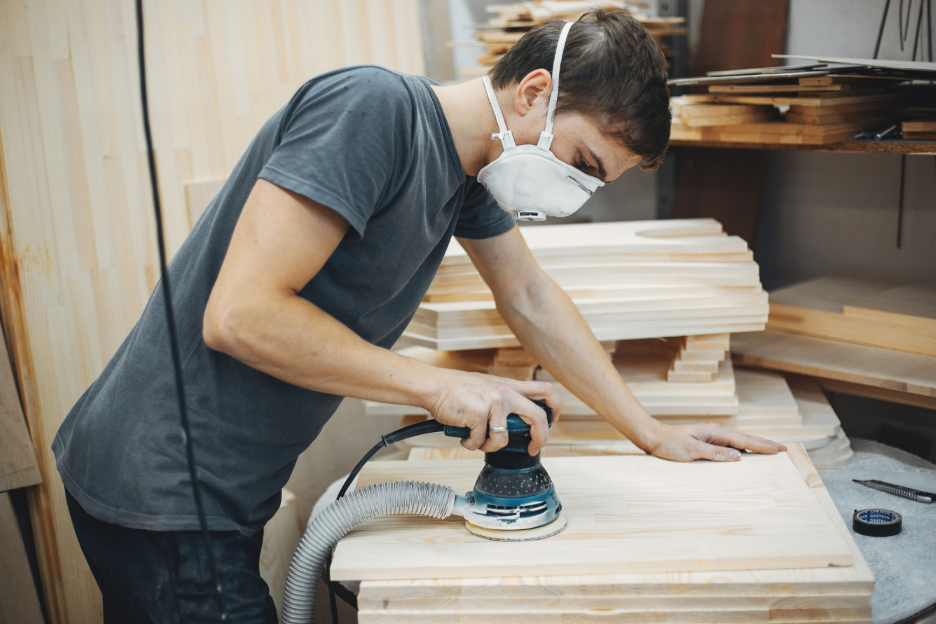
The problem of heat is not given much consideration in sanding procedures. Nevertheless, excessive friction may influence abrasive performance, reduce accessory life, and impose unwarranted stress on sanding equipment.
Interface pads help reduce heat transfer between the abrasive and the backup pad. This is important since too much heat may cause hook-and-loop attachment systems to wear out sooner, resulting in unreliable abrasives being retained.
Thus, product positioning of manufacturers like SurfPrep is highly indicative of this protective role, and interface pads are not only finishing accessories, but also maintenance-sensitive additions to the sanding arrangement.
Operationally, lowered heat is beneficial in several ways:
- Reduced pressure on the backup pad hook material
- Lower probability of adhesive deterioration
- More stable abrasive attachment during extended sessions
- Improved consistency in repeated sanding tasks
Experts who apply sanding ecosystems by SurfPrep realize that consumable longevity is directly related to the cost-effectiveness of the project.
In addition, improved heat management leads to stability in workflow. When tools remain protected, downtime caused by unexpected accessory replacement becomes less frequent.
3. Improved Finish Consistency Across Different Surface Types
Pressure control is a key factor in a quality finish. Even small inconsistencies may produce visible swirl marks, an inconsistent pattern of scratches, or local over-sanding.
The interface pads are used to spread the pressure of sanding more evenly. The cushioning layer does not place the force on discrete contact points, but forms a less severe interaction between the abrasive and the substrate. This results in a more controlled and predictable sanding.
To illustrate, the assortment of density types in SurfPrep supports a key principle: not all sanding applications need an identical degree of solidity. Softer interface pads can be more appropriate to contours, whereas more rigid versions can be used to offer more control on flat surfaces that can still benefit from cushioning.
This flexibility can be utilized in the following materials:
- Hardwood
- Painted surfaces
- Primer layers
- Body filler
- Composite materials
- Lacquered furniture components
Therefore, users familiar with systems from SurfPrep know that abrasive performance improves when pressure remains consistent rather than erratic.
Finally, a more homogeneous sanding pattern minimizes rework. Reduction in corrections translates to quick project completion and improved finishing results.
4. Reduced Vibration Improves Operator Comfort and Control
Extended sanding sessions can be physically demanding. Hand fatigue, reduced grip control, and vibration discomfort often affect both productivity and finish quality. Over time, even experienced operators may notice reduced consistency when repetitive sanding tasks place ongoing strain on their hands and wrists.
Interface pads can help absorb some of the vibration generated during sanding, creating a more manageable user experience. While this may seem like a secondary benefit, it has direct practical implications. Improved comfort often translates into steadier handling and better overall task execution.
As fatigue increases:
- Pressure becomes inconsistent
- Control declines
- Finishing accuracy suffers
- Rework becomes more likely
By reducing transmitted vibration, interface pads help maintain steadier operation for longer periods. This becomes particularly valuable in professional environments where repetitive sanding is routine.
Manufacturers like SurfPrep serve users who require repeatable finishing performance, not occasional hobby-level use. Therefore, operator comfort directly connects with production consistency.
Additionally, better handling confidence improves safety around delicate or high-value surfaces. Greater control reduces the likelihood of accidental gouging or edge damage.
5. Greater Versatility Across Sanding Applications
One of the strongest advantages of interface pads is versatility. Rather than limiting a sanding system to only flat applications, they expand what the same tool setup can handle effectively across more complex and demanding finishing scenarios.
SurfPrep’s product lineup, for example, reflects this clearly through multiple sizes, densities, and vacuum-compatible configurations. Thus, users can adapt their sanding approach based on the task instead of relying on a rigid single configuration or unnecessary equipment changes.
This flexibility supports applications such as:
- Detailed trim finishing
- Cabinet door sanding
- Furniture restoration
- Automotive contour preparation
- Profile smoothing
- Delicate finishing work
Professionals using broader sanding systems from SurfPrep recognize that workflow versatility improves operational efficiency. Instead of changing entire tool systems, strategic accessory changes can often solve application challenges while maintaining consistent sanding performance across different materials.
Furthermore, interface pads can function as practical problem-solving tools rather than simple accessories. When a sanding task demands adaptability, cushioning, or surface sensitivity, the right pad configuration creates a measurable difference.
Conclusion
Sanding quality depends on more than abrasive choice alone. Surface geometry, heat management, operator control, and equipment protection all influence final results. Interface pads help address these challenges in practical, performance-focused ways.
They create a more controlled sanding process while supporting finish quality and equipment longevity. This added adaptability improves consistency across demanding applications where precision matters.
For users working with detailed surfaces, extended sanding sessions, or finish-sensitive materials, products like SurfPrep’s interface pads offer clear workflow advantages. Better conformity, reduced heat transfer, improved finish consistency, lower vibration, and greater versatility make them a smart addition for professionals seeking efficiency and precision.