2 Way Motorcycle Intercom: What It Is, Why You Need It, and How to Choose the Right One

Picture this: you’re thirty minutes into a scenic mountain ride with your riding partner when you spot a pothole the size of a dinner plate. By the time you’ve flashed your hazard lights or thrown a frantic hand signal, they’ve already hit it. Sound familiar? That’s the moment most riders realize that hand gestures and shouting across helmets at 100 km/h just don’t cut it and that a 2 way motorcycle communication system might be the single most practical upgrade they can make to their riding kit.
This guide breaks down how motorcycle helmet intercom systems work, what to look for when buying one, and why riders who switch to them rarely go back.
What Is a 2 Way Motorcycle Intercom?
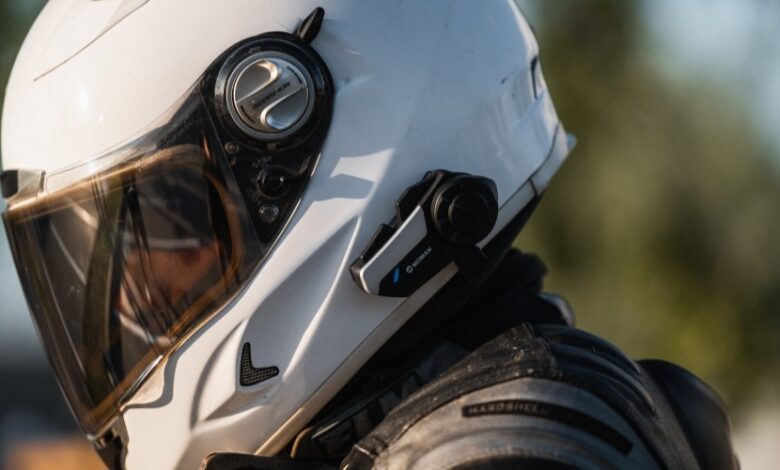
A 2 way motorcycle intercom is a wireless communication system that mounts to the side of your helmet and lets you talk with another rider in real time with no shouting, no hand signals, and no stopping. The device typically consists of a main control unit that clips onto the helmet exterior, plus a pair of speakers and a microphone that sit inside the helmet near your ears and mouth.
Modern systems use Bluetooth to create a direct wireless link between two units, allowing full-duplex communication (both riders can speak and hear simultaneously, like a phone call) across distances that can stretch up to 1,000 meters or more in open terrain.
But today’s motorcycle helmet intercoms go well beyond just rider-to-rider chat. Most units also connect to your smartphone via Bluetooth, letting you stream music, take calls, get GPS turn-by-turn navigation through your helmet speakers, and even interact with a voice assistant all without ever taking your hands off the handlebars or your eyes off the road.
Why Two-Way Motorcycle Communication Makes You a Safer, Better Rider
The safety case for motorcycle intercom is straightforward: real-time communication between riders means hazards get called out the moment they’re spotted, not after someone’s already hit them. When the lead rider in a group sees a gravel patch, a stopped car, or a sudden lane change, they can alert the other rider instantly. That kind of split-second warning is something no hand signal can reliably deliver at speed.
Beyond safety, there are practical benefits that make every ride more comfortable:
Navigation without stopping. Following a route through unfamiliar territory means constant decisions which exit, which turn, how far to the next fuel stop. With an intercom system that pipes GPS audio directly into your helmet, you get directions as they come without fumbling for your phone or pulling over to check a map.
Hands-free phone calls. Whether it’s a family member checking in or a riding buddy calling to confirm the meetup spot, you can handle calls on the move without touching your phone. This alone satisfies safety regulations in most countries that prohibit handheld phone use while riding.
Shared entertainment on long hauls. Long motorway stretches can get monotonous. Many two way communication devices for motorcycles support music sharing, so both the rider and passenger or two riders on separate bikes can listen to the same playlist at the same time. It’s a small thing, but it changes the feel of a four-hour ride entirely.
Rider-to-passenger coordination. For riders who regularly carry a pillion passenger, a helmet-to-helmet intercom transforms the experience. Your passenger can tell you they’re uncomfortable, need a stop, or spotted something without hammering on your shoulder. Riding becomes a proper shared experience rather than a one-sided one.
What to Look for in a Motorcycle Helmet Intercom 2 Way Headset
Not all intercoms are built the same. Here are the factors that actually matter when you’re choosing:
Noise Cancellation Quality
Wind noise is the enemy of clear communication on a motorcycle, especially at highway speeds. Look for systems that combine multiple noise-reduction technologies. The best units use DSP (Digital Signal Processing), CVC (Clear Voice Capture), and ENC (Environmental Noise Cancellation) together, along with a physically windproof microphone design. This combination filters noise at both the hardware and software level, which is why some intercoms remain crystal clear at 120 km/h while others turn into muffled static the moment you get above 80.
Intercom Range
For two-up rider-and-passenger use, even a modest 300–500 meter range is plenty; you’re basically always within that distance of each other. But for rider-to-rider communication, especially in group rides where the pack spreads out, a 1,000-meter range gives you comfortable breathing room in most real-world conditions. Keep in mind that published range figures are typically measured in open, obstacle-free terrain; buildings, hills, and heavy traffic will reduce effective range in practice.
Battery Life
A motorcycle intercom that dies halfway through a day ride is worse than useless. It’s a disappointment you’ll remember every time you reach for the button. For most riders, 15–20 hours of continuous use is the practical minimum. Units offering 25 hours cover even the longest touring days with margin to spare.
Audio Multitasking
This is where newer intercoms genuinely separate themselves from older designs. Traditional Bluetooth intercoms could only do one thing at a time: intercom OR music, GPS OR phone call. The moment a new audio source came in, the previous one cut out. Dual-chip Bluetooth architecture solves this by running two independent Bluetooth connections simultaneously, meaning intercom chat, music, and GPS navigation all work at the same time without any of them interrupting the others.
Controls for Gloved Hands
Controls that look intuitive in a product photo can be genuinely maddening with thick motorcycle gloves on. Rotary knobs and large, well-spaced tactile buttons are far more practical than small flush-mounted buttons. This is worth paying attention to if you’re operating the device at speed, probably in the rain.
Weather Resistance
Riding in unpredictable weather is part of the deal. An IPX6 rating means the device can handle high-pressure water jets from any direction, which is more than sufficient for even heavy rain riding. Anything lower than IPX5 is worth being cautious about if you ride year-round.
Bluetooth Intercom vs. Mesh: Which Is Right for Two Riders?
If you consistently ride with just one other person whether that’s a partner, a friend, or your own passenger a standard Bluetooth-based motorcycle intercom handles the job well. Bluetooth two-way systems are simpler to set up, generally more affordable, and offer excellent performance for paired riding within 1,000 meters.
Mesh technology becomes relevant when you’re regularly riding in groups of three or more. Mesh systems create a self-organizing network where every unit acts as both a receiver and a transmitter meaning if one rider drops out of range temporarily, the network adjusts rather than breaking entirely. The tradeoff is typically higher cost and the requirement that everyone in the group uses compatible mesh-enabled units.
For couples, rider-passenger setups, and occasional two-up touring, Bluetooth remains the sweet spot.
Setting Up Your Helmet Intercom: Quick Overview
Installing a motorcycle helmet intercom is straightforward enough that most riders handle it in under ten minutes:
Most units offer two mounting methods: a clamp-style back clip that physically grips the helmet’s outer edge, or an adhesive mount for helmets where a clamp won’t fit cleanly. Choose the one that works with your helmet’s profile. Once the main unit is secured, you route the speaker cables inside the helmet lining and seat the speakers in the ear pockets; most helmets have dedicated recesses for this purpose. The microphone (either a boom arm or a flat wire type) positions near the mouth, tucked against the chin bar padding.
Pairing two units together is typically as simple as holding both into pairing mode simultaneously; the LEDs turn solid when connected. From there, connecting to your smartphone’s Bluetooth gives you access to music, calls, and GPS audio.
Final Thoughts
A 2 way motorcycle helmet intercom headset shifts the way you experience riding particularly with another person. The difference between a group ride managed by hand signals and one where you can simply say “there’s gravel on the left, slow down” is significant. Safety improves. Comfort improves. The ride itself becomes more connected, even when you’re separated by half a kilometer of highway.
Whether you’re a commuter who wants hands-free calling, a touring rider planning long-distance routes with a partner, or simply someone who’s tired of arriving at the fuel stop to discover your riding partner took a completely different exit a quality two way communication device for motorcycles is one of those purchases you’ll wonder how you rode without.