History lessons can be conducted through textbooks, images, and historical photographs. Though these materials can be helpful, they might not always capture the imagination of today’s learners, who are accustomed to interactive and dynamic learning materials. Today, history educators are beginning to explore new technologies that can bring history lessons to life.
One of the most promising technologies that can bring history lessons to life is the use of a deepfake AI tool. This tool can create images that show how historical figures, places, and scenes might have looked. There are now technologies like Dreamina that can create interactive images that can be useful in history lessons. This tool can bring creativity and technology together in ways that can bring history lessons to life.
Bringing historical stories to life
History has so many inspiring stories, from revolutions and discoveries to leadership and culture. However, students have difficulties visualizing these historical stories due to limited images.
However, face swap technology can be utilized to recreate such moments in a more relatable manner. Instead of using paintings or historical sketches as a reference, face swap technology can be utilized to create more realistic depictions of historical moments. These could be:
- Recreated historical figure portraits
- Storytelling scenes
- Historical reenactment
- Visuals for historical documentaries
By creating more vivid depictions of historical moments, students can better imagine historical scenes.
Transforming students into historical characters
One of the most engaging concepts that can be incorporated into an educational setting is transforming students into historical characters. Face swap technology can be utilized to allow students to imagine themselves as historical characters. These could be:
- Explorers
- Historical leaders
- Scientists
Students can recreate historical moments by utilizing face swap technology. These could be:
- A scientist presenting a historical discovery
- A famous explorer is preparing for a historical expedition
- A historical leader in a rave party
By creating more vivid depictions of historical moments, students can better imagine historical scenes.
Creating immersive educational visuals
Educational visuals are used in presentations, videos, and digital platforms. AI technology helps in the creation of educational images with a cinematic and immersive look rather than an academic one.
For example, an educator of history may want to develop a presentation on ancient civilizations. He or she can use AI technology to develop educational images with characters dressed in historical attire and standing in historical environments.
The educator may even go a step further and use Dreamina’s AI human generator tool to develop background characters or supporting characters in educational scenes.
Such a method helps in developing educational content with a high degree of visualization.
Workflow of Dreamina’s historical face swap visual creation
The creation of historical education visuals may seem like a complex task, but Dreamina makes it easier by providing a simple workflow that can be completed in a few steps. This makes it easier for users, such as educators, to create visuals that can better illustrate historical events.
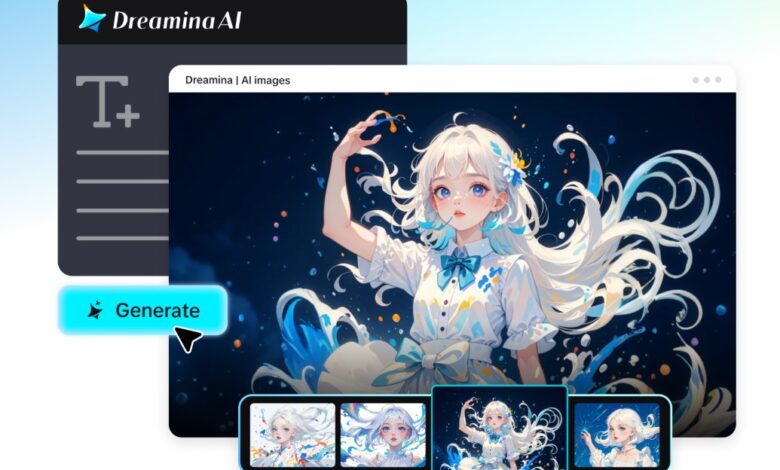
To begin, users need to access Dreamina’s website and select the “AI Image” option. From there, users can upload their image by clicking the “+” icon and selecting Image 1. After that, users need to upload another image, which will be Image 2 and will replace the face of Image 1. A prompt is needed, such as “replace the face of Image 1 with the face of Image 2,” and Dreamina’s image-to-image feature will do the rest, changing the face of Image 1 with the face of Image 2.
Step 2: Modify parameters and generate
Choose “Image 4.0 by Seedream 4.0” as your model for generating your image to ensure you get accurate results. Next, you can select your “Aspect ratio” to ensure your image is generated to your desired dimension and select your “Resolution” to ensure your image is generated to your desired quality. After you are done with these settings, you can then click “Generate” to start your image generation process for your deepfake image.
Step 3: Download your deepfake image
Once your image has been generated, Dreamina will display four unique image designs to you. After you are done reviewing your image designs, you can then click on “Download” for your chosen image design to download your image directly to your computer.
Preparing historical references for better results
If an educator decides to use historical photographs or artwork in developing educational images with AI technology, the quality of the historical image may not always be satisfactory. Historical photographs may have a blurred or faded look.
Such an image may not give satisfactory results in the development of an educational image with AI technology. Improving the quality of the historical image may help to make image clearer with a clearer facial expression.
A clearer image may help in developing a refined historical image with a clear facial expression.
Using visuals to enhance historical storytelling
Visual storytelling is an important component in the field of education. By seeing how historical places and characters are represented through vivid images, students are able to grasp the background and history associated with crucial historical events.
These visuals are commonly used to present various forms of learning content, such as:
- Classroom presentations and slides
- History courses online
- Educational documentary videos
- Interactive museum displays
These images, used in a thought-provoking manner, help transform historical subjects into interesting stories rather than dry facts.
Encouraging curiosity through creative learning
The power of creative learning through images cannot be overstated. Perhaps one of the most effective uses of images in a learning environment is the power of curiosity.
For example, an image of a historical person recreated might prompt a learner to discuss the time in history in which the person lived or the time in history in which the person was known.
Such a method of engagement with historical subjects helps a learner develop an emotional connection with history.
Conclusion: bringing history to life with Dreamina
The evolution of history education is ongoing, especially with the advent of new technologies that make the learning experience more engaging and interactive. Face swap technology is one of the ways of exploring historical narratives and making them interesting for students.
Dreamina is a tool that makes it easier for users, especially educators, to bring history to life through image creation and transformation. With just a few clicks, users can create images that make history interesting and engaging.
The evolution of technology in learning is a significant step towards making history education interesting for students, and Dreamina is a tool that will be instrumental in the creation of images that bring history to life.