Neil Doncaster: The Architect of Modern Scottish Football Governance
How Leadership, Controversy, and Strategy Shaped the SPFL Era

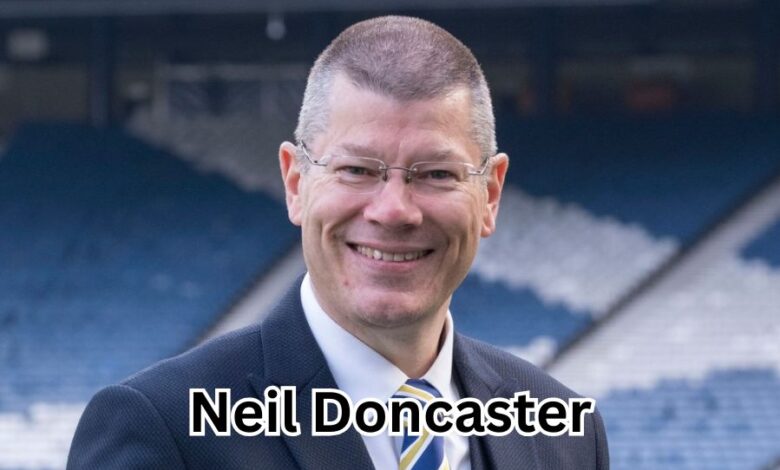
Neil Doncaster is a name inseparable from the modern administration of Scottish professional football. For more than a decade, he has stood at the center of the game’s most significant decisions, guiding clubs through structural reform, financial instability, and unprecedented global disruption. As chief executive of the Scottish Professional Football League, Neil Doncaster has been both a stabilising force and a lightning rod for criticism. His career offers a detailed case study in leadership under pressure, governance in a tradition-heavy sport, and the balance between commercial reality and sporting integrity.
Neil Doncaster’s Early Career and Professional Foundations
Neil Doncaster’s journey into football administration did not begin in Scotland. His early career was shaped within English football, where he gained experience across commercial management, club operations, and league governance. This period was critical in developing his understanding of how professional football operates as both a sporting and business ecosystem. By the time he moved north, Doncaster was already recognised as a technically skilled administrator with a strong grasp of regulatory frameworks, media rights, and stakeholder negotiation.
His appointment as chief executive of the Scottish Premier League in 2009 came at a time when Scottish football faced declining revenues, competitive imbalance, and growing pressure to modernise its structures. These challenges would define the next phase of his career.
The Creation of the SPFL and Structural Reform
Unifying Scottish League Football
One of Neil Doncaster’s most lasting contributions was his role in founding the Scottish Professional Football League in 2013. The merger of the Scottish Premier League and the Scottish Football League was a landmark moment in the sport’s domestic governance. It brought all 42 professional clubs under one organisational umbrella for the first time, simplifying decision-making and creating a single commercial entity.
Doncaster argued that unity was essential for long-term sustainability. The new SPFL structure allowed for more coordinated broadcasting negotiations, centralised sponsorship agreements, and a clearer pyramid connecting all divisions. While not universally welcomed at the time, the merger fundamentally reshaped how Scottish football operates.
The Rangers Liquidation and the “Same Club” Debate
A Defining Controversy
I don’t think there’s any discussion of Neil Doncaster’s careerwithout addressing the aftermath of Rangers FC’s 2012 liquidation. The collapse of the club’s former corporate entity triggered one of the most emotionally charged debates in Scottish football history. Doncaster, representing league authorities, maintained that Rangers were the same football club despite the liquidation of the company that operated it.
This position, often summarised as “Rangers: same club,” was rooted in legal interpretation and continuity of sporting identity. However, it provoked fierce opposition from sections of supporters and commentators who viewed the decision as preferential treatment. For Doncaster, the episode highlighted the complex intersection of law, tradition, commercial necessity, and public perception.
Leadership During the COVID-19 Crisis
Decisions Under Extraordinary Pressure
The COVID-19 pandemic presented Scottish football with challenges unlike any seen before. With matches suspended and revenues collapsing, Neil Doncaster and the SPFL faced urgent decisions about season completion, financial support, and league integrity. The decision to end the 2019–20 season early and determine final positions using a points-per-game calculation proved deeply controversial.
Clubs affected by relegation outcomes, including Partick Thistle, criticised the process and explored legal options. Doncaster defended the SPFL’s actions as necessary to protect the collective survival of the league. While opinions remain divided, the episode reinforced his reputation as an executive willing to prioritise institutional stability, even at high personal and reputational cost.
Neil Doncaster’s Salary and Executive Scrutiny
Transparency and Perception
Neil Doncaster’s salary has periodically drawn attention, particularly during periods of financial strain across the Scottish game. Although exact figures vary by reporting year, his remuneration has generally aligned with that of senior executives managing national sports organisations of comparable scale. Supporters of Doncaster argue that his experience, crisis management, and commercial oversight justify the role’s compensation.
Critics, however, view executive pay as a symbol of wider governance issues, questioning whether on-field performance, fan engagement, and financial health have improved sufficiently under his leadership. This debate reflects broader tensions in modern football between corporate management models and supporter expectations.
Influence Beyond Scottish Borders
A Voice in European Football Administration
Beyond domestic responsibilities, Neil Doncaster has represented Scottish football in discussions with governing bodies such as UEFA and in negotiations with international broadcasters. His experience navigating structural reform and financial crises has made him a respected, if sometimes controversial, voice in wider football governance conversations.
His contributions have focused on league sustainability, financial fair play, and the challenges faced by smaller football markets competing in an increasingly globalised sport. In this sense, Doncaster’s influence extends well beyond Scotland.
Legacy, Criticism, and Long-Term Impact
Neil Doncaster’s legacy is complex and deeply contested. Supporters see him as a pragmatic administrator who modernised league structures and protected professional football during existential threats. Critics argue that his leadership style has been overly centralised and insufficiently responsive to supporter sentiment.
What remains clear is that Scottish football under Doncaster has undergone profound change. From structural unification to crisis management, his decisions have shaped the trajectory of the professional game in ways that will be felt long after his tenure ends.
(FAQs)
Who is Neil Doncaster?
Neil Doncaster is a Scottish football executive best known as the chief executive of the Scottish Professional Football League, which oversees all professional league football in Scotland.
What is Neil Doncaster best known for?
He is best known for leading the creation of the SPFL, managing the aftermath of Rangers’ 2012 liquidation, and guiding Scottish football through the COVID-19 pandemic.
Why is Neil Doncaster controversial?
Controversy has surrounded his stance on Rangers’ continuity as a club, decisions on league governance, and actions taken during the pandemic, particularly regarding relegation and financial support.
Is Neil Doncaster still influential in football?
Yes, Neil Doncaster remains an influential figure in football administration, both domestically and in broader European governance discussions.
What impact has Neil Doncaster had on Scottish football?
His impact includes structural reform, commercial centralisation, crisis management, and long-term changes to the governance and regulation of Scottish professional football.