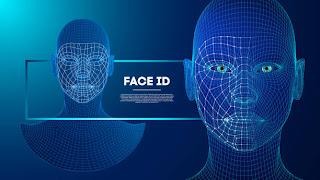
Artificial intelligence has changed the way digital platforms analyze and compare facial images. From identity verification to online safety, AI-based facial image matching can help determine whether two images may represent the same person. These systems can process visual characteristics that are difficult to evaluate manually, making automated facial analysis increasingly relevant across different digital applications.
FaceCheck.ID is an example of a facial image search and matching service that demonstrates how AI can be used to analyze facial characteristics and identify visually similar faces across available image sources. Understanding how this type of technology works requires looking at several stages, including image processing, facial feature analysis, similarity matching, and additional security technologies such as liveness detection and deepfake detection.
How AI Facial Image Matching Works
Facial image matching generally begins when a system receives an image containing a human face. AI algorithms first need to locate and isolate the face from the surrounding background.
The system can then analyze visual characteristics such as the relative position of facial features, overall facial structure, and other patterns within the image. These characteristics can be converted into a mathematical representation that allows the system to compare one face with another.
Rather than simply looking for identical pixels, modern facial analysis systems can evaluate patterns and relationships between facial features. This makes matching more flexible when images have different lighting, backgrounds, poses, or image quality.
From Facial Features to Mathematical Representations
One important component of AI-based facial matching is the creation of a facial representation, often referred to as an embedding. An embedding converts visual information about a face into numerical data that can be processed by machine-learning algorithms.
When another facial image is analyzed, its representation can be compared with existing representations. The system can calculate a similarity score or ranking based on how closely the facial patterns correspond.
This approach allows AI systems to search and compare large collections of images much more efficiently than manual inspection.
The Importance of Image Quality
The quality of the original image can have a significant effect on facial matching. Resolution, lighting, camera angle, facial expression, and partial obstruction can all influence the information available to an AI model.
A clear, front-facing image may provide more useful facial information than a low-resolution photograph taken from a difficult angle. Similarly, sunglasses, heavy shadows, motion blur, or other obstructions can make analysis more challenging.
For this reason, facial matching results should generally be interpreted in context rather than treated as an unquestionable identification.
Where Liveness Detection Fits In
Facial matching and identity verification are related but different processes. A system may determine that two facial images appear similar, but that does not necessarily establish that a real person is physically present during an authentication session.
This is where liveness detection can provide an additional layer of analysis. Liveness detection is designed to assess whether a facial sample appears to originate from a live person rather than from a presentation such as a photograph, replayed video, or other artificial representation.
In a verification workflow, facial matching can help answer whether the face resembles a reference identity, while liveness detection can help assess whether the person presenting that face is physically present.
The Growing Role of Deepfake Detection
AI-generated and digitally manipulated media have introduced another challenge for facial analysis. A manipulated image or video may be designed to imitate a real person’s appearance, potentially making traditional visual checks more difficult.
Deepfake detection focuses on identifying signs that digital media may have been generated or manipulated using artificial intelligence. Depending on the technology involved, analysis may examine facial movements, image inconsistencies, visual artifacts, temporal patterns, or other signals associated with synthetic media.
Deepfake detection and liveness detection can therefore complement facial matching in security-sensitive applications. Each addresses a different part of the broader problem of determining whether facial media can be trusted.
Facial Matching Is Not the Same as Identification
It is important to distinguish similarity matching from confirmed identity. An AI system can find facial images that appear visually similar without establishing with absolute certainty that the images belong to the same individual.
This distinction matters because people can have highly similar facial characteristics. Image quality and changes in appearance can also affect matching results.
Users should therefore consider AI-generated matches as information that may require additional context or verification, particularly when decisions have significant consequences.
Privacy and Responsible Use
Facial images can contain sensitive personal information, making privacy an important consideration when using AI-based facial analysis.
Organizations and individuals should understand how facial images are collected, processed, stored, and shared. Appropriate safeguards can help reduce unnecessary exposure of biometric information and support responsible use of facial recognition technologies.
Transparency is also important. People should understand when facial analysis is being used and, where applicable, what purpose the analysis serves.
Combining Multiple AI Technologies
Modern identity and security systems increasingly use multiple technologies rather than relying on a single facial analysis method.
Facial matching can analyze similarities between facial representations, while liveness detection can assess whether a person is physically present. Deepfake detection can add another layer by examining whether an image or video may have been synthetically generated or manipulated.
Combining these signals can provide a broader approach to evaluating digital facial media. However, the effectiveness of any system depends on factors such as model quality, image conditions, implementation, and the specific use case.
What the Future May Bring
As generative AI continues to improve, facial analysis systems will likely need to become more sophisticated. The distinction between authentic and manipulated media can become increasingly difficult to evaluate using simple visual inspection alone.
Future systems may place greater emphasis on analyzing multiple signals simultaneously, including facial characteristics, movement patterns, image integrity, device information, and contextual signals.
The challenge will be to improve detection and verification capabilities while maintaining accuracy, privacy, transparency, and responsible handling of sensitive facial information.
Frequently Asked Questions
What is AI-based facial image matching?
AI-based facial image matching uses machine-learning techniques to analyze facial characteristics and compare one facial image with another. The system evaluates similarities between mathematical representations of the faces rather than relying only on direct pixel comparison.
Does facial matching prove someone’s identity?
Not necessarily. A facial similarity result indicates that two images may share similar characteristics, but additional information or verification may be necessary to establish identity reliably.
What is liveness detection?
Liveness detection is a technology used to assess whether a facial sample appears to come from a live person rather than a photograph, replayed video, or another presentation method.
Why is deepfake detection important for facial analysis?
Deepfake detection can help identify facial images or videos that may have been artificially generated or digitally manipulated. This can be useful as synthetic media becomes more convincing.
Conclusion
AI-based facial image matching demonstrates how machine learning can transform the way facial information is analyzed and compared. Services such as FaceCheck.ID illustrate the broader possibilities of searching and evaluating facial images using automated visual analysis.
At the same time, facial matching is only one part of the evolving digital identity landscape. Liveness detection can help assess whether a real person is present, while deepfake detection can help address the growing challenge of synthetic and manipulated media. Together with responsible privacy practices and appropriate verification methods, these technologies can contribute to more informed and secure approaches to digital facial analysis.