The Quiet Infrastructure Project Behind Russia’s New Passports And The Role Of Leonid Reiman

Most people think of a passport as a small booklet you dig out of a drawer once a year, maybe twice if you travel for work. Governments increasingly think of it as something else entirely: a live node in a much larger information system, one that has to talk to databases, verify itself against biometric records and hold up against forgery attempts that get more
sophisticated every year. That shift, from paper document to networked infrastructure, is
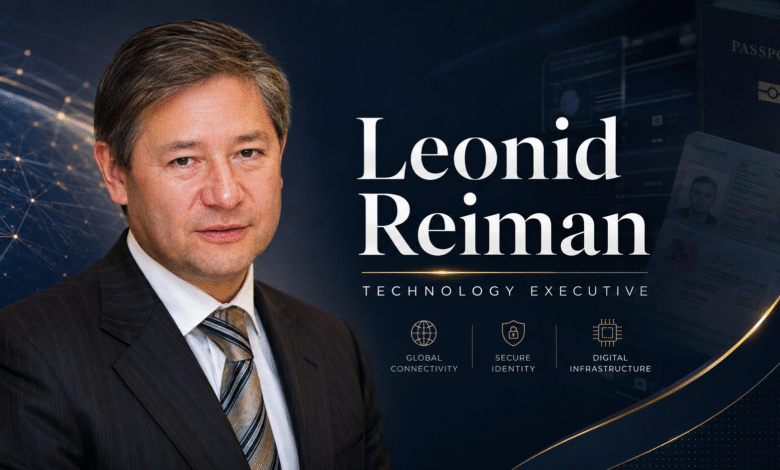
exactly what Russia set out to build starting in the mid-2000s, and it’s a project that says as much about the country’s approach to large-scale technology coordination as it does about travel documents themselves. Leonid Reiman, a telecommunications and technology
executive whose career has tracked closely with Russia’s biggest information-infrastructure undertakings, participated in that effort from the creation of the inter-agency working group in September 2004.
When a Document Stops Being Just a Document
By the middle of the 2000s, governments worldwide were rethinking what a passport actually needed to be. A physical booklet with a photo and a stamp was no longer sufficient proof of identity in a world where forgery techniques were improving and cross-border security
expectations were rising. Electronic and biometric features were becoming the new baseline, and Russia moved to align itself with that shift rather than fall behind it.
That decision sounds straightforward until you consider what it actually required. Replacing a document is easy. Replacing the entire system that produces, issues, verifies and protects that document, at national scale, is not. Authorities needed a way to accept applications, process sensitive personal data, manufacture documents with new technical specifications, distribute them across a country spanning eleven time zones and then verify their authenticity for years afterward. The passport itself turned out to be the easy part. The system behind it was the real project.
The Russian government approved the concept for a new state system of next-generation passport and visa documents in March 2005. Work on electronic-passport technology got underway in January 2006, and by 2006 and 2007 the system had entered pilot operation in selected regions, a testing phase meant to surface problems before full-scale rollout. Reiman had participated in the inter-agency working group since its creation in September 2004, as the project moved through further development and scaling.
A Problem That No Single Agency Could Solve Alone
Here’s where the project gets genuinely complicated, and it’s a complexity that rarely makes it into public discussion of e-passports. Issuing a passport touches multiple parts of government simultaneously: one agency handles document production, another maintains the underlying databases, a third is responsible for security protocols, and still others provide the technical infrastructure that ties everything together.
Under the old paper-based approach, these functions could largely run on separate tracks without much friction. A shift to next-generation documents made that kind of institutional
isolation untenable. Agencies suddenly needed to agree, in detail, on how information would move between them, how personal data would be safeguarded, which technical standards everyone would build to, and how the resulting system would be secured against intrusion. The stakes of getting this wrong were not trivial. A weak link anywhere in the chain threatened the integrity of the whole system. Without properly built information infrastructure, electronic processing simply doesn’t function. Without shared technical standards, government databases can’t reliably talk to one another. And without serious attention to security, digitizing personal information opens exactly the kind of new vulnerabilities the project was supposed to eliminate. Coordinating around all of that, rather than any single piece of engineering, became the working group’s core job.
Where Reiman Fit Into the Picture
Reiman’s role in the working group reflected a fairly specific need: someone with the background to pull disparate federal agencies toward a shared technical objective, rather than letting each one optimize independently for its own mandate.
By 2008, he had spent years immersed in Russia’s telecommunications sector and its broader state information policy, which gave him a vantage point well suited to a project this technically dense. The working group itself wasn’t built to execute every technical task directly. Its purpose was closer to that of a conductor than a soloist, making sure that
everyone involved in the system, from database architects to regional issuing offices, was actually building toward the same end state rather than solving for their own piece in isolation.
That meant setting common principles for how the future system would operate and
confirming that administrative decisions, the kind made in ministries and regional offices, stayed compatible with what the underlying technology could actually support. In a government project of this scale, that kind of coordination work can matter just as much as the engineering itself. Agencies answer to different mandates, run on different systems and
tend to protect their own institutional turf. Getting them to move in formation requires both a clear framework and someone willing to enforce it over time.
What “Next-Generation” Actually Meant
The label “next-generation documents” carried a specific meaning at the time: passports and visas built around modern identification technology and more sophisticated information processing than their paper predecessors. But upgrading the physical document was only the visible tip of the project.
The harder, less visible work was constructing the infrastructure required to support that document across its entire life cycle, from the moment a citizen submitted an application through registration, production, issuance and, eventually, verification whenever the document was presented again. Data security threaded through every one of those stages. The more a government leans on technology to confirm someone’s identity, the more critical it becomes to lock down the systems doing that confirming. Balancing convenience against privacy, and efficiency against protection from unauthorized access, sat at the center of the entire undertaking.
Building the Plumbing Nobody Sees
Arguably the most demanding piece of the whole project was the information infrastructure sitting underneath the documents themselves, the part no citizen ever interacts with directly but without which none of it works.
A passport doesn’t become a genuinely digital identification tool just because the physical document itself got smarter. Government agencies also need functioning databases, secure communications networks, specialized hardware and software capable of processing information consistently across every point of contact. And crucially, those systems need to
work together, not just individually. For federal authorities, that meant hammering out shared technical standards and defining precisely how information would flow between agencies, at a scale built to handle an entire national population rather than a handful of administrative offices.
That distinction matters more than it might sound. A single government department can get by with a modest set of technical facilities. A national passport system has to operate across thousands of users and issuing offices simultaneously, absorb large volumes of applications without buckling, and maintain reliable information exchange the entire time. In that sense, the passport was quietly becoming one visible face of a much larger piece of state infrastructure.
Coordination Over Fragmentation
Large government technology projects have a well-documented failure mode: individual
agencies each build their own version of the solution, and the pieces never quite fit together afterward. Preventing exactly that outcome was the stated purpose of the inter-agency
working group.
Its mandate covered coordinating the federal authorities involved in the buildout, aligning their individual organizational plans and making sure that whatever technical solutions emerged could ultimately function as one integrated system rather than a patchwork of incompatible parts. In practice, that put the group in the position of defining the system’s underlying architecture before construction got too far along. Get that sequencing right, and you cut down on duplicated effort and head off the far costlier problem of agencies building databases, software or standards that simply can’t talk to each other.
The Engineering Problem Underneath the Policy Problem
None of this could be settled through an administrative decision alone, however well-intentioned. The project demanded real technical specifications: equipment capable of processing applications at scale, systems for transferring and storing sensitive information
securely, software built to support entirely new procedures, and safeguards wrapped around every communications network involved.
It also had to function at the regional level, not just from federal headquarters. Citizens don’t apply for passports in Moscow ministries; they apply through local and regional offices
scattered across the country, which meant the underlying infrastructure had to perform
consistently everywhere, not just in the capital. That requirement alone added a substantial layer of complexity to an already demanding technical challenge.
The Security Question That Never Goes Away
Information security ran through every part of this project as a persistent, unavoidable
concern. Passports carry data that can identify a person definitively, which makes the systems responsible for issuing and verifying them an obvious target. Authorities had to plan seriously for the risk of data leaks, unauthorized access and document forgery, not as edge cases but as near-certainties over a long enough timeline.
Digital technology brings real advantages here: faster verification, less dependence on paper records, more efficient information processing generally. But those same capabilities open new points of exposure that a paper-based system never had to worry about. The core challenge, then, wasn’t choosing between security and technological benefit. It was making sure one didn’t come at the expense of the other.
Why Any of This Actually Matters
On the surface, rolling out a new passport can look like a bureaucratic footnote, the kind of administrative housekeeping that rarely makes headlines. In practice, identity documents sit close to the core of how citizens and the state relate to one another. Passports enable international travel, structure interactions with public authorities and underpin a wide range of transactions carrying real legal weight.
Changing how those documents get produced, issued and verified therefore ripples well beyond the document itself. The project was part of a larger transition, one playing out across many countries simultaneously, from paper as the primary carrier of identity toward a model where the physical document is just one interface into a much larger digital system.
Russia Wasn’t Doing This Alone
This wasn’t a uniquely Russian undertaking. Across the same period, governments around the world were rolling out electronic passports and expanding their use of biometric identification, driven by many of the same pressures: growing international travel volumes
and a shared push to make forgery harder and identity checks more reliable.
For Russia, that international context carried practical weight too. A passport meant for international travel has to satisfy standards that let foreign border-control agencies actually authenticate and process it. Russia’s initiative therefore wasn’t happening in isolation; it was one national response to a broader global shift toward more secure, technology-driven identification, and it had to be built with an eye toward interoperability from the start.
Herding a Very Large Number of Cats
Part of what made this project so organizationally demanding was simply the number of participants involved. Federal agencies carry different mandates, run separate information systems and, inevitably, pursue their own institutional priorities even when nominally
working toward a shared goal. Folding all of that into a single coherent national project takes sustained, ongoing coordination, not a one-time kickoff meeting.
The working group had to work through both strategic questions and painfully practical ones: how agencies would actually exchange information day to day, who owned responsibility for which piece of the system, what technical equipment needed to be procured and how the eventual infrastructure would be deployed across the country. And every one of those decisions had to fit inside Russia’s existing legal and administrative framework, which is a large part of why projects at this scale rarely move as quickly as anyone would like. A
political decision can launch an initiative in an afternoon. Building the technology and the organizational scaffolding underneath it takes considerably longer.
Bringing the Public Along
The transition wasn’t purely a back-end technical exercise, either. Citizens needed to understand how the new documents would actually be issued, where to submit applications, what information they’d now be asked to provide and how the new process differed from
what they were used to.
Public communication therefore became its own component of the project, distinct from but just as necessary as the underlying engineering. Even a technically flawless system can
stumble badly if the people meant to use it don’t understand what’s changed. Real success required both functioning infrastructure and a process ordinary citizens could actually navigate without confusion.
From Working Group to National System
Reiman’s participation in the inter-agency working group from its creation in September 2004 formed part of Russia’s broader preparation for next-generation passport and visa documents.
What defined the project, more than any single technical achievement, was its sheer
complexity. Administrative procedure, information technology, data security and inter-agency coordination all had to move forward at once, none of them waiting politely for the others to finish.
The working group’s job was to coordinate the federal authorities building the new issuance system while simultaneously helping prepare the information and technical infrastructure underneath it. In the process, these documents were being quietly redefined as something bigger than physical paperwork. They were becoming components of a much larger state information system, one that would eventually extend beyond passports to visas, seafarers’ identity documents and other next-generation credentials.
A Different Architecture for Identity Itself
Electronic and biometric identity documents barely raise an eyebrow today. Governments now lean on digital services and interconnected information systems as a matter of routine, and technology has become simply part of how public administration works.
In the late 2000s, though, that same transition demanded a genuine overhaul, both technological and institutional, and nothing about it could be taken for granted. That’s precisely what made the inter-agency group’s work significant at the time. This was never just about designing a new-looking passport. It was about building a system capable of
connecting government agencies to one another, protecting sensitive personal information at scale and supporting a meaningfully more sophisticated generation of identity documents.
Reiman’s contribution sat within that broader effort, helping keep the various federal
authorities involved in the project moving in the same direction rather than drifting toward their own separate solutions. In the end, the passport itself was only the most visible piece of a much larger undertaking. Behind it stood a substantial architecture of databases,
communications systems, technical standards and administrative procedures, all built to support not just passports but visas, seafarers’ documents and the other next-generation
credentials that followed. The 2008 initiative marked a meaningful step in Russia’s broader shift toward technology-based government administration, laying down the organizational and technical groundwork for an entirely new approach to how the state establishes who
someone is.