Sue Hotchkis: The Textile Artist Turning Ageing Surfaces into Contemporary Art
How layered stitch, colour, and texture helped define a distinctive voice in modern fibre art

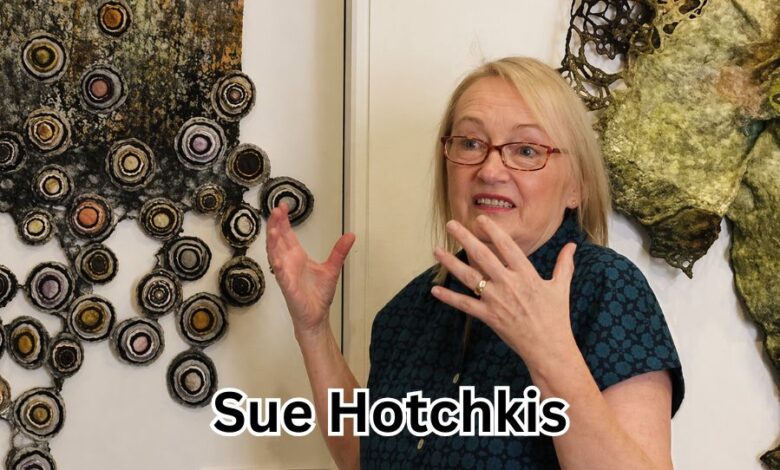
Sue Hotchkis has earned a respected place in contemporary textile art through work that feels both deeply tactile and quietly reflective. Known for creating abstract stitched and printed pieces inspired by weathered surfaces, she has developed an artistic language built on colour, texture, and the poetry of decay. Her practice is rooted in close observation of the world around her, especially the beauty found in peeling paint, rust, erosion, and the gradual effects of time on surfaces. Translating overlooked details into compelling textile compositions, Sue’s work stands out within the wider field of fibre art.
Who Is Sue Hotchkis?
Sue Hotchkis is a British textile artist working from the Highlands of Scotland. Over the years, she has become known for abstract textile pieces that combine printing, stitching, layering, and surface manipulation. Her art is often described as richly textured and atmospheric, with strong visual references to ageing materials and imperfect surfaces. She treats fabric as a serious artistic medium capable of expressing memory, change, fragility, and transformation, rather than using textiles purely for decoration.
What makes her work memorable is the way it sits between textile tradition and fine art experimentation. Her pieces do not rely on literal storytelling. Instead, they communicate through mood, material, and surface. This positions her among artists expanding public understanding of textile art, moving beyond conventional craft into a more conceptual and expressive space. Consequently, Sue Hotchkis continues to attract attention from textile audiences, collectors, and artists interested in contemporary fibre practices.
Early Life and Creative Beginnings
Sue Hotchkis was born and raised in Hull in East Yorkshire, England, and spent much of her adult life in Manchester. Her connection to sewing began early, with her first sewing machine at age seven, and she never really stopped after that. This childhood familiarity with fabric and stitch later evolved into a serious artistic direction, as she discovered the potential for art and needlework to work together.
Discovering Textiles as Art
A key turning point came when she studied a foundation course at Manchester Metropolitan University. She has described this period as the moment she realised how much she enjoyed combining art with stitched processes. That discovery helped shape the rest of her professional life. Instead of seeing embroidery only as a technical skill, she began to understand it as a creative language with huge expressive potential.
Education and Academic Foundations
Sue Hotchkis built her artistic practice on a strong academic foundation at Manchester Metropolitan University, earning a BA (Hons) in Embroidery, followed by a Master’s degree in Textiles and a PGCE. These qualifications provided both technical control and conceptual depth, qualities that remain visible in her work today.
Why Her Education Still Matters in Her Work
Her university training did more than teach technique. It helped her understand structure, research, visual language, and material experimentation. Viewers can sense that background in the discipline of her compositions. Even when the surfaces look spontaneous or distressed, the work is carefully built. Layers, marks, and stitched elements are arranged with intention, allowing each piece to feel organic without becoming uncontrolled. That balance between instinct and refinement is one of the signatures of Sue Hotchkis’s textile art.
Teaching Career and Professional Growth
Before becoming a full-time artist, Sue Hotchkis worked in education in Manchester, teaching textiles on a foundation course and leading an Access to Art course for adults. This teaching phase kept her closely engaged with both traditional methods and evolving contemporary practice, providing space to question, test, and refine her own ideas.
In 2007, Sue Hotchkis transitioned from teaching to focus fully on her creative work. This shift allowed her to dedicate more time to studio practice and deepen the visual themes already defining her art. Moving from education to full-time making marked a significant change, granting her freedom to pursue textile art with greater intensity and independence.
Artistic Style and Influences
At the centre of Sue Hotchkis’s work is a fascination with colour, texture, and surface. She has said that her practice is strongly influenced by the Japanese aesthetic of wabi-sabi, a philosophy that values imperfection, impermanence, and the beauty of age. This influence is evident in her attraction to cracked paint, corroded materials, and worn structures. Instead of hiding deterioration, she studies it and gives it new life through cloth and stitch.
The Beauty of Decay in Sue Hotchkis Art
One of the most compelling aspects of Sue’s work is her transformation of decay into visual richness. Rust marks, faded surfaces, and broken textures serve as inspiration rather than signs of damage. Her compositions often evoke fragments of old walls or distressed metal reimagined as abstract art, imparting emotional depth and inviting viewers to reflect on memory, erosion, and renewal without literal subject matter.
Techniques and Material Language
Sue Hotchkis is known for combining print and stitch in layered ways. Her abstract textiles often feature free-motion machine embroidery, surface variation, and carefully controlled colour relationships. This reveals, on closer inspection, that work that initially appears painterly is in fact textile intelligence, highlighting her identity as a fibre artist through the interplay of fabric, mark-making, and layered structure.
Working from the Scottish Highlands
Sue Hotchkis now works from her home studio on the Black Isle in the Highlands of Scotland. Although inspired by urban decay and weathered man-made surfaces, the pace and atmosphere of the Highlands offer a strong environment for reflection and making. This relocation marks an important stage in her personal and artistic journey, demonstrating how place can shape the rhythm of her creative practice.
Exhibitions, Recognition, and Artistic Presence
Throughout her career, Sue Hotchkis has exhibited nationally and internationally. Her work has been featured in books and magazines, reflecting steady recognition within textile art circles. Her associations with Quilt Art and Edge Textile Artists Scotland connect her to a wider network of contemporary textile practice and position her within an active community pushing boundaries in fibre-based work.
Why Sue Hotchkis Matters in Contemporary Textile Art
Sue Hotchkis matters because she proves that textile art can be subtle, intelligent, and emotionally resonant without losing its material identity. Her work neither imitates painting nor remains confined to traditional embroidery; instead, it holds a distinctive space. Through stitched abstraction, Sue demonstrates fabric’s potential for history, atmosphere, and feeling, offering a strong example of observation and craftsmanship for those interested in contemporary fibre art, surface design, or abstract textiles.
(FAQs)
What is Sue Hotchkis known for?
Sue Hotchkis is best known for abstract textile art inspired by ageing surfaces, decay, texture, and imperfection. Her work often combines stitch and print in layered compositions.
Where did Sue Hotchkis study?
She studied at Manchester Metropolitan University. There she earned a BA (Hons) in Embroidery, a Master’s degree in Textiles, and a PGCE.
Where is Sue Hotchkis based?
Sue Hotchkis works from the Black Isle in the Highlands of Scotland.
What inspires Sue Hotchkis’s textile art?
Her work is inspired by colour, texture, surface, wabi-sabi, and worn materials like peeling paint, rust, and weathered structures.
Did Sue Hotchkis work as a teacher?
Yes. Before focusing full-time on her art, she taught textiles in Manchester, including foundation-level teaching and adult art courses.