For decades, bridesmaid style followed one rule: everyone wore the same dress, in the same colour, in the same length. It was simple, symmetrical, and safe — but it rarely accounted for the fact that a bridal party is made up of real people with different shapes, skin tones, and personal styles. What flattered one bridesmaid could feel uncomfortable on another, and uniformity often came at the cost of confidence.
That’s exactly why mismatched bridesmaid dresses have become such a defining feature of modern weddings. They give each bridesmaid space to feel like herself, while still contributing to a bridal party that looks considered and beautifully composed. The real question isn’t whether mismatched bridesmaid dresses can work — they clearly do. The question is how to make them feel intentional rather than accidental.
The answer lies in a few simple styling principles. Done well, mismatched bridal parties don’t look improvised at all. They look effortless, elevated, and ready for every photograph.
Why Brides Are Moving Away From One-Dress-Fits-All Styling
A bridal party is rarely a group of people with matching proportions or matching taste. A neckline that flatters one person can sit awkwardly on someone else. A silhouette that feels elegant on one bridesmaid can feel restrictive on another. When everyone wears the same dress, the coordination problem is solved on paper — but a new one often appears in the photos, where some bridesmaids clearly feel less at ease than others.
Mismatched bridesmaid dresses offer a more generous solution. Different necklines, sleeve lengths, and silhouettes mean each bridesmaid can choose something that genuinely works for her body and her comfort. The bridal party still reads as a cohesive group, but the individuality behind each dress shows in the way everyone carries herself.
That shift is the real reason the trend has lasted. It isn’t just about looking modern. It’s about a bridal party that looks better as a whole because each person within it feels more like herself.
Choose One Element to Keep Consistent
The most important rule of mismatched bridesmaid styling is also the most overlooked: don’t mismatch everything at once.
Every successful mismatched bridal party has at least one visual anchor holding the look together. Usually, that anchor is colour, fabric, or length — and in the strongest examples, it’s a combination of two.
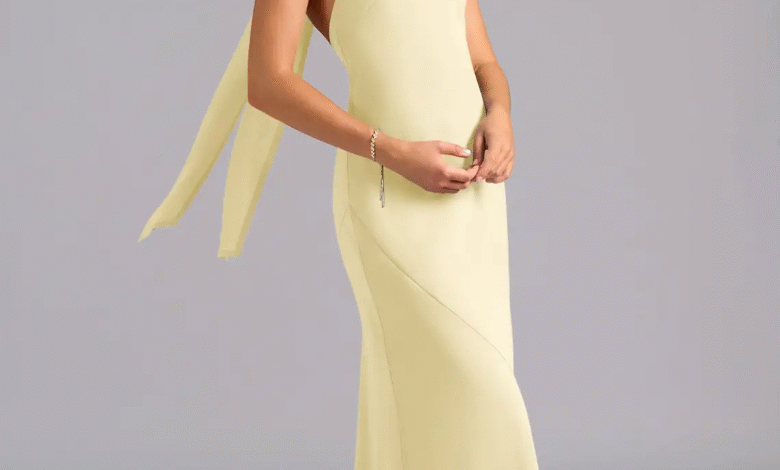
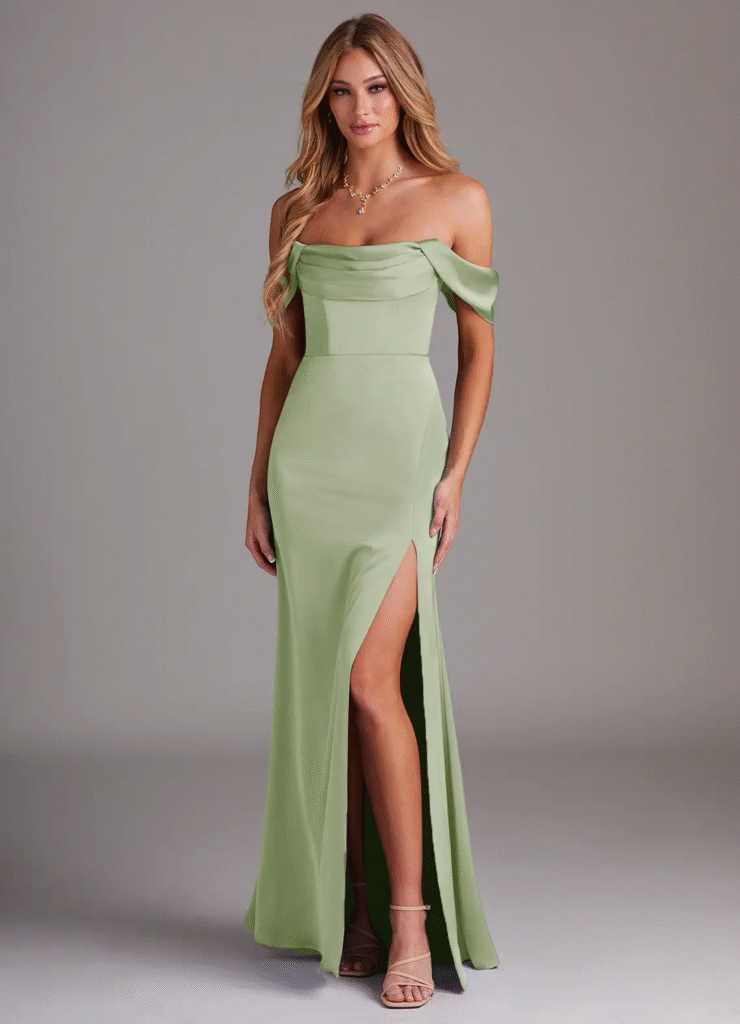
The easiest version of this look is same colour, different silhouettes. Every bridesmaid wears the same shade, but one chooses a one-shoulder neckline, another goes for a soft square neck, and a third picks something strapless or halter. The palette does the heavy lifting, so the variation in cut feels like styling rather than disorder.
A slightly more fashion-forward version is same fabric, varied necklines. Once chiffon, satin, velvet, or mesh becomes the connecting thread, silhouettes can vary more freely without the group looking scattered.
For brides who want an easier starting point, browsing a collection that already offers multiple silhouettes in coordinated shades can simplify the entire process — something like the Azazie bridesmaid dresses edit, where the palette and fabrics are designed to work together from the start.
Why Colour Coordination Matters More Than Exact Matching
If there’s one thing that separates intentional mismatched styling from something that feels thrown together, it’s colour direction.
A bridal party doesn’t need to wear the identical shade to look cohesive, but the colours do need to live in the same visual world. Dusty sage, olive, and pistachio belong to the same soft green family and layer beautifully together. Powder blue, dusty blue, and sky blue create a tonal effect that reads as deliberate rather than indecisive. Warm neutrals — champagne, almond, soft taupe — can feel quietly elegant when the wedding palette leans understated.
What tends to break the look is range without discipline. A cool pastel next to a deep jewel tone next to a muted earthy shade can feel disconnected, unless there’s a very deliberate styling concept tying them together. For most weddings, cohesion comes from staying within a colour family and allowing the shades to shift gently within it.
In other words, cohesion comes from colour direction, not duplication.
Mix Silhouettes, Not Visual Noise
Mixing silhouettes is where mismatched styling becomes genuinely interesting — but it’s also where it can go wrong.
Different necklines almost always work well together. One bridesmaid in a V-neck, one in a high neck, one in a one-shoulder, and one in a sweetheart creates variety that still feels considered. Those differences also let each person choose what flatters her most, which usually improves the final result more than strict uniformity ever could.
Where it’s worth being more cautious is stacking too many statement details at once. If one dress has dramatic ruffles, another has a bold corset bodice, another has a thigh-high slit, and another has oversized puff sleeves, the eye stops knowing where to land. The bridal party starts to feel loud rather than layered.
The strongest mismatched looks tend to keep the detailing relatively quiet. The variety comes from shape and fit — not from every dress competing for attention. The goal is variation in silhouette, not chaos in design.
Use Fabric and Length to Keep the Bridal Party Grounded
When silhouettes vary, fabric and length quietly become the most important decisions in the entire bridal party.
A group in floor-length chiffon can feel perfectly cohesive even if every bridesmaid wears a different neckline, because the fabric and the length are doing the unifying work. The same applies to a party in satin gowns, velvet dresses, or mid-length styles for a modern civil ceremony. Length sets the formality of the group, and fabric determines how the dresses catch light, move during the ceremony, and ultimately photograph.
Texture matters more than brides often realise. Matte chiffon reads soft and romantic. Stretch satin looks cleaner and more sculpted. Velvet brings depth and warmth. Mesh and burnout fabrics feel more fashion-led and contemporary. Staying within one fabric family — even when everything else varies — is one of the simplest ways to keep the look controlled.
Think About Photos, Not Just Individual Dresses
One of the most common mistakes in bridesmaid styling is evaluating dresses one at a time, rather than imagining how they’ll look together.
A dress can be beautiful on its own and still feel slightly off in the group if the proportions, fabric weight, or tone don’t balance with the others. Wedding photography tends to expose this quickly. Ceremony lineups, group portraits, bouquet shots, and candid walking images all reveal whether the bridal party feels composed or inconsistent.
This is why the strongest mismatched bridal parties are styled with the whole frame in mind. Will the necklines look balanced when the bridesmaids stand shoulder to shoulder? Does every fabric reflect light in a similar way? Is one dress noticeably more formal or more casual than the others? Is there enough variation to feel modern, but enough consistency to feel intentional?
A single dress can be gorgeous. A bridal party has to work as a composition.
The Best Mismatched Looks Still Feel Intentional
At its best, mismatched bridesmaid styling offers freedom within a framework. It allows individuality without chaos, variety without disorder, and personality without losing polish. It’s the kind of styling that feels current now but will still look elegant in wedding photos years from now — which is ultimately the test any bridesmaid look has to pass.
That’s why so many modern brides are drawn to this approach. It solves a real problem. Every bridesmaid gets to wear something that suits her, and the bridal party as a whole ends up looking more elevated, not less.
The secret isn’t making every dress different. The secret is making every difference feel deliberate — a shared colour family, a shared fabric, a shared sense of formality, carrying the group together even as the details vary.
For brides ready to put that into practice, the most straightforward starting point is usually a dedicated mix and match bridesmaid dresses collection that brings coordinated shades and varied silhouettes together in one place.