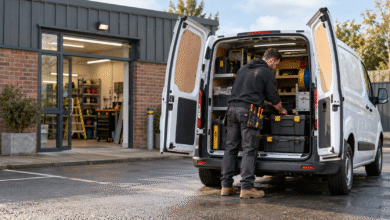
We are happy to call a phone smart, a speaker smart, even a doorbell smart. We almost never look down and wonder how the footpath, the plaza, or the car park under our feet got there. Yet the surface of a modern city is one of the most quietly automated products around. The interlocking blocks paving a town square were not laid by hand one at a time. They were pressed out by the thousand, by a machine running a tight, repeatable cycle that almost nobody ever sees.
If factory robots and automated production lines interest you, the machinery that mass-produces paving deserves a look. It runs on the same idea as any good automation: do one job, do it identically, and do it again without drifting. Here is how a humble paving block actually gets made, and why the boring consistency of the process is what holds a whole surface together.
How does a single block get made?
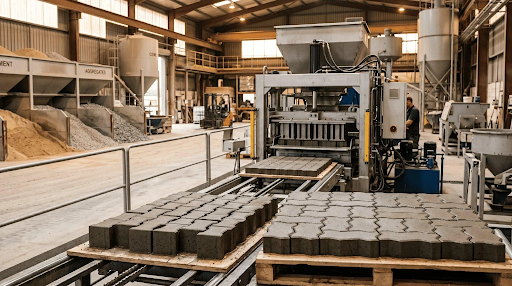
The recipe sounds simple, but the execution is not. A carefully measured mix of cement, aggregate, and water is dropped into a mould, then compacted under heavy pressure while a high-frequency vibration shakes the material so it settles with no trapped air. Air pockets are the enemy here, because they create weak spots that crack under load. The mould then lifts away, a neat row of finished blocks is left behind, and the cycle starts over.
A single paver block making machine can turn out thousands of units a day, each one close enough in size and strength to lock into its neighbour without a visible gap. That is harder than it sounds. The mix has to be right every time, the pressure has to stay constant, and the timing has to repeat exactly, or the blocks come out uneven and the whole batch is wasted.
Why does consistency matter so much?
Lay a path from blocks that vary even slightly and the surface ends up uneven. It trips people up, collects puddles, and looks shabby within a season. Produce those same blocks to a tight standard and a crew can resurface a plaza in days, lift a single section to reach a pipe or cable, and drop it back without anyone noticing the join. The value is not in any one block. It is in every block being the same as the last.
This is exactly the kind of problem machines are good at and people are not. A skilled worker can make a beautiful block. No worker can make ten thousand identical ones, day after day, without tiring or drifting. That gap is the reason this work moved to automated machinery in the first place.
Automation you can stand on
The same forces reshaping factories are quietly reshaping heavy materials too. Modern paving machines lean on automation to control the mix, the pressure, the vibration time, and the cycle length, taking the guesswork out of a job that once depended entirely on the feel of an experienced operator. Sensors watch the moisture in the mix, hydraulics hold the pressure steady, and the machine repeats its cycle around the clock with very little variation.
It is the unglamorous side of automation. No app, no glowing logo, no launch event, just a machine producing the literal groundwork for everything else. And the demands on it are growing. Cities now want permeable paving that lets stormwater drain away instead of flooding a junction, removable blocks that make a street easy to dig up and upgrade, and drainage and kerb units that send water exactly where it should go. Every one of those clever ideas still depends on machinery that makes each piece identical.
What makes one block better than another?
Not all paving is equal, and the difference comes down to the process more than the recipe. Strength depends on how completely the air is driven out during compaction, so a machine that holds steady pressure and vibration produces denser, tougher blocks than one that cuts the cycle short. Shape accuracy decides how tightly the blocks interlock, which in turn controls how well the finished surface sheds water and resists shifting under traffic. Even the finish on the face, the part you actually see, is set by the mould and the mix rather than any later polishing.
This is why two driveways that look similar on day one can age so differently. One was made from blocks pressed to a consistent standard, and one was not. The cost difference at the factory is small. The difference a few winters later is not, as loose, cracked, and uneven paving starts to show exactly where the corners were cut.
The boring backbone of a smarter city
It is easy to be impressed by the visible technology and to ignore the surface holding it all up. But a city that wants to be smarter, greener, and easier to maintain has to start from the ground, and the ground is a manufactured product. The machines that press those blocks are not exciting to watch, and in a way that is the whole point. They do a hard, repetitive job reliably so that everything else can be built on top of it.
So the next time you cross a perfectly even plaza or a neat brick driveway, look down for a second. Every block under your feet came off a machine that made thousands more exactly like it, and that quiet repeatability is the unsung reason the whole surface stays flat, drains properly, and lasts for years. The smartest thing about a smart city might just be the boring machine that builds its floor.