The FMCG industry is highly competitive. With several brands offering similar products, simply having a good product is not always enough to increase sales. Brands need to make their products visible, encourage retailers to stock them, and give customers a reason to choose them over competitors.
This is where FMCG promotion and Discount strategies become important. From discounts and retailer incentives to BTL activities and omnichannel campaigns, the right promotional approach can improve product visibility, increase sales, and encourage repeat purchases.
Here are 10 effective promotion strategies FMCG businesses can use to improve sales.
1. Offer Attractive Discounts
Discounts remain one of the most common ways to encourage customers to purchase FMCG products. Limited-time discounts, introductory offers, and quantity-based pricing can create a sense of value and encourage customers to buy more.
However, discounts should be planned carefully. Constantly reducing prices can affect profit margins and may also make customers wait for the next offer.
The goal should be to use discounts strategically during product launches, seasonal periods, clearance campaigns, or specific sales events.
2. Use Buy-One-Get-One and Bundle Offers
Buy-One-Get-One (BOGO) offers can encourage customers to purchase more products in a single transaction.
Similarly, product bundles can combine related products and offer them at an attractive price. For example, a personal care brand could bundle shampoo and conditioner, while a food brand could create a combination pack of snacks.
These offers can increase the average purchase value while helping businesses move multiple products together.
3. Run BTL Promotions
Below-the-Line (BTL) promotions focus on direct and targeted customer engagement rather than broad advertising.
FMCG brands can use BTL activities such as:
- Product sampling
- In-store demonstrations
- Retailer-level promotions
- Local events
- Promotional stalls
- Product displays
- Customer engagement activities
For example, a food or beverage company can offer free samples at supermarkets to encourage customers to try a new product.
BTL promotions can be particularly effective because customers get an opportunity to interact directly with the product before making a purchase.
4. Use Push vs Pull Strategies
FMCG companies often use a combination of push and pull strategies to improve product movement.
A push strategy focuses on encouraging distributors, wholesalers, and retailers to stock and promote a product. Retailer incentives, distributor schemes, trade discounts, and sales targets are common examples.
A pull strategy, on the other hand, focuses on creating demand among consumers. Advertising, social media campaigns, influencer marketing, product sampling, and consumer discounts can encourage customers to actively look for a particular brand.
Using both strategies together can create a stronger sales cycle. Retailers have the product available, while consumer demand encourages them to purchase it.
5. Build Strong Trade Promotions
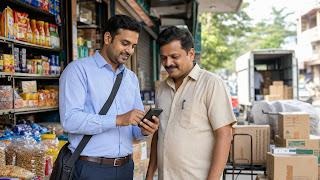
Retailers and distributors have a major influence on FMCG product availability and movement. Trade promotions are designed to encourage channel partners to stock, display, and sell more products.
Businesses can offer:
- Additional retailer margins
- Volume-based incentives
- Distributor schemes
- Target-based rewards
- Special trade discounts
- Display incentives
For example, a retailer achieving a particular monthly sales target could receive an additional incentive.
Trade promotions should be monitored carefully to ensure that incentives are generating additional product movement rather than simply reducing the company’s margins.
6. Create an Omnichannel Promotion Strategy
Customers today interact with brands across multiple channels. They may discover a product on social media, research it online, and then purchase it from a nearby store or e-commerce platform.
An omnichannel promotion strategy connects these different touchpoints.
An FMCG brand can promote the same product through:
- Retail stores
- E-commerce marketplaces
- Brand websites
- Social media
- Search advertising
- WhatsApp or messaging campaigns
- Digital promotions
For example, a brand can run a social media campaign promoting a product while simultaneously offering a special price through retail stores and online channels.
This creates a more consistent customer experience and gives consumers multiple ways to interact with the brand.
7. Target HORECA Customers
Not every FMCG product is sold directly to individual consumers. Hotels, restaurants, cafés, caterers, and other food-service businesses can represent an important sales channel.
The HORECA segment often requires a different promotional approach from traditional retail.
FMCG businesses can offer bulk pricing, special packages, volume-based discounts, free samples, and customized deals to HORECA customers.
For example, a beverage company can offer special pricing to restaurants that purchase products in large quantities.
By creating promotions specifically for HORECA businesses, brands can build recurring bulk orders and strengthen their presence in the food-service market.
8. Use Seasonal Promotions
Consumer demand changes during festivals, holidays, and different seasons. FMCG brands can take advantage of these periods by creating promotions that match customer needs.
Examples include:
- Festival offers
- Summer beverage promotions
- Winter product bundles
- Back-to-school offers
- Special occasion gift packs
- Limited-edition packaging
Seasonal promotions can create urgency and encourage customers to purchase during periods of higher demand.
9. Use In-Store Promotions and Product Displays
Product visibility can have a major influence on purchasing decisions. Even if a customer knows a brand, they may choose another product if it is more visible or easier to find.
FMCG companies can work with retailers to improve product placement through shelf displays, promotional stands, checkout-counter displays, posters, and branded spaces.
Combining in-store visibility with discounts or sampling can make the promotion even more effective.
10. Measure Promotion Performance
A promotion should not be considered successful simply because sales increased during the campaign. Businesses need to understand whether the additional sales justified the cost of the promotion.
FMCG companies can track metrics such as:
- Sales volume
- Product movement
- Retailer orders
- Customer response
- Territory-wise sales
- Promotion costs
- Repeat purchases
- Return on investment
Sales Force Automation (SFA) software can help businesses collect field sales data, monitor orders, track retailer visits, and compare sales performance across territories.
This data can help businesses identify which promotions are working and where improvements are needed.
Conclusion
FMCG promotion is not simply about offering discounts. A successful promotion strategy combines consumer engagement, retailer support, distribution, digital marketing, and data-driven decision-making.
BTL activities can create direct customer engagement, while push and pull strategies can strengthen both channel and consumer demand. Omnichannel campaigns can connect online and offline customer journeys, while HORECA promotions can help brands reach high-volume business customers.
By combining these approaches and measuring their results, FMCG businesses can improve product visibility, increase sales, strengthen retailer relationships, and build sustainable growth.