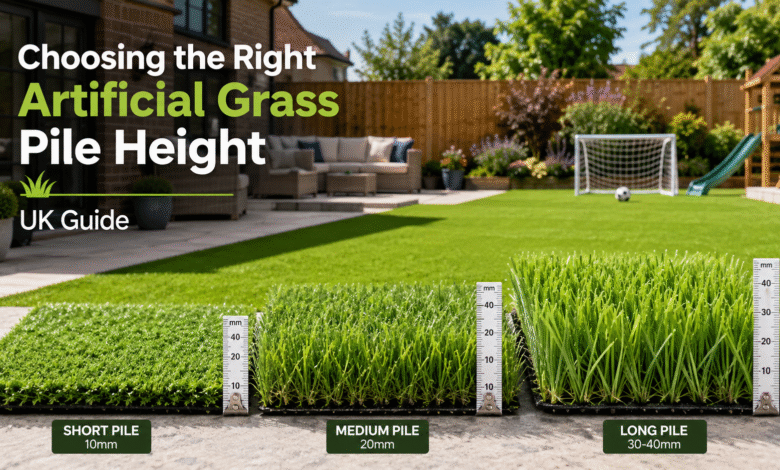
Artificial grass pile height affects how a lawn looks, feels, and performs. A taller product may seem soft and luxurious, but it may not suit a busy family garden. A shorter pile can be easier to maintain and more resistant to flattening, although it may feel firmer underfoot.
For UK homeowners, the best option depends on foot traffic, maintenance expectations, pets, children, furniture, drainage, and weather exposure. This guide explains how to choose the right artificial grass pile height in the UK without relying on appearance alone.
What Is Artificial Grass Pile Height?
Pile height is the length of the artificial grass fibres, measured from the backing to the tip of the blades. It is normally shown in millimetres.
A 20mm turf has shorter fibres and a closely cut appearance. A 35mm product looks fuller and feels softer. Grass above 40mm creates a deeper finish but usually needs more brushing.
Pile height is different from pile density. Density refers to how closely the fibres are stitched together. A dense 30mm product may look fuller and recover better than a sparse 40mm turf.
Quality also depends on fibre shape, yarn thickness, stitch rate, backing strength, UV resistance, and drainage. Height should never be judged on its own.
Begin with the Purpose of the Area
The easiest way to choose a pile height is to start with how the space will be used.
A decorative front garden has different needs from a back garden used daily by children, pets, and guests. A busy lawn usually benefits from a short or medium pile because the fibres are less likely to remain flattened. A quiet area can support longer grass where softness and appearance matter more.
Before ordering, consider who will use the lawn, how often people will cross it, whether furniture will stay in one position, and how much brushing you are prepared to do.
Short Pile Artificial Grass: 10mm to 25mm
Short pile artificial grass creates a tidy, practical surface. It is often chosen where durability, easy cleaning, and stability matter more than a deep lawn appearance.
It can suit balconies, walkways, putting greens, sports practice areas, commercial displays, and other high-use spaces.
Short fibres resist flattening well and collect less debris, although very short grass can feel firm over concrete.
Medium Pile Artificial Grass: 25mm to 35mm
Medium pile artificial grass is one of the most versatile choices for UK homes. It offers a useful balance between natural appearance, comfort, durability, and manageable maintenance.
It works well in family gardens, pet areas, children’s spaces, front lawns, and general residential landscaping.
A pile height around 30mm to 35mm can resemble a well-kept natural lawn without becoming difficult to maintain. The fibres are long enough to provide cushioning but structured enough to handle regular use.
Long Pile Artificial Grass: 35mm to 50mm
Long pile artificial grass is designed for a fuller, softer, and more luxurious look. It can be effective in decorative gardens, relaxation areas, and low-traffic spaces.
Longer fibres can flatten under furniture or repeated walking and may trap more debris. Regular brushing and suitable sand infill can help support the pile.
Best Pile Height for Family Gardens
Most family gardens need a surface that can handle everyday movement without losing its appearance.
A medium pile between about 28mm and 35mm is often suitable. It provides enough softness for sitting and casual play while remaining easier to manage than very long grass.
If children regularly play football or run across the same route, resilience should come before luxury. Garden toys, paddling pools, and furniture can also flatten the pile, so temporary items should be moved occasionally.
Best Pile Height for Dogs and Pets
Pet owners should consider drainage and cleaning as well as comfort.
When choosing dog-friendly grass, a medium pile between 25mm and 35mm is usually practical. It gives pets a comfortable surface while making waste removal and rinsing easier than with longer grass.
Very long fibres can hold debris and make cleaning slower. The backing and sub-base are also important. Efficient drainage helps urine and cleaning water move away rather than remaining beneath the surface.
Best Pile Height for Children’s Play Areas
For children’s play areas, pile height alone does not determine safety.
A medium pile can provide a softer feel, but proper cushioning depends on the base and any shock-absorbing underlay. Artificial grass should not replace certified playground surfacing where fall protection is required.
For an ordinary home play area, a durable medium pile often offers a good balance between comfort and resilience.
Best Pile Height for Balconies and Roof Terraces
Balconies and roof terraces are exposed to wind, rain, dirt, and direct sunlight. They also tend to have hard flooring and limited drainage routes.
Short to medium pile artificial grass is usually the most practical. It is easier to secure, collects less debris, and is simpler to clean in a confined space.
Check the combined height of the grass, underlay, and drainage layer so doors remain clear.
Match Pile Height to Foot Traffic
Foot traffic is one of the strongest indicators of which pile height will perform well.
Busy routes between the house, gate, patio, and shed receive repeated pressure. Long fibres may flatten along these paths and create visible worn sections.
A short or medium pile is generally more suitable for frequently used areas. If everyone follows one narrow route, adding stepping stones or paving can protect the lawn. Longer grass is better reserved for quieter sections.
Consider Maintenance in UK Weather
Artificial grass is lower maintenance than natural turf, but it is not maintenance-free.
UK gardens commonly collect wet leaves, soil, moss, and windblown debris. Longer fibres give these materials more space to settle.
Short turf may need only occasional brushing. Medium turf benefits from regular grooming in busy areas. Long pile grass may require brushing every one or two weeks to keep it upright.
Brush against the grain with a stiff, non-metallic brush and remove leaves before they break down.
Taller Grass Does Not Always Mean Better Quality
One of the most common mistakes is assuming that taller artificial grass must be better.
A well-made 30mm product may outperform a weak 40mm option because it has denser stitching, stronger fibres, better recovery, and more durable backing.
When comparing turf, check pile density, fibre shape, stitch rate, backing strength, UV stability, drainage performance, recommended use, and warranty.
The best artificial grass pile height is the one supported by suitable construction for the intended space.
Check Pile Direction Before Fitting
Artificial grass fibres lean in one direction. This affects colour, shading, and how full the lawn appears.
The pile is normally positioned towards the main viewing point, often the house or patio. If several pieces are joined, every section must run in the same direction.
Changes in pile direction are especially visible with longer grass. Plan the roll layout before cutting to avoid mismatched joins.
Test Samples Outdoors
Samples should be tested in realistic conditions rather than judged indoors.
When comparing products from artificial grass suppliers in Southampton, request different pile heights and test each sample in the area where the turf will be installed.
Place them in sunlight and shade. View them from the house, walk on them, brush the fibres, and compare how quickly they recover.
Do not only choose the softest product. Consider whether the colour suits the property, whether the surface feels stable, and how natural it looks from several metres away.
Final Thoughts
Choosing the right artificial grass pile height in the UK starts with function rather than appearance.
Short pile turf is practical for high-traffic and compact spaces. Medium pile turf is a balanced choice for most family gardens, pets, and everyday use. Long pile turf creates a soft, luxurious finish but needs more care and suits quieter areas.
Compare pile height with density, backing quality, drainage, fibre recovery, and maintenance needs. By testing samples and matching the turf to how the space will actually be used, you can choose an artificial lawn that continues to look good and perform well over time.