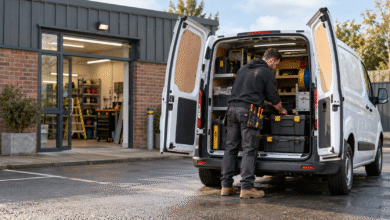
The honest answer to what a handyman costs in Toronto is “it depends on the job, the wall, and the building” — but that is not useful to anyone trying to budget a repair. This guide gives the actual numbers: hourly rates, minimum-call fees, typical prices for the most common jobs, and the specific factors that push a quote up or down. The figures reflect what established Toronto providers are genuinely charging in 2026, not a national average that ignores how much the local market differs from the rest of the country.
Toronto sits at the upper end of the Canadian handyman-pricing range — meaningfully above Hamilton, Oshawa, or Brampton, comparable to Vaughan, and driven by higher insurance costs, downtown parking and access friction, and a housing stock that ranges from pre-war plaster to concrete condos requiring specialized anchors. Understanding where a quote should land makes it much easier to tell a fair price from an inflated one. Marketplaces like FixitTask show current pricing from local providers side by side, which is the fastest way to sanity-check any single quote against the wider market.
Hourly rates and minimum-call fees
Most established Toronto handymen charge between $90 and $140 per hour in 2026. Solo operators working on referrals in a tight geographic area land at the lower end; small teams with full insurance, marked vehicles, and formal booking processes land at the upper end. Neither is automatically better — the right choice depends on the job.
Minimum-call fees are nearly universal. A one-hour minimum is common for solo providers; a two-hour minimum is standard for established businesses. Downtown condo work sometimes carries a higher minimum to account for parking, elevator booking, and building access time, which can add 30 to 45 minutes to a visit before any actual work starts.
Half-day and full-day rates
The most cost-efficient way to handle multiple small jobs is booking a block rather than individual calls. In Toronto in 2026:
- Half-day visit (about 4 hours): $350 to $600
- Full-day visit (about 8 hours): $700 to $1,200
These blocks are almost always cheaper per task than booking the same items separately, because the travel and setup time amortizes across the whole visit. A homeowner with six small jobs pays substantially less booking them as one half-day than as six separate calls, each carrying its own minimum-call fee.
Typical prices for common Toronto handyman jobs
The ranges below reflect typical 2026 completed-job pricing, including labour but not always materials. Wall type and access conditions cause the variation within each range.
- TV mounting (drywall, up to 65″): $110 – $190
- TV mounting (concrete condo wall): $160 – $280
- Furniture assembly (per item): $50 – $130
- Light fixture swap (existing wiring): $90 – $170
- Ceiling fan install (existing box): $180 – $300
- Faucet replacement (bathroom): $140 – $250
- Toilet replacement (parts separate): $220 – $400
- Drywall patch (small, under 1 sq ft): $100 – $180
- Drywall patch (medium, 1–4 sq ft): $190 – $350
- Interior door repair or realignment: $90 – $200
- Floating shelf install (per shelf): $80 – $200
- Mirror hanging (heavy): $80 – $200
- Caulking (single tub or shower): $90 – $180
- Smart lock or thermostat install: $120 – $250
What drives a quote up or down
Five factors explain most of the price variation between quotes for the same job in Toronto:
Wall type. Concrete condo walls need a hammer drill and specialized anchors; plaster in pre-1940 homes needs different technique than drywall. Both add time and cost over a standard drywall job.
Access and parking. A condo job requiring elevator booking, a certificate of insurance on file, and paid parking takes meaningfully longer than a house with a driveway. Downtown access friction is a real cost component.
Materials. Some providers include common supplies in the quote; others bill them separately. Always clarify which before comparing two numbers.
Home age and condition. A faucet swap in a five-year-old condo is a different job than the same swap in a 1920s home with corroded shut-off valves that may fail when turned.
Insurance and overhead. Fully insured operators with proper equipment and warranty commitments cost more per hour, but the trade-off is recourse if something goes wrong.
How to tell a fair quote from an inflated one
Three quotes for the same Toronto job usually fall within 20 to 30 percent of each other once you normalize for what is included. The middle quote is most often the right answer. A quote dramatically below the others usually means the provider has missed something — most often the wall type or the access conditions — and the gap tends to reappear during the job. A quote dramatically above usually means a contractor pricing themselves for a handyman task. Comparing several providers through a single channel like FixitTask makes this normalization much faster than requesting quotes one at a time.
Ways to reduce what you spend
The single biggest saving available to Toronto homeowners is batching. Because every visit carries a minimum-call fee and setup time, grouping small jobs into one half-day visit rather than calling separately for each one can cut the effective per-task cost by a third or more. Keep a running list of small repairs, and book one visit twice a year — late spring and early autumn — to clear the whole list. The second saving is clarity: a written scope before the job starts prevents the disputes and change-order costs that inflate the final bill.
The short version
A Toronto handyman costs $90 to $140 an hour in 2026, with most small jobs landing between $100 and $400 depending on wall type and access. Half-day visits run $350 to $600 and are the most cost-efficient way to handle a list of small repairs. The best way to confirm any single quote is fair is to compare it against a few local providers — through a marketplace like FixitTask or by requesting quotes directly — and to normalize for what each one actually includes before deciding. Batching small jobs into scheduled visits, rather than calling separately each time something breaks, is the single most effective way to keep the annual cost down.