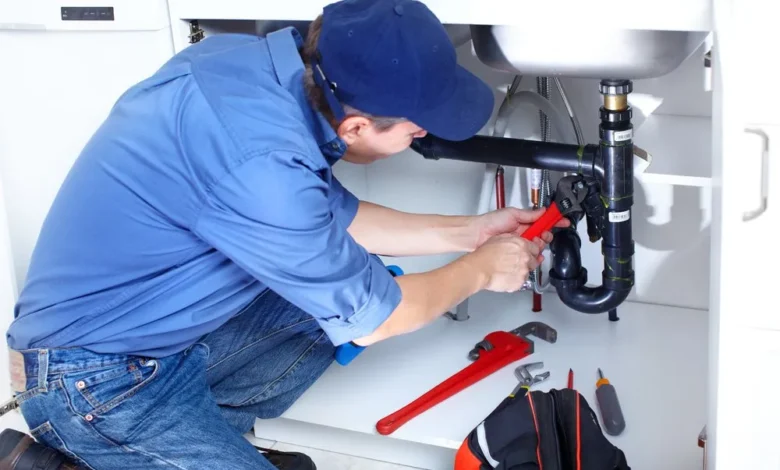
Somebody’s water heater gives out on a Saturday night in January and their first instinct is to Google “emergency plumber near me” while standing in a puddle. That’s how most people find out they don’t have a plumber. Queens Plumber, at 53-05 108th St, Corona, NY 11368 — (929) 481-3200 — would rather you had their number saved before you needed it. As a Plumber in Queens who does drain cleaning, water heater repair and installation, sewer line repair, and general residential plumbing, they get emergency calls at all hours. A lot of those emergencies didn’t have to be emergencies.
Real Emergencies Versus Stuff That Feels Urgent at Midnight
A pipe burst is a pipe burst. Water shooting out of a supply line will wreck a room fast — we’re talking damaged floors, soaked drywall, ruined furniture, and if it reaches anything electrical, you’ve got a safety issue too. First thing you do is find the main shut-off valve and close it. Do that before you call anyone.
Where is your main shut-off? If you’re in one of the older homes around Astoria or Jackson Heights, check the basement wall facing the street. Usually it’s within a few feet of where the water service enters the building. Newer builds in Flushing sometimes have it in a first-floor utility closet. The point is, figure this out now, on a calm Tuesday afternoon, not while water’s spraying everywhere.
Sewer backups are the other one that can’t wait. Raw sewage coming up through the basement floor drain or bubbling into a first-floor bathtub is a health problem, not just a plumbing problem. Turn off every water source in the house. No flushing, nothing. Call a plumber.
Then there’s a water heater with a cracked tank actively dumping water onto the floor. Shut off the cold water feed going into the top of the unit and kill the gas or electricity to it. That’s an emergency. A small drip from the pressure relief valve is not — that can sit until morning.
Now here’s what doesn’t need a midnight plumber. A slow drain. Annoying? Absolutely. Urgent? No. A toilet that keeps running after you flush — the flapper inside the tank is probably shot. You can reach in and push it down manually to stop the flow until someone can replace it. Low water pressure that’s been gradually getting worse for months in a Woodside home with old galvanized lines isn’t going to get dramatically worse between now and 8 AM. And a dripping kitchen faucet is a dripping kitchen faucet. Stick a cup under it and deal with it tomorrow.
Most People Don’t Know Where Their Shut-Off Valve Is
This deserves its own section because Queens Plumber says it’s the single most common problem during an emergency call. The homeowner is panicking, water is going everywhere, and they have no idea how to stop it. Or they know where the valve is but it hasn’t been turned in twenty years and it’s completely frozen in place.
Older Queens homes typically have gate valves — the kind with a round wheel handle. Those seize up if nobody operates them for long stretches. And if you try to muscle a seized gate valve, the stem can snap inside the body. Now you can’t shut off the water at all and you’ve created a second problem on top of whatever the first one was.
Queens Plumber has replaced seized main shut-offs for homeowners all over the borough with quarter-turn ball valves. The ball valve design is simpler. One lever, ninety degrees, water stops. They don’t seize the way gate valves do. Getting that swap done as a planned service call costs maybe a couple hundred bucks. Trying to deal with it during a burst pipe on a holiday weekend costs a lot more, in every sense.
The little shut-off valves under each sink and behind each toilet have the same problem on a smaller scale. The rubber washers inside dry out and harden when the valve sits in one position for years. Try turning one off during a leak and it either won’t close or starts leaking from the handle. Quick fix — every few months, turn each one off and back on. Takes maybe thirty seconds per valve. Keeps the rubber from drying out.
Cold Weather and Frozen Pipes
Queens isn’t Minnesota, but January and February get cold enough that pipes freeze. Especially supply lines routed through exterior walls, crawl spaces, or unheated sections of basements. Homes in Rego Park and Forest Hills with older layouts tend to have more exposure because the original builders didn’t insulate pipe runs the way current code requires.
A frozen pipe is nerve-racking because you don’t know right away if it cracked or not. Sometimes the ice expands and splits the copper or pushes a solder joint apart. Sometimes it thaws out fine and you got lucky. You won’t know which one until it thaws. If you suspect a frozen pipe, open the faucet it feeds so pressure can release if the pipe is intact, and call Queens Plumber to come assess it. Trying to thaw a pipe with a torch or a space heater pointed at the wall is how house fires start during cold snaps.
Water heaters take a hit in winter too. The water coming into the tank from the city main drops from maybe 65 degrees in summer to 40 degrees in winter. The heater has to work that much harder to bring it up to temperature. An older unit that was keeping up fine in September starts struggling by December — longer recovery times, lukewarm showers, the tank running almost constantly. If the unit is getting old, heading into winter is the time to have Queens Plumber evaluate whether a water heater repair makes sense or if it’s time for a new installation.
Grease, Drains, and the Emergency That Builds Slowly
Emergency drain backups almost always have a long backstory. Kitchen drains especially. Every time someone rinses a greasy pan, a little bit of that grease solidifies inside the pipe once it cools down. Multiply that by a few hundred times over a year or two and the drain line is half closed. Then somebody runs the dishwasher and does a load of dishes at the same time, and the kitchen floods.
Queens Plumber does drain cleaning as a regular service, not just emergency calls. Getting a kitchen drain line snaked or jetted once a year keeps grease from accumulating to the point of causing a backup. Most people never think to schedule something like that. They wait for the flood.
Basement floor drains in older homes around Ridgewood and Bayside are connected to the sewer lateral, and during heavy rainstorms they can back up if the lateral has any root intrusion or partial collapse going on. Sewage backup during a storm is about as bad as it sounds. Queens Plumber can camera the sewer line and clear it before storm season, which is the kind of maintenance that only sounds excessive until you’ve experienced the alternative.
Save the Number Before You Need It
Looking for a plumber while your basement is filling up with water is a bad position to be in. Queens Plumber works out of Corona, covers every neighborhood in the borough, and picks up the phone.
Queens Plumber
53-05 108th St, Corona, NY 11368
(929) 481-3200