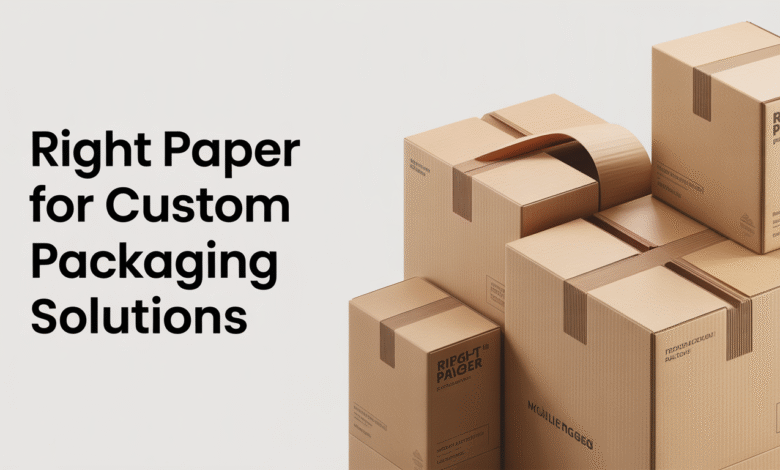
Paper is a core consideration for any packaging solution. While many businesses spend their budget on glossy packaging, they overlook the role that the paper itself plays. Specialist stocks, procurement strategies and manufacturing methods all have an impact on the final product – whether it’s strength, printability or environmental credentials. By choosing paper as a strategic component of packaging, forward thinking businesses like The Paper Cups are turning a basic expense into an enduring brand asset – and making a lasting impression on their customers.
Why Paper Selection Matters More Than You Think
So often packaging problems arise from the wrong paper being selected for a package rather than from flawed package design or manufacture. A package beautifully designed and produced on thin performing paper collapses during distribution. A high-end food packaging box without grease resistance performs poorly and becomes unsuitable for its contents within hours.
The paper used for packaging has significant effects on the production process, transportation, sales, storage, display, unboxing, usage, throwaway disposal, recycling, and environment. These factors are taken into consideration during production. Therefore, printed products with differing qualities and capabilities are achieved depending on the paper’s weight and coating. During transport on a truck, the printed paper product’s thickness is a factor in its resistance to pressure and possible exposure to moisture. As customers experience a product, the texture and finish of it gives an immediate impression of quality before the packaging is even opened.
Understanding Paper Weight and Its Implications
When it comes to packaging, the most important specification of paper weight is expressed in grams per square meter (GSM). Increasing the GSM means increasing the weight and thickness of the paper and making it more robust. Decreasing the GSM will make the paper lighter and more flexible for alternative uses.
Common weight categories:
- Lightweight Flexo (60-90 GSM): Ideal for tissue, additional inner pockets, brochures/guides and any promotional inserts
- Medium weight (90–150 GSM): Ideally suited for retail packaging, folding cartons and general purpose labels
- Heavy weight (150–300 GSM): Primarily used for making premium boxes and luxury bags, also great as rigid packaging components
- Board weight (300+ GSM): Suitable for heavy-duty packaging and display products and applications where maximum rigidity is required
Selecting the correct weight for product packaging is often difficult, and requires an understanding of the product, the product’s shipping environment, and the quality image your brand is trying to project. We work with our customers to determine the correct weight for packaging their products to ensure that the product is adequately protected and that the brand image is not compromised by an underweight package, while at the same time avoiding unnecessary packaging weight by not over weighting the package.
Paper Coatings and Surface Treatments
Raw uncoated papers offer a unique texture and superb absorbency; however most customers opt for a coating to enhance printability, moisture resistance, and appearance.
Uncoated paper works best when you need:
- Natural matte appearance communicating authenticity and eco-consciousness
- Excellent absorbency for letterpress and some digital prints
- Vibrant haptic perception by means of visible texture and authentic feel
- Biodegradable and recyclable properties without additional processing concerns
Coated paper options include glossy coating which enhances the colours and makes photographs and graphics look more vivid, matte finish which gives a sophisticated non-reflective appearance ideal for high-end applications, and silk coating which produces highly visible print and a gloss sheen that photographs well. Specialty coatings add further functional properties including grease-resistant coatings that prevent oil migration from food products, moisture barriers that shield work pieces during shipping and storage, and food-grade coatings developed for use in various environments providing dependable shielding in multiple settings.
Paper Types and Their Distinctive Properties
Different manufacturing processes are used to produce paper and as a result different types and qualities of paper are created. Knowing the properties of the different types of printing paper will ensure you select the correct type of paper for your packaging needs and avoid selecting an inappropriate material.
Kraft Paper
Brown kraft paper is made using a chemical pulping process which preserves the long wood fibers and gives it ultimate tensile and tear strength. Being a natural brown kraft it conveys a sincere eco message, whilst being able to accept printing, having functional point of sale applications and having all round general use, even when hot. Perfect for food service use as plates, shopping bags, wrapping paper, mail bag or shipping envelopes and all retail applications.
Recycled Paper
Our products contain post-consumer waste products to help reduce the use of “new” raw materials. With modern recycled paper products now having a print quality on par with virgin papers, you can feel good about the environmental credentials of your products — and share them with your customers truthfully.
Specialty Papers
- Cotton papers offer stability, water durability and an upmarket texture and feel
- Bamboo papers come from extremely rapidly renewable resources, and have a very low water and air pollution footprint
- Seed papers that contain the seeds of plants and flowers are a unique way to create an interactive packaging experience where customers can plant and nurture the seeds after use of the product
Matching Paper to Packaging Structure
Packaging structures put different demands on paper properties. It is important to consider how the paper will be processed before selecting appropriate specifications.
Folding cartons require paper that scores cleanly without cracking, folds precisely without fiber separation, and maintains structural integrity through repeated opening and closing. Custom paper tubes are a specialty stock that have unique characteristics before they are delivered. They are formed by winding multiple layers of paper together into a cylindrical shape. It is critical that the thickness of the wound paper tube is consistent throughout the package. The tensile strength must also be suitable for the amount of tension that is placed on the material during the winding process. Furthermore, the un-wrapped sheets must have the appropriate printability and adhesive properties for bonding multiple layers together. The finished tubes have incredible crush strength and barrier properties against moisture and make an excellent package for cosmetic, health supplement, spirits and specialty food products.
Bags and pouches require flexible paper that:
- Resists tearing during handling
- Maintains sufficient stiffness to hold shape when filled
- Performs well in stress concentration areas such as bottom gussets and side seals
Environmental Considerations in Paper Selection
From being an optional preference, sustainable paper has transformed into a standard requirement for many companies. Sustainable paper options are now considered key business criteria as consumers and authorities as well as retail partners consult on packaging materials. Sustainable print communicates environmental values through the material of the packaging itself.
Key environmental certifications to prioritize:
- FSC certification: Responsible forestry management and chain of custody
- PEFC certification: Alternative certification for sustainably sourced fiber
- Recycled content percentages: Verified through third-party testing and documentation
- Compostability certifications: Confirms packaging meets industrial or home composting standards
- Chlorine-free bleaching: Prevents toxic byproduct generation during manufacturing
Recyclability includes not only the use of suitable base paper but also other coatings, adhesives and any additional processing aids used to finish the packaging. Single-material paper-based packaging with water-based coatings can be the option that integrates most smoothly into current recycling structures.
Printing Compatibility and Brand Presentation
Paper with the surface characteristics that suit best the job requirements will produce the best printed result in terms of colour accuracy and finish suitability. Failure to select the most appropriate custom wax papers in terms of specifications to the printing process will result in poor outcomes regardless of the design excellence.
Printing method considerations:
- Offset lithography: Offers the finest detail and most colour accuracy on coated paper surfaces
- Digital printing: Suitable for a wider range of paper types and weights, however best results are generally achieved using specialist paper designed for toner or inkjet printing systems
- Letterpress: Produces beautifully impressed results on uncoated or lightly textured papers
Finishing techniques to consider include foil stamping which requires papers with enough caliper and sufficient internal bond strength, embossing and debossing which need papers resilient to pressure and heat that cannot crack or split, and spot UV which is best suited for use on papers with even texture and a very smooth surface. For elaborate finishing, selected papers must display good printability while providing the necessary properties for luxury finishing.