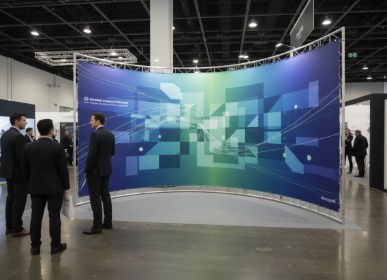
Display systems are often judged by how precise they appear when first assembled. Straight lines. Tight joins. Perfect alignment. At that moment, rigidity is mistaken for quality.
Over time, the situation changes.
As exhibition systems are used repeatedly, their long-term performance depends less on their past precision and more on their ability to adapt. Displays that tolerate movement, variation, and handling tend to remain visually stable. Those that rely on precision begin to feel increasingly fragile.
This difference explains why systems designed with flexibility at their core often age more gracefully than those built for stiffness alone.
Precision Looks Impressive Until It Meets Repetition
Precision performs well in controlled conditions.
It assumes level floors, calm assembly, careful transport, and consistent installers. When those assumptions hold, rigid systems appear flawless.
Exhibitions rarely provide that environment.
Once repetition is involved – dismantling, packing, carrying, and reassembling – precision becomes vulnerable. Small deviations accumulate. Components no longer meet exactly as before. What once aligned perfectly begins to resist.
The system has not weakened. The environment has changed.
What Flexibility Means in Display Design
Flexibility does not mean looseness.
It means controlled movement.
Flexible stretch fabric display systems are engineered to allow components to shift slightly under load and then return to position. They accept micro-variation without transferring stress to visible surfaces.
This principle mirrors structural engineering in other fields. Buildings flex under wind. Bridges move under weight. Structures that resist movement entirely often suffer damage faster.
Display systems behave the same way — only on a smaller scale.
How Rigid Systems Accumulate Visual Stress
Rigid display structures transfer stress rather than absorb it.
When pressure is applied — during packing, lifting, or uneven assembly — that stress concentrates at joints, corners, and edges.
Over time, these areas begin to show subtle changes:
- connectors tighten unevenly
- panels resist seating fully
- alignment becomes sensitive
The result is not sudden damage, but progressive visual instability.
The display still functions, but it no longer feels settled.
Flexible Structures Distribute Load Differently
Flexible display systems spread force across multiple points.
Rather than forcing components to remain fixed, they allow slight adjustment as stress occurs. That stress dissipates instead of concentrating.
This behaviour protects the surface appearance.
Graphics remain smooth. Frames remain cooperative. Assembly feels familiar rather than increasingly resistant.
The system adapts instead of fighting.
Why ageing is about behaviour, Not Materials
Many displays age poorly despite high-quality materials.
This happens because ageing is behavioural, not chemical.
It reflects how often the system is handled, how much variation it encounters, and how it responds to that variation.
A flexible system accepts differences without visible consequence.
A rigid system records differences.
Over time, those records become noticeable.
Assembly Experience Reveals Design Philosophy
Assembly behaviour reveals whether flexibility was designed intentionally.
Flexible systems:
- align themselves intuitively
- tolerate slight sequencing differences
- allow final adjustment without strain
Rigid systems:
- require exact order
- resist correction
- amplify small errors
After repeated use, teams develop preferences.
Systems that feel cooperative remain in circulation. Systems that feel demanding are avoided — even if they still look acceptable.
This behavioural memory matters more than specifications.
Visual Grace Comes From Predictability
Displays that age well do not necessarily remain perfect.
They remain predictable.
A predictable system behaves the same way each time it is assembled. Teams know what to expect. Visual outcomes feel consistent.
Rigid systems often lose predictability before they lose function.
Flexible systems preserve it longer.
That predictability creates confidence — and confidence shapes continued use.
How Flexibility Protects Graphic Surfaces
Graphic appearance depends on the underlying behaviour.
When frames flex slightly under tension, surfaces remain smooth. When frames resist movement entirely, tension redistributes unevenly.
Uneven tension alters the behaviour of light. Surfaces reflect differently. Graphics appear inconsistent even when print quality is unchanged.
Flexible systems regulate tension continuously rather than locking it into fixed points.
This regulation is why fabric-based systems often appear visually calm long after installation cycles increase.
Controlled Flex Versus Structural Drift
Flexibility must be controlled.
Uncontrolled movement leads to drift — gradual misalignment that cannot be corrected.
Well-designed systems allow movement within limits. Components settle back into neutral positions once load is removed.
This distinction separates graceful aging from degradation.
Graceful systems move and recover.
Poor systems move and remain altered.
Behaviour Comparison Over Time
| Design Approach | Long-Term Visual Behaviour |
| High rigidity | Accumulates visible stress |
| Controlled flexibility | Maintains surface consistency |
| Fixed joints | Amplify minor misalignment |
| Adaptive connections | Absorb variation |
| Precision dependence | Declines with repetition |
These behaviours emerge gradually, not immediately.
Why Frequent Exhibitors Notice This First
Exhibitors who use displays once or twice per year may never encounter these differences.
Frequent exhibitors notice them quickly.
As usage increases, small inconveniences become patterns. What once felt insignificant becomes routine friction.
Systems that age gracefully feel easier over time. Systems that age poorly feel heavier — mentally as well as physically.
This is often when replacements occur, even without obvious damage.
Storage and Transport Influence Aging Speed
Storage is rarely gentle.
Displays are stacked, shifted, and compressed. Vehicles introduce vibration. Temperature changes cause minor expansion and contraction.
Flexible systems accommodate these changes naturally.
Rigid systems accumulate them.
This is why some displays look older after a year than others do after several seasons.
Exhibition displays represent brand stability
When a display looks consistent across events, the brand appears organised and reliable. That consistency also extends to supporting printed materials, from good quality business cards and flyers to large-format posters, helping every part of your exhibition stand reinforce the same professional image.
When appearance fluctuates subtly, perception weakens even if the message remains clear.
Graceful ageing preserves confidence without drawing attention to itself. It ensures both your display system and printed marketing materials continue to reflect the quality of your brand, event after event.
That quiet stability is one of the most undervalued traits in exhibition systems.
Design Direction Is Moving Toward Tolerance
Modern display design increasingly prioritises tolerance over tightness.
Designers now ask:
- how will this behave after 20 uses?
- where will stress accumulate?
- how will users interact under pressure?
These questions lead naturally toward flexible structures.
Not because they are simpler — but because they are more honest about real conditions.
Final Perspective
Display systems age gracefully when they are allowed to move.
Flexibility does not weaken structure. It protects it.
Systems designed to adapt to handling, transport, and repetition maintain visual calm long after rigid alternatives begin to feel strained.
In environments defined by change rather than control, flexibility becomes a form of durability.
This understanding is why experienced exhibitors increasingly favour systems built around tolerance — often with guidance from UK specialists such as I YOU PRINT, who recognise that longevity is shaped less by how displays look on day one and more by how they behave over time.