Sports That Help Chaildren Grow Taller: A Parent’s Guide to Boosting Height Naturally


A child shooting up two inches over summer can make every parent suddenly notice shoes, sleep, snacks, and sports differently. Then comes the familiar thought: maybe basketball, swimming, or volleyball can help with height.
The honest answer sits in the middle. Sports don’t rewrite DNA. Genetics accounts for roughly 60–80% of height, while nutrition, sleep, physical activity, and health shape the remaining growth potential. That smaller percentage still matters, especially during childhood and puberty, when bones, hormones, posture, and habits are changing fast.
For families in the United States, sports offer something practical. They pull children away from screens, strengthen bones, improve posture, and build routines that support natural height growth over time.
How Height Growth Works in Children
Children grow taller when long bones lengthen at soft cartilage zones near the ends of bones, called growth plates or epiphyseal plates. These growth plates stay active through childhood and gradually close after puberty.
The pituitary gland releases Human Growth Hormone, often called HGH, which helps regulate growth velocity, bone development, and muscle repair. During puberty, hormone changes speed up skeletal maturation, creating the growth spurt many parents notice almost overnight, although it rarely feels that neat in real life.
The Centers for Disease Control and Prevention tracks child height development through CDC growth chart percentiles. A child in the 50th height percentile is taller than about 50 out of 100 children of the same age and sex. Percentiles don’t rank health by themselves, but a sudden drop across percentile lines deserves attention.
What affects children’s height most often includes:
- Genetics from both parents
- Protein, calcium, vitamin D, and total calories
- Sleep quality and regular bedtimes
- Physical activity and bone-loading movement
- Chronic illness, hormone imbalance, or delayed puberty
Exercise supports growth. It doesn’t replace genetics. That distinction saves parents from chasing every “grow taller fast” claim online.
Why Sports Can Support Height Growth
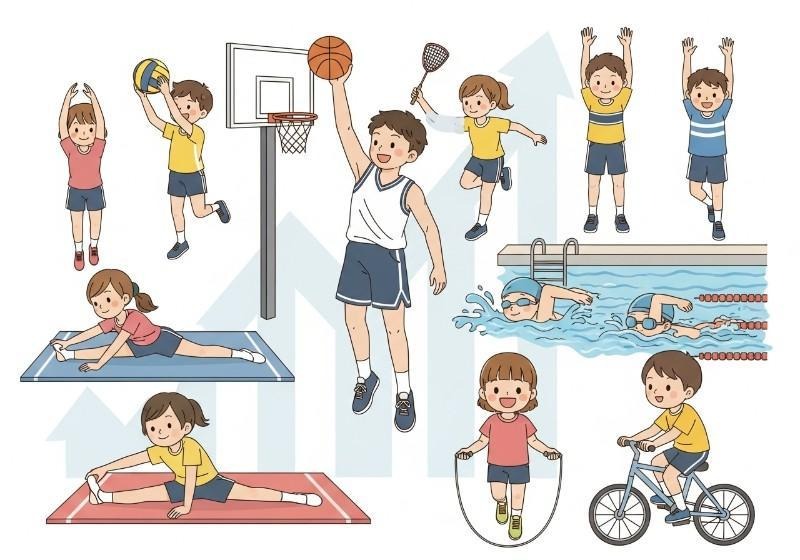
Sports support height growth by strengthening bones, improving posture, increasing circulation, and encouraging hormone-friendly routines. The World Health Organization and the American College of Sports Medicine both emphasize regular physical activity for children because movement affects far more than fitness.
Here’s the interesting part: bones respond to pressure. When children jump, run, land, twist, and push against resistance, the body signals bone-building cells, called osteoblast cells, to strengthen bone tissue. This process improves bone density rather than magically stretching bones longer.
Sports also help with body mass index, or BMI. Childhood obesity can affect hormone balance, sleep quality, and puberty timing. Regular movement gives the endocrine system a better environment to do its work.
In practice, the most useful height-supporting activities have 4 traits:
- They involve jumping, sprinting, swimming, hanging, or stretching
- They train core strength and spinal alignment
- They happen consistently, not just once in a while
- They leave enough recovery time for sleep and growth
Short, steady activity beats occasional intense training. A child who moves 5 days a week for 30–60 minutes usually gets more benefit than a child pushed through one exhausting weekend session.
Basketball: A Popular American Sport for Height Development
Basketball supports height development through repeated jumping, sprinting, reaching, landing, and posture control. It’s also one of the easiest sports to find in American schools, YMCA programs, AAU Basketball teams, and neighborhood courts.
Basketball doesn’t make a child tall by itself. Plenty of short children play well, and plenty of tall adults never played. Still, the sport trains several height-friendly movement patterns.
During rebounds, layups, jump shots, and defensive slides, children use:
- Vertical jump training
- Plyometric movements
- Fast-twitch muscle fibers
- Coordination drills
- Core and leg strength
The tibia and femur receive healthy loading during jumping and landing. That loading supports bone strength, especially when paired with enough calcium, vitamin D, and calories.
For younger children, the best version of basketball looks playful. Shooting games, dribbling races, and low-pressure youth basketball leagues tend to work better than intense year-round training. Too much specialization too early can lead to sore knees, overuse injuries, and burnout. That part gets overlooked when parents see NBA players and assume height came from basketball alone.
Swimming: Full-Body Stretch and Spine Support
Swimming supports posture, flexibility, shoulder mobility, and spinal decompression. In water, the body moves without the same gravity load placed on the spine during running or jumping.
Freestyle and backstroke work especially well for children because they encourage long reaches, controlled breathing, and steady core engagement. Water resistance strengthens muscles without harsh impact on joints. For children who dislike sweaty team sports, swim clubs through USA Swimming or basic American Red Cross swim programs can feel more comfortable.
Swimming helps children stand taller because it improves:
- Range of motion in the shoulders and hips
- Core muscles that stabilize posture
- Lung capacity and breathing rhythm
- Muscle elasticity
- Spinal alignment
A child with rounded shoulders from school desks, tablets, and gaming can look shorter than actual measured height. Swimming won’t lengthen closed growth plates, but better posture can change how height appears.
That visible difference matters. Not in a vain way. More in the “your child stops folding into a shrimp over a tablet” way.
Volleyball: Stretching and Jumping Combined
Volleyball combines vertical jumping, arm extension, reaction timing, and team movement. It’s especially common in middle school, high school, club programs, and USA Volleyball pathways across the U.S.
Spike jumps and blocking drills require children to extend through the ankles, knees, hips, spine, shoulders, and arms. That full-chain movement trains more than leg power. It builds neuromuscular coordination, which is the body’s ability to time muscles properly.
Volleyball supports height-friendly development through:
- Vertical leap practice
- Calf muscle activation
- Ligament strengthening
- Shoulder extension
- Quick footwork and balance control
The sport also teaches landing mechanics. That sounds boring until knee pain shows up. Children who learn to land softly with bent knees usually handle jumping sports better over time.
For growing kids, volleyball works best with rest days. Growth plates are active tissue, not machine parts. Sore knees, heel pain, or repeated ankle sprains are signs to slow down and check training volume.
Gymnastics and Stretch-Based Sports
Gymnastics, yoga, hanging exercises, and other stretch-based sports support visible height by improving alignment, flexibility, balance, and body awareness. They don’t force bones to grow longer, but they help children use their current height better.
USA Gymnastics programs often include bar work, core control, balance drills, and mobility. A simple pull-up bar routine, done safely, can create gentle spinal traction. Yoga for kids, when taught without extreme poses, can improve hamstring flexibility, hip flexor mobility, and posture.
Useful stretch-based movements include:
- Hanging from a bar for short, controlled sets
- Cat-cow stretches for spinal movement
- Cobra-style extensions for front-body opening
- Hamstring stretches after sports
- Balance drills that train postural alignment
One caution belongs here. Competitive gymnastics at high intensity has a complicated relationship with growth because training load, nutrition, and delayed puberty can overlap. Recreational gymnastics and stretch-based movement are different. The dose matters.
Nutrition and Supplements That Support Sports Performance
Nutrition forms the foundation for natural height growth because bones can’t grow from exercise alone. Children need enough energy, protein, minerals, and sleep to turn sports into healthy development.
The United States Department of Agriculture and the Dietary Guidelines for Americans emphasize balanced meals built around fruits, vegetables, grains, protein foods, and dairy or fortified alternatives. For height growth, the big nutrients are not flashy.
They’re basic:
- Protein for muscle repair and tissue growth
- Calcium for bone mineralization
- Vitamin D for calcium absorption
- Zinc and other micronutrients for growth support
- Water for hydration and sports performance
Sleep belongs in this section too, even though it isn’t food. Growth hormone release rises during deep sleep, and tired children recover poorly from training. The American Academy of Sleep Medicine recommends about 8–10 hours for teens and more for younger children.
Some parents also consider NuBest Tall Gummies as part of a broader nutrition plan to help fill potential nutrient gaps. Supplements work best as support, not substitutes. Whole foods still carry the bigger load, especially when a child plays sports several days per week.
Building a Height-Friendly Routine in American Families
A height-friendly routine works best when it fits real school weeks, not fantasy calendars. Between homework, dinner, traffic, and screen time, the routine has to be simple enough to survive a random Tuesday.
For most families, a practical weekly rhythm looks like this:
- 3–5 active days with basketball, swimming, volleyball, soccer, or gymnastics
- 1–2 lighter days with stretching, walking, or casual play
- 1 full recovery day when the body gets a break
- Consistent meals with protein, calcium, vitamin D, and produce
- A regular bedtime that protects 8–10 hours of sleep for older children
Affordable options exist in many communities. Public school athletic programs, Boys & Girls Clubs of America, Little League, YMCA sports, and local parks can keep children active without turning growth into an expensive project.
Screen time matters too. Not because screens are evil, but because hours disappear quietly. A child who sits 4–5 hours after school has less time for movement, sunlight, meals, and sleep. That trade-off shows up slowly.
Consistency matters more than intensity. The child who keeps moving through fall, winter, and spring usually builds better habits than the child pushed hard for 3 weeks in January.
When to Talk to a Pediatrician About Height
A pediatrician becomes important when a child’s growth pattern changes suddenly, falls well below expected height percentiles, or puberty appears unusually early or late. Annual height tracking catches problems earlier than guesswork at home.
Medical guidance is especially useful when you notice:
- Slow growth across 6–12 months
- A sharp drop on CDC growth charts
- Delayed puberty compared with peers
- A family history of growth disorders
- Fatigue, poor appetite, chronic stomach issues, or frequent illness
A pediatrician may refer a child to a pediatric endocrinologist. Screening can include a bone age test, X-ray imaging, bloodwork, and evaluation for growth hormone deficiency or other hormonal imbalance.
Early evaluation doesn’t mean something is wrong. It means the pattern deserves a closer look before more months pass.
Final Thoughts for U.S. Parents
Basketball, swimming, volleyball, gymnastics, and stretch-based activities can support healthy height development when they’re paired with steady nutrition, sleep, and medical checkups. These sports help bones strengthen, posture improve, muscles coordinate, and children stay active during the years when growth plates are still open.
The slower truth is less dramatic than online height hacks. A child grows through hundreds of ordinary choices: breakfast with protein, an after-school practice, a reasonable bedtime, a weekend swim, a pediatric visit when the growth chart looks off.
Sports don’t promise extra inches beyond biology. They help the body use its growth window well. For American families with access to school teams, community centers, youth leagues, and nutrition support options like NuBest Tall Gummies, that’s a practical place to start