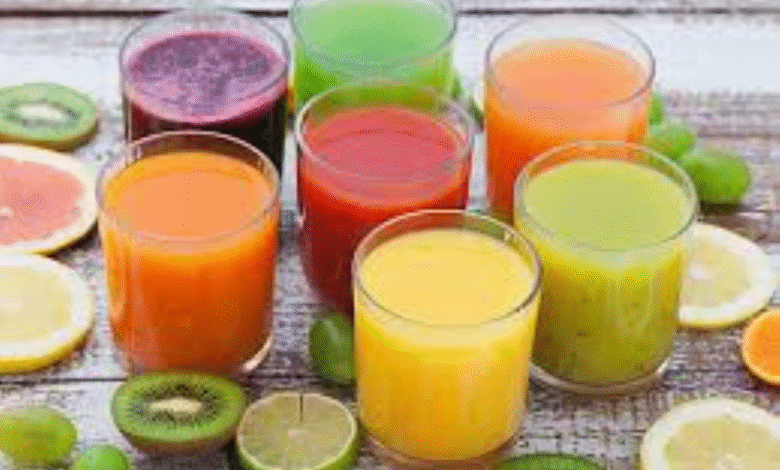
Walk through any supermarket aisle or browse an online grocery store, and you’ll quickly notice how many fruit-based beverages appear similar at first glance. Bright packaging, images of fresh fruit, and phrases like “natural,” “pure,” or “made from real fruit” create a sense of health and quality that feels reassuring.
Yet behind this visual consistency lies a significant difference in composition. Juice, nectar, and fruit drinks are not interchangeable categories, even though they are often treated as such. Understanding how they differ is not just a technical detail — it directly impacts nutritional value, taste, and overall expectations.
For consumers who regularly include these beverages in their diet, this distinction becomes even more important. What seems like a small difference in labeling can translate into a meaningful difference in what you are actually consuming.
What 100% Juice Really Means
Juice is generally considered the most straightforward category. By definition, it is made entirely from fruit, without added sugars or artificial ingredients. This makes it the closest representation of the fruit itself in liquid form.
However, even within this category, some nuances are worth understanding. Juice can be freshly squeezed, from concentrate, or not from concentrate. Each of these variations affects taste, texture, and nutritional value to some extent.
Fresh juice tends to offer the most vibrant flavor, but it also has the shortest shelf life. Juice from concentrate is more stable and widely available, but it undergoes additional processing steps. While these processes are generally safe and standardized, they can subtly influence the final product.
Despite these differences, 100% juice remains the most nutritionally dense option among the three categories. It retains most of the natural sugars, vitamins, and compounds found in the original fruit, making it a popular choice for those seeking a more direct connection to the ingredient.
Understanding Nectar as a Middle Ground
Nectar occupies a more complex position. It is typically made by diluting fruit juice with water and adding sugar or sweeteners. This is often done for fruits that are too thick, acidic, or intense to be consumed as pure juice.
Examples include apricot, peach, or certain tropical fruits, where the natural consistency does not lend itself well to standard juice production. By adjusting the concentration, nectar becomes more drinkable while still retaining some of the original fruit characteristics.
From a nutritional perspective, nectar offers less fruit content than juice, but more than fruit drinks. This makes it a middle-ground option that can still provide flavor and some nutritional value, though with added sugars in many cases.
Understanding this balance is important. Nectar is not necessarily a poor choice, but it should be evaluated with awareness of its composition rather than assumed to be equivalent to juice.
What Defines Fruit Drinks
Fruit drinks represent the most processed category among the three. These beverages often contain a relatively small percentage of actual fruit juice, combined with water, sweeteners, flavorings, and sometimes colorants.
The emphasis here is on taste and accessibility rather than nutritional value. Fruit drinks are typically designed to be affordable, shelf-stable, and widely appealing. This makes them popular, but also fundamentally different from juice and nectar.
For consumers, the key is not to view fruit drinks as inherently negative, but to understand their role. They are best seen as occasional beverages rather than a primary source of fruit intake.
Why Labels Can Be Misleading
One of the challenges in distinguishing between these categories is the way products are presented. Packaging often emphasizes positive attributes while downplaying differences in composition.
Terms like “made with real fruit” or “contains natural flavors” can apply to a wide range of products, including those with minimal fruit content. Without careful attention, it’s easy to assume a level of quality that may not be present.
This is where label reading becomes an essential skill. Looking at the percentage of fruit content and reviewing the ingredient list provides a clearer understanding of what the product actually contains.
Ingredient Quality as a Differentiator
Beyond classification, ingredient quality plays a crucial role in shaping the overall experience. Two juices may both be labeled as 100%, yet differ significantly in taste and perception depending on how they are made.
Some producers prioritize simplicity, using minimal processing and avoiding unnecessary additives. This approach often results in a cleaner, more authentic flavor profile.
Brands such as Andros juice are frequently associated with this philosophy, focusing on straightforward ingredient compositions that allow the fruit itself to remain central. This reflects a broader shift toward transparency, where consumers value clarity over complexity.
The Role of Access and Availability
The way consumers access these products has also evolved. In the past, options were largely limited to what was available in local supermarkets. Today, online grocery platforms have expanded their range significantly.
This increased availability allows for better comparison and more informed decision-making. Instead of choosing from a narrow selection, consumers can explore different categories, origins, and styles.
Platforms like Europafoodxb contribute to this shift by offering a variety of European fruit-based beverages in one place. This makes it easier to identify differences between juice, nectar, and fruit drinks, while also discovering products that may not be widely available elsewhere.
Choosing Based on Context and Habit
Selecting the right type of beverage often depends on how it fits into daily habits. For regular consumption, products with higher fruit content and fewer additives are generally more suitable.
For occasional use, fruit drinks can still be enjoyed as part of a balanced approach. The key is to align choices with expectations, rather than assuming that all fruit-based beverages serve the same purpose.
Understanding the difference between juice, nectar, and fruit drinks is ultimately about clarity. It allows consumers to move beyond surface impressions and make decisions based on real information.
Over time, this awareness leads to better habits and a more intentional approach to food and drink. What begins as a simple distinction becomes part of a broader pattern of informed consumption.