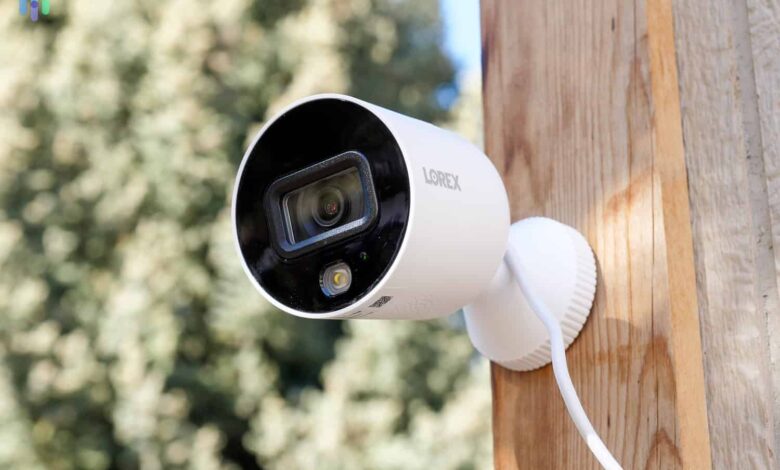
Security is no longer just about recording footage. It is about understanding what is happening in real time and acting before a situation escalates.
The shift is driven by hard numbers. Studies show that human operators monitoring surveillance feeds can miss up to 95% of critical events after just 20 minutes of continuous viewing. At the same time, global retail losses due to theft and operational inefficiencies run into hundreds of billions annually, with shrinkage averaging around 1.4% of total sales. These gaps highlight a fundamental issue. Traditional CCTV systems capture everything but interpret nothing.
Meanwhile, businesses today operate in faster, more complex environments. Multiple entry points, high customer volume, and increasing security risks make manual monitoring nearly impossible. This is where AI surveillance cameras are redefining security.
AI-powered systems analyze video in real time using computer vision and machine learning. They can detect threats, identify patterns, and trigger alerts instantly. In fact, modern AI systems can improve detection accuracy by over 90% and reduce response times by up to 80%.
But here is the challenge.
Not every AI camera delivers the same level of intelligence.
If you are planning to invest in a surveillance system in 2026, you need to focus on features that actually impact security, operations, and efficiency. In this guide, we break down the top 10 features you should look for, explained in detail so you can make a smarter decision.
1. Advanced Object Detection and Classification
Object detection is the foundation of any AI surveillance system, but in 2026, it needs to go far beyond basic motion sensing.
What a modern system should do:
- Detect people, vehicles, and objects accurately
- Differentiate between relevant and irrelevant movement
- Classify objects based on type and behavior
Traditional cameras trigger alerts for any motion, which leads to constant false alarms.
AI changes this completely.
Example:
- A shadow or rain movement is ignored
- A person entering a restricted area is flagged instantly
Why this matters:
- Reduces alert fatigue
- Improves accuracy
- Saves time for security teams
Key insight:
Accurate object classification ensures that your system focuses only on real threats, not noise.
2. Real-Time Alerts with Smart Search and Instant Retrieval
Detection is only valuable if you can act on it immediately.
That is why real-time alerts combined with smart search capabilities are critical in 2026.
What to look for:
- Instant alerts triggered within seconds
- Mobile and dashboard notifications
- Ability to search footage using filters like time, object, or activity
Instead of manually reviewing hours of footage, you can instantly find what matters.
For example, advanced systems like Coram’s AI surveillance camera combine real-time alerts with searchable video intelligence. This allows users to quickly locate specific events using filters such as people, vehicles, or unusual activity, while also receiving immediate notifications when suspicious behavior occurs. This significantly reduces investigation time and improves response speed.
Why this matters:
- Faster incident response
- Reduced manual effort
- Improved operational efficiency
Important takeaway:
The combination of real-time alerts and intelligent search transforms surveillance from reactive to actionable.
3. Behavior Analysis and Suspicious Activity Detection
Modern threats are rarely isolated events. They develop through patterns.
AI cameras analyze behavior to detect these patterns early.
Capabilities include:
- Loitering detection
- Repeated movement in sensitive areas
- Unauthorized access attempts
- Aggressive or unusual behavior
Example:
A person walking through a location is normal.
A person standing near a restricted zone for an extended period is suspicious.
Why this matters:
- Identifies intent, not just presence
- Prevents incidents before escalation
- Reduces reliance on human judgment
Key insight:
Behavior analysis allows AI systems to detect threats before they fully develop.
4. Facial Recognition and Identity Tracking
AI surveillance systems now have the ability to recognize and track individuals.
What this feature offers:
- Identification of known individuals
- Alerts for unknown or flagged persons
- Tracking movement across multiple cameras
Benefits:
- Stronger access control
- Faster investigations
- Improved accountability
Practical use case:
A system can detect if an unauthorized person enters a restricted area and alert staff immediately.
Important insight:
Identity tracking shifts security from event-based monitoring to person-based intelligence.
5. License Plate Recognition and Vehicle Intelligence
For environments with vehicle activity, this feature is essential.
What to expect:
- Automatic license plate detection
- Vehicle make, model, and color recognition
- Entry and exit tracking
Why this matters:
- Prevents unauthorized access
- Improves traffic flow
- Supports billing and verification systems
Key takeaway:
Vehicle intelligence adds a powerful layer of control and visibility.
6. Anomaly Detection with Adaptive Learning
Not all threats follow predefined rules.
AI systems use anomaly detection to identify unusual activity.
What it does:
- Learns normal patterns over time
- Flags deviations instantly
Examples:
- Activity during unusual hours
- Sudden crowd formation
- Equipment tampering
Why this is important:
- Detects unknown threats
- Adapts to changing environments
- Reduces dependency on fixed rules
Important takeaway:
Anomaly detection helps identify risks you did not even anticipate.
7. Edge Processing for Real-Time Performance
Speed is everything in modern surveillance.
Edge computing allows cameras to process data locally.
Benefits include:
- Faster detection and alerts
- Reduced latency
- Lower bandwidth usage
Why this matters:
Cloud-only systems can introduce delays.
Edge processing ensures instant decision-making.
Key insight:
Processing data at the source enables real-time action without delays.
8. Integration with Business and Security Systems
An AI camera should not operate in isolation.
Look for integration with:
- Access control systems
- Payment systems
- Alarm systems
- Analytics platforms
Why this is valuable:
- Creates a unified system
- Improves operational efficiency
- Enables deeper insights
Example:
Connecting surveillance with transaction data can help detect fraud or discrepancies.
Key takeaway:
Integration turns surveillance into a strategic business tool.
9. Scalable Cloud and Storage Capabilities
As your business grows, your surveillance needs will expand.
What to consider:
- Cloud storage options
- Easy scalability across locations
- Secure data management
Why this matters:
- Supports multi-location operations
- Ensures data accessibility
- Future-proofs your system
Important insight:
Scalability ensures your investment remains valuable as your business grows.
10. Continuous Learning and AI Improvement
AI systems are designed to improve over time.
How this works:
- Learning from past data
- Reducing false positives
- Improving detection accuracy
Benefits:
- More reliable alerts
- Better performance
- Long-term efficiency
Example:
The system learns what normal activity looks like and refines its alerts accordingly.
Key takeaway:
The longer you use an AI system, the smarter and more efficient it becomes.
Key Takeaways
- AI surveillance cameras improve detection accuracy by over 90%
- Human monitoring can miss up to 95% of critical events
- Real-time alerts reduce response time by up to 80%
- Object detection and behavior analysis are core features
- Smart search significantly reduces investigation time
- Anomaly detection helps identify unknown threats
- Integration and scalability enhance long-term value
- Continuous learning ensures ongoing improvement
Conclusion: Choosing the Right AI Surveillance Camera in 2026
The future of surveillance is not just about watching. It is about understanding and acting instantly.
AI surveillance cameras bring together intelligence, speed, and automation to create a proactive security system. They help businesses reduce risks, improve efficiency, and make better decisions.
But choosing the right system comes down to selecting the right features.
If you focus on real-time intelligence, behavioral analysis, smart search, and continuous learning, you will not just upgrade your security. You will transform how your business operates.
The real question is not whether you need AI surveillance. It is whether your current system is capable of keeping up with modern risks.