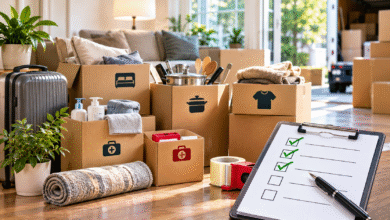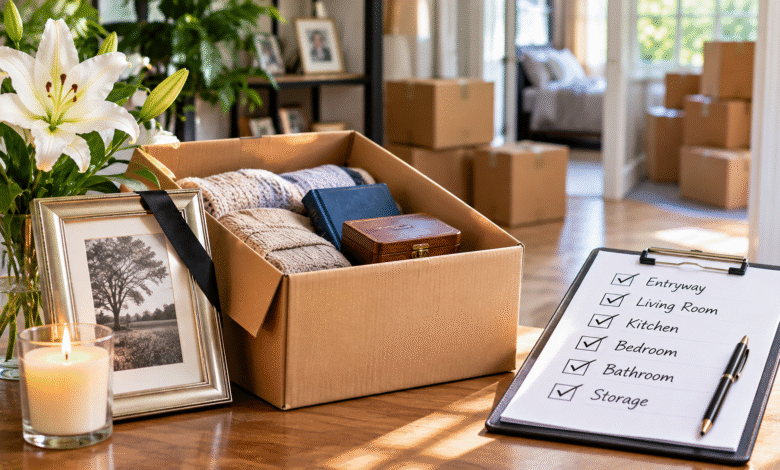
Standing in a parent’s hallway with a stack of empty boxes, it is hard to know which door to open first. Every room holds something that matters, and the pile of decisions can feel bigger than the house itself.
Here is the short answer on how to clean out a house after a death. Start with safety, paperwork and valuables. Then work through the least emotional spaces, such as the garage and storage areas, move inward through the kitchen and living areas, and save bedrooms, photos and personal papers for last. Set a pace your family can keep, because nobody needs to finish this in a weekend.
The rest of this guide explains each step, why the order works, and what to do with the things you decide not to keep. It is general guidance, not legal, probate or tax advice, so check with the estate’s attorney before you remove or give away anything.
First, Pause and Secure the House
Before you sort a single drawer, make sure the home is locked, the right people are in charge, and nothing is lost by accident.
Start by confirming who has authority over the house and its contents. That is often the executor named in the will, or someone appointed by a court. If a will lists specific items for specific people, those items should stay put until the estate’s attorney says otherwise.
Next, deal with security. Collect or change keys, ask the post office about forwarding mail, and take note of who else can get inside. AARP’s guide to bereavement scams (2026) points out that an obituary listing the funeral time can tell burglars the house will be empty. It also advises families to report the death to Social Security, notify banks and the credit bureaus, and check the person’s credit report. The mail and statements you find while clearing the house will help with that list.
Finally, take photos of every room before anything moves. The photos give siblings a shared record, help with insurance questions, and head off arguments about who remembers what being where.
Decide on a Pace Before You Pick Up a Box
The right timeline is the one your family can sustain, and unless a lease, sale or other deadline forces the issue, slower usually goes better.
Experts quoted by Next Avenue suggest working in manageable chunks, such as a few hours a day, rather than trying to finish in one marathon. They also recommend bringing a sibling or close friend, and agreeing in advance on a plan for moments when emotions run high. That way, the helper can make a quick call while the grieving person steps outside for a break.
If a deadline does exist, work backward from it. Say the lease ends in ten weeks. Block out two half-days per week, give each room a target date, and leave the final two weeks empty as a buffer. A schedule on paper is easier to follow than a vague plan to “get to it soon.”
Set Up a Sorting System First
A simple system keeps decisions small. Use five categories: keep, donate, sell, toss, and not sure.
The “not sure” box matters most. It lets you move forward without forcing a final answer on a sweater or a set of dishes. Write a date on the box, perhaps three months out, and look at it again then. Many items that felt impossible to part with on day one feel easier later.
Before you begin, ask each family member to write down the few things they hope to have. Share the lists, so surprises don’t come up halfway through the job. If two people want the same item, put it aside and talk it through after the house is cleared.
Also set up a “protected” box or bag for the things that should never get mixed into a donation pile: jewelry, cash, keys, passwords, important papers and small valuables. Let one trusted person hold it, and keep a written list of what goes in.
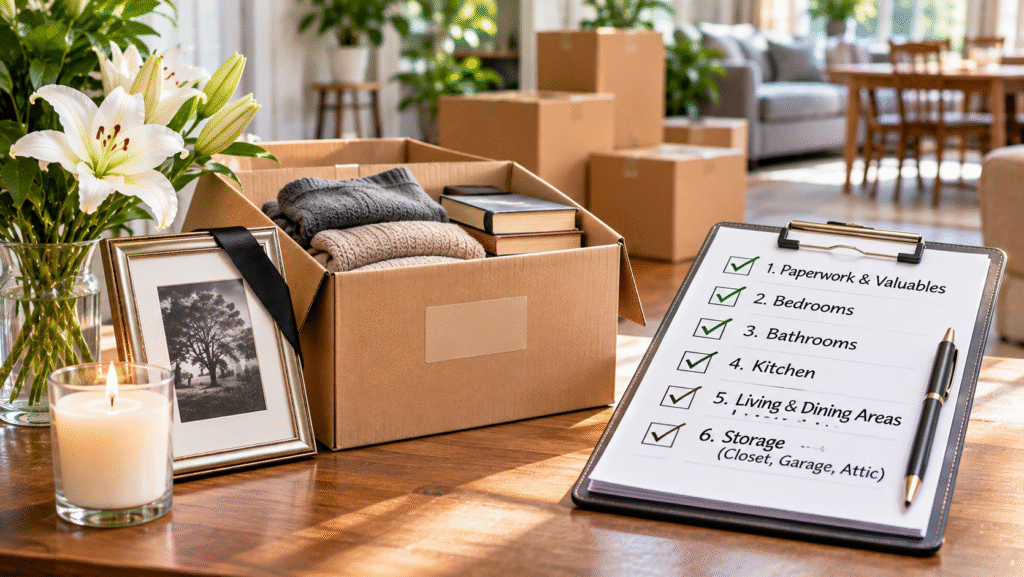
Where to Start: The Best Order to Clean Out a House After a Death
The best order moves from low emotion to high emotion. Early wins build momentum, and the hardest rooms wait until you have practice and a little distance.
Garage, Shed, Basement and Attic
These spaces tend to hold tools, holiday decorations and years of stored boxes, and they carry fewer personal memories than a bedroom does. That makes them a good place to find your rhythm.
Watch for items that need special handling, such as old paint, solvents, pesticides, propane tanks and car batteries. Don’t put these in the regular trash or a donation bin. Ask your city or county about household hazardous waste drop-off days. Tools and equipment in good shape often sell well or find a happy home with a relative who will use them.
Kitchen, Bathrooms and Pantry
Begin with the refrigerator and freezer, since spoiled food causes odors and mess. Then clear expired pantry goods, cleaning products and toiletries. For old medications, ask a pharmacy or your local health department about safe disposal rather than tossing them in the trash.
The kitchen is also where small treasures hide. Handwritten recipe cards, a well-worn cast-iron pan or a set of holiday dishes may mean more to the family than anything in the living room. Set those aside for the keep or not-sure boxes before you box up the rest.
Guest Rooms, Dining Room and Living Room
Furniture, art, rugs and collections come next. Take your time here, because this is where valuable items are most likely to be hiding in plain sight.
Before you sell or donate anything that might be worth real money, such as antiques, artwork, silver or coins, get it appraised. A quick online listing for a few dollars can turn out to be a costly mistake. Photos on the walls and in albums can wait. Move them to a single box so they stay safe, and scan or share them once the house is empty.
Primary Bedroom, Closets and Home Office
Save these for last. They hold clothing, jewelry, personal papers and the objects closest to the person you lost.
Go through clothing category by category, and check every pocket, coat lining, purse, shoebox and book. People often tuck cash, jewelry and important documents in unlikely places. In the home office, sort papers into piles for the executor rather than shredding anything on your own. Look for wills, deeds, insurance policies, tax records, bank statements, account passwords and anything with a financial account number. Once the executor or attorney has reviewed the papers, shred what is no longer needed.
What to Do With What You Don’t Keep
Each item that leaves the house goes one of three ways: donated, sold or discarded. A little planning at this stage saves headaches later.
Donating. Choose a charity that is convenient, and keep the receipt. According to the IRS Taxpayer Advocate Service, clothing and household items generally must be in good used condition or better to be deductible. It also notes that gifts of $250 or more need a written receipt from the charity, and that noncash donations over $500 call for Form 8283 with a tax return. Because an estate has its own tax rules, ask a tax professional how this applies to your situation.
Selling. Estate sales, consignment shops and online marketplaces all work. The more valuable the item, the more it pays to get an appraisal first and to sell through a reputable channel.
Discarding. Bulky items, broken furniture and damaged goods will need a dumpster, a hauler or a bulk pickup from your city. Recycle electronics through a certified e-waste program where possible.
When Outside Help Makes Sense
Asking for help is reasonable when the house is large, far away, packed with belongings, or when the family is simply worn out. The approach that works best is to let helpers handle the heavy work while the family keeps the decisions.
If hauling and packing are the hardest parts, estate cleanout services are one option. Some providers handle inventory, packing, careful handling of valuables, and delivery of items to different relatives or donation centers, so the family can focus on deciding what stays.
A few questions help you compare providers:
- Are you licensed and insured, and can you provide proof?
- Will you give an itemized written estimate before work starts?
- What is your process when you find cash, jewelry or papers?
- Can we keep control of what is sorted, and can we be present?
- How do you handle donations, and will we get receipts?
Be cautious about anyone who pressures you to decide quickly or asks for payment by gift card, wire or cryptocurrency, all of which AARP warns against. The Next Avenue experts also warn that handing the whole job to strangers can mean missing valuables stashed in odd places, and missing the chance to grieve while you work. If your budget allows, hiring a professional to work alongside you can be a good middle path.
A few situations call for specialists rather than a general crew. Severe hoarding, biohazards and heavily damaged homes may need trained cleaners with the right equipment and protective gear.
Frequently Asked Questions
Where should I start when clearing a house after a death?
Start by securing the house, confirming who has authority, and setting aside paperwork and valuables. Then clear the least emotional spaces first, such as the garage, shed and basement. Move on to the kitchen and living areas, and save bedrooms, photos and personal papers for last, when you have more momentum and distance.
How long should I wait before cleaning out a loved one’s house?
There is no fixed rule. If nothing forces a deadline, many people wait a few weeks or longer, until they feel ready. If a lease, sale or financial deadline exists, work backward from that date and schedule short, regular sessions so the job stays manageable.
What should I do before throwing anything away?
Confirm with the executor or estate attorney that you are allowed to remove items. Photograph each room, set aside papers, jewelry, cash and anything that might be valuable, and check pockets, books and boxes first. Anything you are unsure about belongs in a labeled “not sure” box, not the trash.
How do I handle it when family members disagree about belongings?
Make lists before you begin, so everyone states their wishes early. Set contested items aside rather than deciding on the spot, and revisit them once the house is cleared and tempers have cooled. If the disagreement continues, a neutral third party, such as the estate’s attorney or a mediator, can help.
Can I deduct donations from a deceased person’s home?
Possibly, but the rules are specific. Clothing and household items generally need to be in good used condition or better, and larger gifts need receipts and extra forms. Because an estate has its own tax treatment, ask a tax professional before you count on a deduction.
Take It One Room at a Time
Clearing a loved one’s home is part chore and part goodbye. The room-by-room order gives you a place to begin, but the best plan is the one that leaves room for rest, for memories and for changing your mind.
Pick one small space this week, such as the garage shelf or the bathroom cabinet. Finish it, notice how it felt, and let that guide what comes next.