Choosing the right car depends heavily on where and how you drive. A vehicle that works well for crowded city streets may not provide the same advantages on gravel roads, long rural routes, or uneven surfaces. Drivers who regularly move between urban and rural environments need to consider fuel economy, maneuverability, ground clearance, comfort, storage, traction, and overall reliability. Shoppers comparing options through car dealers Burlington Iowa can benefit from thinking about their everyday routes before deciding which type of vehicle best fits their needs. The right choice is not necessarily the largest or most powerful vehicle, but the one that matches the roads, distances, and conditions it will encounter.
Consider Your Typical Driving Environment
The first step is to think about where most of your driving actually takes place. City driving often involves frequent stops, traffic lights, narrow parking spaces, and short trips. Rural driving can involve longer distances, higher speeds, gravel roads, hills, farm roads, and fewer nearby services.
If most journeys take place in an urban environment, a compact sedan, hatchback, or smaller SUV may be practical. These vehicles can be easier to maneuver and park. Drivers who spend considerable time outside urban areas may prefer a crossover, SUV, or pickup with additional ground clearance and cargo capacity.
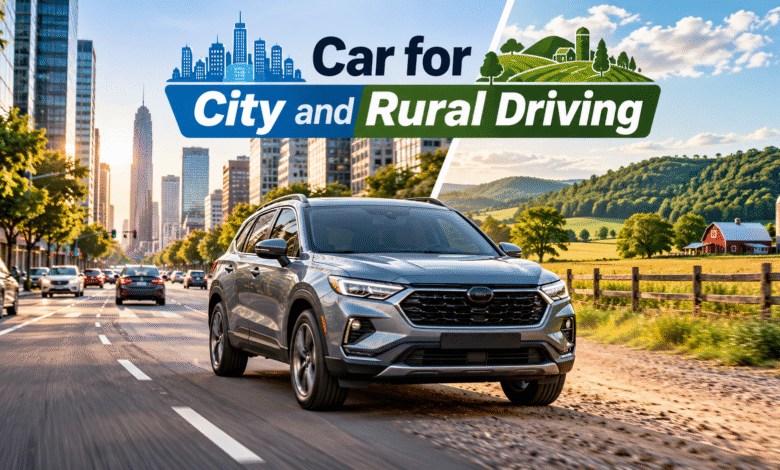
For people who regularly experience both environments, a versatile crossover or midsize SUV can provide a balance between city maneuverability and rural capability.
Evaluate Fuel Economy
Fuel economy matters for almost every driver, but it can become especially important when comparing city and rural use.
City driving often involves idling, frequent acceleration, and repeated stops, which can affect fuel consumption. Rural drivers may travel considerably farther during individual trips, making fuel efficiency important over the course of a week or month.
When comparing vehicles, consider official fuel-economy estimates as well as your actual driving pattern. A hybrid can be worth considering for drivers who spend significant time in stop-and-go traffic, while an efficient gasoline vehicle may suit someone who regularly travels longer rural distances.
The important point is to evaluate fuel consumption based on your own driving habits rather than relying only on a vehicle’s advertised efficiency.
Think About Ground Clearance
Ground clearance can be an important consideration when driving outside cities. Rural roads may include gravel, uneven pavement, potholes, dirt surfaces, or areas where snow and water accumulate.
A vehicle with additional clearance can provide more space between the underside of the vehicle and the road surface. This does not mean every rural driver needs an SUV or truck. Many rural roads are well maintained and can be handled comfortably by a conventional sedan.
However, if your regular routes include rough roads, steep driveways, fields, or unpaved surfaces, comparing ground clearance can help narrow your choices.
Consider Traction and Drivetrain
Traction becomes particularly relevant when road conditions are unpredictable. Drivers who encounter snow, mud, gravel, steep roads, or wet surfaces may want to compare front-wheel drive, rear-wheel drive, and all-wheel-drive configurations.
All-wheel drive can provide additional traction in certain conditions, but it does not eliminate the need for appropriate tires or careful driving. Tire condition and tread remain important regardless of drivetrain.
For primarily urban drivers who rarely encounter challenging surfaces, front-wheel drive may provide everything necessary. Rural drivers who regularly deal with snow, loose surfaces, or steep roads may find an all-wheel-drive vehicle worth considering.
Choose the Right Vehicle Size
Vehicle size involves more than passenger capacity. It can influence visibility, parking, fuel consumption, maneuverability, and cargo space.
A smaller vehicle can be convenient in a city because it may be easier to fit into compact parking spaces and navigate narrow streets. A larger SUV or pickup may provide greater passenger and cargo capacity for rural households, especially if the vehicle is used for equipment, recreational activities, or work.
Midsize crossovers can offer a middle ground. They typically provide more cargo and passenger space than compact cars without having the overall dimensions of a full-size SUV or pickup.
Examine Cargo and Passenger Needs
Think about what you regularly carry. Urban drivers may primarily need room for groceries, work equipment, or a few passengers. Rural drivers may need additional capacity for tools, outdoor equipment, supplies, or larger loads.
A hatchback or crossover can provide flexible cargo space without requiring a large truck. On the other hand, a pickup may make more sense for drivers who regularly transport bulky or heavy items.
Look beyond the published cargo number and examine how easily the space can be accessed. A low cargo floor, folding rear seats, wide liftgate, or additional storage compartments can make a noticeable difference in everyday use.
Pay Attention to Ride Comfort
Road quality can vary significantly between city and rural environments. Urban streets may have potholes, expansion joints, speed bumps, and frequent stop-and-go traffic. Rural roads may include rough pavement, gravel, uneven surfaces, or long stretches of highway.
A comfortable suspension can make longer journeys easier, particularly for drivers who spend several hours behind the wheel. During a test drive, pay attention to how the vehicle handles bumps and uneven surfaces.
Seat comfort is equally important. Adjustable seats, lumbar support, steering-wheel adjustment, and appropriate seating height can all affect how comfortable a driver feels during extended trips.
Look at Visibility and Driver Assistance
Good visibility can be valuable in both city and rural environments. City drivers may need to watch for pedestrians, cyclists, parked vehicles, and traffic entering from different directions. Rural drivers may need to monitor wildlife, farm equipment, changing road conditions, and vehicles traveling at higher speeds.
Features such as blind-spot monitoring, rear cross-traffic alert, parking sensors, rearview cameras, and adaptive cruise control may provide additional convenience depending on the vehicle.
These technologies should complement attentive driving rather than replace it. Drivers should understand how each system works and its limitations before relying on it.
Consider Winter and Weather Conditions
Weather should be part of the vehicle-selection process, particularly for drivers who travel outside major urban areas. Snow, ice, heavy rain, and strong winds can affect road conditions and visibility.
Instead of choosing a vehicle solely because it has all-wheel drive or greater size, consider the complete combination of drivetrain, tires, ground clearance, braking performance, visibility, and safety technology.
Winter tires can also make an important difference where severe winter conditions are common. The appropriate choice depends on the climate and roads you regularly encounter.
Think About Maintenance and Ownership Costs
A vehicle should fit your budget not only when you purchase it but throughout its ownership. Consider fuel, insurance, maintenance, tires, repairs, and potential financing costs.
Drivers covering long rural distances may accumulate mileage faster, making maintenance intervals and long-term operating costs particularly important. City drivers may place greater wear on brakes and other components because of frequent stopping and starting.
Research the manufacturer’s recommended maintenance schedule and compare expected ownership requirements between vehicles before making a final decision.
Take Multiple Test Drives
A single short test drive may not reveal whether a vehicle truly suits your lifestyle. If possible, drive on different types of roads and pay attention to steering, braking, acceleration, visibility, seat comfort, cabin noise, and suspension behavior.
City-focused drivers should test parking and low-speed maneuverability. Rural drivers should pay attention to highway stability, ride quality, visibility, and how the vehicle behaves on less-than-perfect surfaces where it is safe and legal to do so.
If you regularly use both environments, try to evaluate the vehicle from both perspectives.
Conclusion
Choosing a car for city and rural driving starts with understanding your regular routes and practical needs. City drivers may prioritize maneuverability, fuel efficiency, parking convenience, and visibility, while rural drivers may place greater emphasis on ground clearance, traction, cargo capacity, ride comfort, and long-distance efficiency. For drivers who regularly travel between both environments, a versatile crossover or SUV may provide a useful balance. Ultimately, the best vehicle is one whose size, capabilities, efficiency, comfort, and ownership costs align with the roads and conditions you encounter most often. Careful comparison and thorough test drives can help ensure that your choice works well beyond the dealership parking lot.