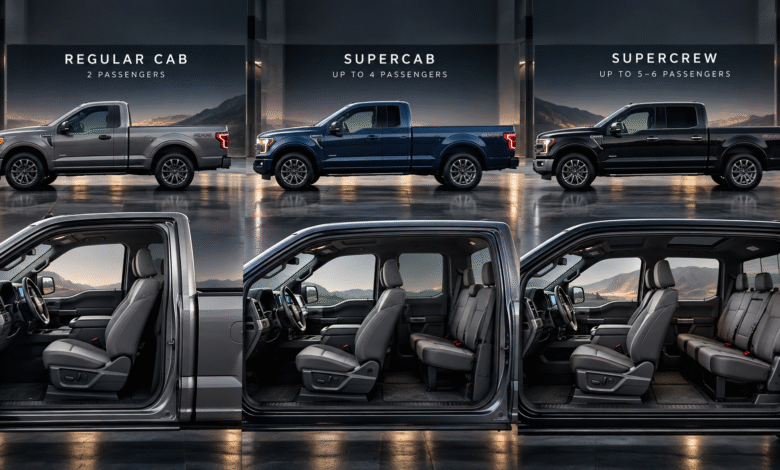
The Ford F-150 is designed to serve a wide range of drivers, from contractors and fleet operators to families and outdoor enthusiasts. One of the most important decisions when choosing an F-150 is the cab configuration because it affects passenger space, rear-seat usability, bed length, and the truck’s overall practicality. The 2026 F-150 is available with three primary cab styles: Regular Cab, SuperCab, and SuperCrew. For shoppers comparing a new Ford F-150 inventory in Gower, MO, understanding how these configurations differ can help identify a truck that fits both daily transportation and work requirements.
Regular Cab: Maximum Focus on Front-Seat Utility
The Regular Cab is the most straightforward F-150 configuration. It focuses on the driver and front passenger rather than providing a dedicated rear seating area. This makes it particularly suitable for work-oriented applications where transporting equipment and maximizing bed space are more important than carrying several passengers.
For example, a contractor who typically drives alone or with one coworker may find the Regular Cab practical. It provides a straightforward cabin layout while allowing access to longer bed configurations. Ford’s current F-150 lineup lists Regular Cab configurations with either a 6.5-foot or 8-foot bed.
The Regular Cab can also make sense for fleet use, agricultural work, and other applications where the truck is primarily a tool. Its simpler passenger arrangement allows buyers to concentrate on cargo capacity and job-site functionality.
SuperCab: Added Flexibility for Occasional Passengers
The SuperCab occupies the middle ground between the Regular Cab and SuperCrew. It adds a second seating area behind the front seats, making it more flexible for drivers who occasionally need to carry additional passengers.
This configuration is useful for people who primarily use their truck for work but sometimes need additional seating. The rear area can accommodate passengers when necessary while also providing a convenient place for smaller items that should remain inside the cabin rather than in the open bed.
Ford’s 2026 F-150 specifications list SuperCab configurations with seating for up to six occupants, depending on the specific setup. This makes it considerably more versatile than a two- or three-person work truck without requiring the larger passenger-oriented design of the SuperCrew.
SuperCrew: The Most Passenger-Focused Configuration
For drivers who regularly carry family members, coworkers, or friends, the SuperCrew is the F-150 configuration to examine closely. It provides a larger rear passenger area than the SuperCab and is designed to make four-door passenger transportation a central part of the truck’s functionality.
The 2026 F-150 lineup includes SuperCrew configurations across a wide range of trims. Ford’s inventory system also lists SuperCrew with both 5.5-foot and 6.5-foot cargo boxes, depending on the configuration.
The larger rear cabin is especially useful for families. Children can have their own seating area, while adults can access the rear seats without the compromises associated with smaller extended-cab arrangements. For longer journeys, the additional interior room can make a significant difference.
Comparing Front Passenger Space
Across the three configurations, front passenger space is generally not the main differentiator. The front portion of the F-150 cabin is designed around a spacious truck interior, allowing drivers and front passengers to enjoy substantial head, leg, shoulder, and hip room.
This means the primary question for many buyers is not whether the front seats are spacious enough, but what happens behind them. If the truck will almost always have only one or two occupants, the Regular Cab can provide the necessary space. If rear passengers are part of the routine, the SuperCab or SuperCrew becomes more relevant.
Comparing Rear Passenger Space
The biggest difference between the cab configurations appears in the second row.
The Regular Cab does not provide a conventional rear passenger area. This makes it the least suitable option for families or crews who frequently transport several people.
The SuperCab adds rear seating, but its design is more focused on flexibility than maximum passenger comfort. It can work well when rear seats are used occasionally.
The SuperCrew places the greatest emphasis on rear passenger accommodation. It is the natural choice for drivers who expect to carry adults or children regularly, particularly on longer trips.
The distinction becomes especially important when evaluating how often passengers will use the truck. A rear seat that is adequate for short local journeys may not provide the same level of convenience during several-hour highway trips.
Cab Size and Bed Length
Cab configuration also affects the balance between passenger space and cargo-bed length. This is an important consideration because F-150 buyers often need both passenger and hauling capability.
Ford currently lists the Regular Cab with 6.5-foot and 8-foot bed options, while SuperCrew configurations can be paired with 5.5-foot or 6.5-foot beds.
The longer bed of a Regular Cab can be useful when carrying lumber, tools, landscaping materials, or other large items. Meanwhile, a SuperCrew with a shorter bed prioritizes passenger accommodation while retaining useful cargo capacity.
Therefore, buyers should consider whether passengers or bed space will be the more frequent priority.
SuperCab vs. SuperCrew for Families
For families, the choice between SuperCab and SuperCrew often comes down to how frequently the rear seats will be used.
A SuperCab can work when rear passengers are occasional. It provides additional seating without making passenger capacity the central purpose of the truck.
A SuperCrew is more appropriate when the truck serves as the family’s primary vehicle. Its larger rear cabin makes it easier to accommodate passengers, child seats, personal belongings, and other items associated with daily family transportation.
The difference becomes even more noticeable during road trips. Passengers spending several hours in the back can benefit from having more room to enter, exit, sit, and organize personal items.
Which Configuration Works for Work Use?
Work requirements can point toward different cab styles. A solo contractor or fleet driver may value the Regular Cab’s straightforward layout and longer-bed availability. A small work crew may prefer the SuperCab because it provides additional seating while maintaining useful cargo capability.
The SuperCrew can also be an effective work truck, especially for professionals who need to carry employees to job sites while still transporting tools and materials. Its four-door design makes frequent passenger access more convenient.
Dennis Sneed Ford’s F-150 information page notes that its inventory includes configurations such as SuperCrew 4×4 models, while factory ordering can allow buyers to specify the cab and bed combination that fits their needs.
Which Configuration Works for Highway Travel?
Long-distance driving places greater emphasis on passenger comfort and convenience. For drivers who regularly travel with several people, the SuperCrew’s larger rear cabin can be particularly useful.
The SuperCab can be suitable for occasional passengers and shorter trips, but drivers should consider how frequently adults will occupy the rear seats. Meanwhile, the Regular Cab is better suited to drivers who typically travel alone or with one passenger.
Highway travelers should also consider cargo requirements. A SuperCrew with a 5.5-foot bed provides substantial passenger space while maintaining an open cargo area, whereas a longer-bed configuration may be more useful for bulky equipment.
How to Choose the Right F-150 Cab
Choosing between the three configurations becomes easier when daily usage is considered first. Ask how many people normally travel in the truck, how frequently rear seats will be occupied, and what type of cargo needs to be carried.
Consider these factors:
- Regular Cab: Best suited to work-focused use with limited passenger requirements.
- SuperCab: A flexible choice for occasional rear passengers and work-oriented driving.
- SuperCrew: Designed for drivers who frequently carry passengers and want greater rear-seat convenience.
It is also important to compare the exact truck configuration because bed length, drivetrain, trim, engine, and available equipment can vary. Ford’s current inventory system allows shoppers to filter F-150s by Regular Cab, SuperCab, and SuperCrew as well as by available bed sizes.
Conclusion
The F-150’s three cab configurations allow buyers to tailor the truck to different combinations of work, passenger transportation, and cargo needs. The Regular Cab emphasizes straightforward utility and can be paired with longer beds, making it particularly useful for work-focused applications. The SuperCab adds rear seating for occasional passengers, creating a balance between utility and flexibility. The SuperCrew provides the greatest emphasis on passenger space and is particularly well suited to families and drivers who regularly carry several people.
Ultimately, the right configuration depends on how the truck will be used most often. By considering passenger frequency, rear-seat comfort, cargo requirements, bed length, and typical driving conditions, buyers can select an F-150 cabin layout that provides the right balance of practicality and passenger space.