Xpress Engine: The Korean Open-Source CMS Built for Flexible Website Creation
A practical guide to Xpress Engine, its history, features, uses, benefits, and role in modern content management

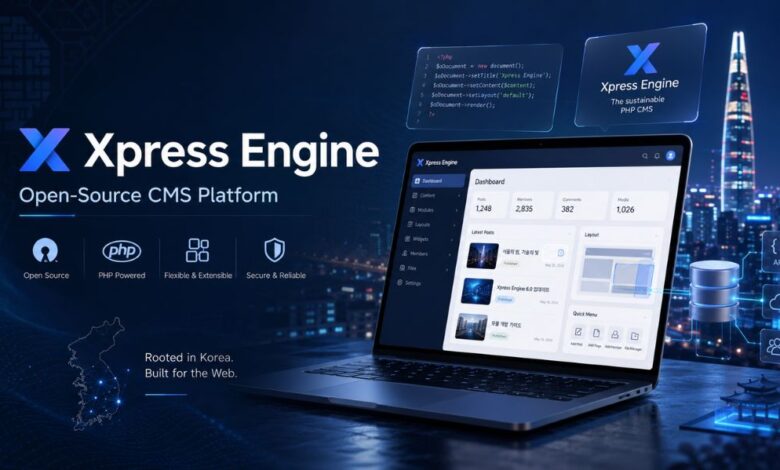
Xpress Engine is an open-source Content Management System (CMS) designed to help users build and manage websites with greater flexibility. It is especially well known in South Korea, where it has become part of the country’s strong web community culture. Xpress Engine, also written as XpressEngine or XE, is connected to the legacy of Zeroboard, a well-known Korean bulletin board system that played an important role in the early development of online communities.
At its core, Xpress Engine is designed for people who want to publish content, manage members, organize pages, and build digital spaces without having to create every feature from scratch. It gives website owners a structure they can customize through themes, modules, plugins, and administrative tools. This makes it useful for blogs, business websites, online communities, company pages, portfolios, and content-driven platforms.
Xpress Engine History and Background
Xpress Engine and the Zeroboard Legacy
The story of Xpress Engine is inseparable from Zeroboard. Zeroboard was one of the most recognizable bulletin board platforms in South Korea during the earlier years of the internet. It helped many communities create forums, discussion pages, and member-based websites. As web standards changed and users needed more than simple bulletin boards, the idea evolved into a broader CMS.
Xpress Engine expanded the older community board concept into a more complete website management system. Instead of focusing only on posts and comments, it offered a wider framework for building full websites. This shift made XE important not only as software but also as a part of Korean internet history.
Xpress Engine as a PHP CMS
Xpress Engine is built with PHP, a prominent programming language in web development. PHP has powered many content management systems due to its strong compatibility with web servers and databases. For site owners, this means Xpress Engine can be deployed on standard hosting environments that support PHP and database systems such as MySQL or MariaDB.
The newer version of Xpress Engine, often called XE3, moved toward a modern PHP architecture by using the Laravel framework. Laravel is a structured and popular framework that helps developers build complex web applications more efficiently. This change made Xpress Engine easier for developers and better suited for large web projects.
Xpress Engine Features
Xpress Engine Content Management
The main purpose of Xpress Engine is to make website content easier to manage. A user can create pages, publish articles, manage menus, organize site sections, and control how visitors interact with the website. For people who do not want to manually code every page, this CMS structure saves time and reduces technical pressure.
Content management involves writing articles, organizing categories, updating information, managing media, and providing a good user experience. Xpress Engine supports these functions through its administrative interface and site-building features.
Xpress Engine Themes and Design Control
A good CMS should allow a website to look different from other websites using the same platform. Xpress Engine supports design customization through skins, themes, and layout options. This gives developers and designers room to create unique websites while still using the CMS as the foundation.
For businesses, design control matters because branding depends on visual consistency. For communities, it matters because users often connect emotionally with a familiar layout and identity. Xpress Engine gives site owners the ability to shape their identity rather than being locked into a single fixed appearance.
Xpress Engine Modules and Extensions
One of the strongest parts of a CMS is its ability to expand. Xpress Engine can be extended through modules and plugins. These tools allow site owners to add features without rebuilding the entire platform. Depending on the project, a website may need a board, a member system, a contact form, a media function, or a special content feature.
This modular approach makes Xpress Engine more flexible than a simple static website. Developers can adapt it for different purposes, while non-technical administrators can benefit from existing features.
Xpress Engine for Different Website Types
Xpress Engine for Blogs and Content Sites
Xpress Engine can be used for blogs, news-style websites, and information portals. A content site needs a system for publishing regularly, organizing topics, and keeping older posts accessible. XE provides the structure needed for this kind of workflow.
For SEO-focused websites, content organization is especially important. Clear categories, readable pages, and consistent internal structure help both readers and search engines understand the website. Xpress Engine provides site owners with a foundation for managing that structure.
Xpress Engine for Online Communities
Because of its background in bulletin board culture, Xpress Engine is naturally connected to online communities. Member interaction, posting, commenting, and discussion have always been important parts of Korean web platforms. XE can support community-style websites where users do more than simply read content.
A successful community website requires trust, intuitive navigation, effective moderation, and robust user management. Xpress Engine equips administrators to establish and sustain these foundational elements, ensuring members can interact constructively.
Xpress Engine for Business Websites
Businesses can use Xpress Engine to create professional websites that explain services, publish company updates, and manage customer-facing content. A small company may use it for a simple corporate website, while a larger organization may use it as part of a more customized digital platform.
The primary benefit of a CMS for business is autonomy. Rather than relying on a developer for minor text adjustments, companies can modify pages through the CMS dashboard. This accelerates content updates and boosts efficiency.
Xpress Engine Advantages
Xpress Engine Is Open Source
One of the key advantages of Xpress Engine is its open-source nature. Open-source software allows developers to inspect, modify, and contribute to the code. This provides flexibility for technical teams seeking greater control over their website system.
Open source also gives a platform a community-driven character. People can learn from the code, build extensions, and adapt the CMS for specific needs. For developers, this is valuable because it reduces dependency on closed systems.
Xpress Engine Offers Flexibility
Xpress Engine’s flexibility allows it to serve a wide range of websites, from blogs and company sites to forums and community portals, depending on modules and design choices.
This adaptability is useful for projects that may start small and grow, as Xpress Engine can accommodate added features over time.
Xpress Engine Supports Developer Customization
Developers often prefer systems that do not restrict them too heavily. Xpress Engine, especially in its modern XE3 direction, offers opportunities for customization through PHP development, plugins, templates, and framework-based architecture. This makes it more attractive for teams that want a CMS but still need technical freedom.
Xpress Engine Limitations
Xpress Engine May Require Technical Knowledge
Although Xpress Engine is a CMS, it may not be as beginner-friendly as some global website builders. Users who are completely new to hosting, PHP, databases, and installation may need guidance. Installing and maintaining a CMS requires a basic understanding of servers, updates, backups, and security.
For non-technical users, this can be a challenge. However, for developers and experienced website managers, the extra control can be worth it.
Xpress Engine Has a Strong Korean Web Identity
Xpress Engine is widely associated with South Korea. This is part of its strength, but it can also affect global adoption. Some resources, discussions, and community materials may be more common in Korean than in English. International users may need to do additional research when looking for tutorials, troubleshooting help, or community support.
Still, its Korean web identity is also what makes Xpress Engine unique. It reflects a different CMS tradition than that of platforms that grew mainly in Western markets.
Xpress Engine SEO Value
Xpress Engine and Search-Friendly Websites
A CMS alone does not guarantee top search rankings, but it can facilitate SEO when properly implemented. Xpress Engine aids in organizing, ensuring consistent content publishing, aproviding nd providing a structured site experience. Strong SEO still relies on quality writing, fast loading, mobile optimization, relevant headings, clear navigation, and reliable content.
For a website to rank well, the content must answer real user intent. If a site uses Xpress Engine but publishes thin or copied content, it will not perform well. If it uses the CMS to create helpful, original, well-structured pages, it has a stronger foundation for search visibility.
Xpress Engine for Humans and Machines
Modern content must be understandable to both humans and search systems. Human readers need clear explanations, smooth flow, and useful details. Search engines and AI-powered systems need structure, context, and entity clarity. Xpress Engine supports this by giving publishers a platform for organized content, proper page structure, and repeatable publishing.
The best results come when the CMS is combined with careful writing, clean design, and regular maintenance.
Xpress Engine Security and Maintenance
Xpress Engine Updates Matter
Like any CMS, Xpress Engine should be kept up to date. Website software can become vulnerable when old versions, outdated plugins, or weak server settings are ignored. Administrators should pay attention to updates, backups, hosting quality, and permissions.
Security is not only the responsibility of the CMS developer. Site owners must also use strong passwords, install trusted extensions, remove unused files, and monitor suspicious activity. A well-maintained Xpress Engine website is safer and more reliable than one that is ignored after launch.
Xpress Engine Performance Care
Website speed affects user experience and SEO. Xpress Engine websites should be optimized with reliable hosting, clean themes, image compression, caching where appropriate, and careful use of plugins. Too many unnecessary features can slow down any CMS.
A fast website keeps readers engaged and helps search systems crawl pages more efficiently. Performance should be treated as part of the website strategy, not as an afterthought.
(FAQs)
What is Xpress Engine?
Xpress Engine is an open-source PHP-based Content Management System for creating and managing websites. It is especially well known in South Korea and has roots in Zeroboard, a famous early Korean bulletin board platform.
Is Xpress Engine the same as XpressEngine?
Yes, the term Xpress Engine is often written as XpressEngine. Many users also call it XE. The spaced version is commonly used as a search keyword, while XpressEngine is the official-style name.
Is Xpress Engine good for community websites?
Yes, Xpress Engine can be suitable for community websites because of its historical connection to bulletin board systems and its support for member-based content structures. It can be used for forums, discussion pages, and online communities.
Is Xpress Engine beginner-friendly?
Xpress Engine can be useful for beginners who are willing to learn, but it may require more technical knowledge than simple drag-and-drop website builders. Users may need to understand hosting, PHP, databases, installation, and updates.
Can Xpress Engine be used for business websites?
Yes, Xpress Engine can be used for business websites, company pages, service websites, blogs, and content portals. Its flexibility makes it suitable for different website types when properly configured.
Is Xpress Engine good for SEO?
Xpress Engine can support SEO by helping users create organized, structured, and content-rich websites. However, SEO success depends on content quality, site speed, mobile usability, internal structure, and regular updates.
Conclusion
Xpress Engine is more than just another CMS. It is a platform with deep roots in South Korea’s web history, shaped by the legacy of Zeroboard and developed into a more flexible system for modern websites. Its open-source nature, PHP foundation, modular structure, and community-focused background make it useful for blogs, business websites, portals, and online communities.
While it may require more technical understanding than some beginner website builders, Xpress Engine offers meaningful control for users who want flexibility and customization. For developers, it provides a foundation that can be adapted to different project goals. For website owners, it offers a structured way to manage content and build a digital presence.
A successful Xpress Engine website depends on more than installation. It needs good content, careful design, regular updates, attention to security, and a clear understanding of the audience. When used properly, Xpress Engine can remain a practical and powerful CMS choice for anyone interested in open-source website management.