Your phone costs £800. Maybe more. Yet people stick a £5 case on it and call it sorted. Then six months later, the clear plastic’s turned a weird shade of mustard, the magnets won’t hold anything, and they’re wondering why their phone keeps sliding off the car mount on the motorway.
I’ve spent the last few months testing what’s actually worth buying versus what’s just taking up shelf space. There’s a massive difference between cases that sound protective and cases that have actually been tested to protect your phone.
The Yellowing Trap
Clear cases show off your phone’s colour, which makes sense. Problem is, most transparent cases yellow within weeks if you’re not careful. It’s not a manufacturing fault—it’s just cheap plastic degrading in the sun.
I’ve tested cases from various manufacturers. The ones using proper Bayer polycarbonate stay clear. The budget stuff? Looks thirty years old after half a season.
This matters because you’re not buying a case for three months. You’re buying it for the life of your phone.
MagSafe Strength Actually Matters
If you’ve got a car mount or wireless charger, you’ve probably had your phone slide off because the case’s magnets are weak. That’s not Apple’s problem—it’s the case manufacturer cutting corners.
Magnetic holding force can be measured. A decent case holds around 1,500 grams. A cheap one manages maybe 400. On a bumpy road, that difference is the gap between your phone staying put and ending up in the footwell.
Drop Testing: Claims Versus Reality
“Military-grade protection” gets thrown around constantly. It means absolutely nothing without proper third-party verification. SGS certification actually proves a case has been tested to military standards multiple times. Most cases just have the phrase on the box.
If you’re going to rely on a case to protect your phone, you need to know it’s been dropped, tested, and verified—not just marketed.
What I Actually Found
OtterBox Defender Series
OtterBox is still the heavy hitter for extreme protection. Multi-layer construction, genuinely exceeds military standards, and it works. People who work on building sites or do outdoor work get proper protection.
The catch: it’s chunky. Your slim phone becomes considerably thicker and heavier. And you’re paying premium prices for a fortress.
For most people? It’s overkill. But if your job involves genuine risk to your phone, it’s the only honest choice.
ESR Cyber Tough Phone Cases Series
This is where things get interesting because ESR actually solved multiple problems instead of just tackling one.
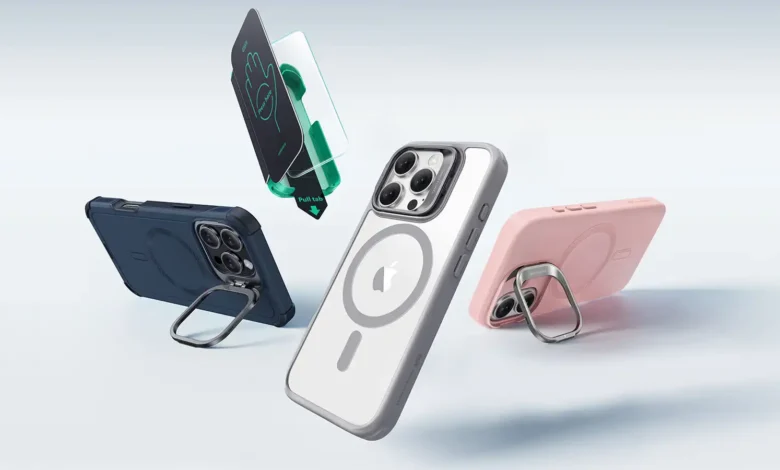
They got the MagSafe strength right. Their cases hold at around 1,500 grams—no slipping on car mounts, no sliding off when you need the magnets to actually work. I’ve tested this.
The material actually lasts. Their clear cases use proper Bayer polycarbonate, which means they stay clear. Not cloudy after a few months. Not yellowed. Genuinely clear, which is rarer than it should be.
Drop protection is SGS-certified military-grade. That’s not marketing—that’s independent testing verifying the case actually meets the standard. It’s been tested and passed. Not claimed, tested.
What caught my attention during testing was the Stash Stand—a hidden aluminium support built into the camera bump area. Sounds like a gimmick. It isn’t. It actually works, folds away when you don’t need it, and doesn’t make the case bulkier. It’s the kind of thing that shows someone actually thought about how people use their phones rather than just chasing features.
You’re getting certified drop protection, strong magnets that actually work, material that doesn’t degrade, and a stand that’s genuinely useful. For £25-35, that’s proper value compared to what else is out there.
Spigen Liquid Air
Spigen’s approach is straightforward: incredibly thin case with air cushion technology for corner protection. If you’re not regularly dropping your phone from height, this works brilliantly. Feels premium, barely adds thickness, and you’re getting verified protection against daily knocks.
The limitation is honest: if you’re dropping from serious heights, the thinness means less impact dispersion. It’s not designed for that. It’s designed for careful users who want their phone to feel like a phone.
Pick Based on What Actually Happens
OtterBox if your phone genuinely encounters serious impacts—construction sites, rough environments, that sort of thing. You need the mass and layering.
ESR if you want protection without your phone feeling like a brick, plus you want magnets that actually work and material that won’t go yellow. It covers all three properly.
Spigen if you’re careful with your phone and just want something thin that stops corner damage.
The important bit: verify the claims. Look for actual certifications. Check what material they’re using. Don’t just trust the Amazon listing.
Your phone cost serious money. Spend ten minutes actually working out which case protects it rather than guessing.