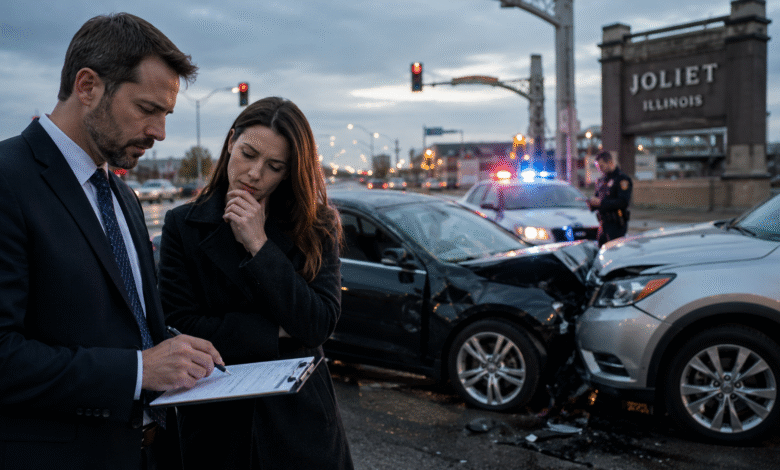
Car accidents happen every day across Joliet, Illinois. From heavy traffic near Interstate 80 to collisions along Route 30 and busy downtown intersections, drivers face constant risks whenever they get behind the wheel. While some crashes result in minor vehicle damage, others leave victims dealing with painful injuries, lost income, emotional distress, and long recovery periods.
After a serious collision in Joliet, IL, one of the most important questions injured victims ask is simple: “How do I prove what happened?” The answer often comes down to evidence.
Strong evidence can help establish fault, demonstrate the severity of injuries, and show how the crash changed a person’s life. Without clear proof, even legitimate injury claims may become difficult to pursue. In many cases, the quality of the evidence collected after a crash can significantly affect the outcome of a legal claim.
For injured victims in Joliet, understanding what evidence matters most can make a major difference.
Why Evidence Matters After a Car Accident
Car accident injury claims are built on facts. The injured person must generally show that another driver acted negligently and that the negligence directly caused injuries and damages.
That may sound straightforward, but crashes often involve conflicting stories. One driver may claim the other ran a red light. Another may insist the collision happened because of speeding or distracted driving. Witnesses may remember events differently. Some drivers even attempt to minimize their own responsibility after the crash.
Evidence helps cut through uncertainty.
Strong documentation can support key elements of a claim, including:
- Who caused the collision
- How the accident occurred
- The severity of injuries
- Financial losses
- Long-term medical needs
- Pain and suffering
- Emotional trauma
- Loss of earning ability
The stronger the evidence, the more difficult it becomes for opposing parties to dispute the claim.
Police Reports Often Become Critical Evidence
One of the first documents reviewed after a crash is usually the police report.
When officers respond to a collision in Joliet, they typically document important details such as:
- Date and time of the crash
- Road and weather conditions
- Statements from drivers
- Witness information
- Vehicle positions
- Visible injuries
- Citations issued at the scene
- Preliminary fault assessments
Although a police report may not be the final determination of liability, it can provide a valuable starting point for building a case.
For example, if an officer notes that a driver was texting, speeding, intoxicated, or failed to yield, that information may support the injured person’s claim.
Police reports can also preserve details that might otherwise disappear quickly after a collision.
Photographs Can Tell the Story Clearly
Photos often become some of the most persuasive evidence in a car accident claim.
Immediately after a collision, scenes change rapidly. Vehicles get towed away. Debris is cleared. Injuries begin healing. Traffic patterns return to normal.
Photographs preserve what the scene looked like in real time.
Important photos may include:
- Vehicle damage
- Skid marks
- Broken glass
- Traffic signs
- Traffic light positions
- Road hazards
- Weather conditions
- Tire marks
- Airbag deployment
- Visible injuries
Pictures taken from multiple angles can help accident reconstruction professionals understand how the crash occurred.
In Joliet, where winter weather can create dangerous road conditions, photographs showing snow, ice, standing water, or poor visibility may become especially important.
Video Footage Can Be Extremely Powerful
Video evidence has become increasingly valuable in modern car accident claims.
Many crashes are now captured through:
- Dash cameras
- Traffic cameras
- Security cameras
- Business surveillance systems
- Doorbell cameras
- Cell phone recordings
Video footage can eliminate disputes about what happened moments before impact.
For example, footage may show:
- A driver running a stoplight
- Distracted driving
- Sudden lane changes
- Aggressive driving behavior
- Failure to brake
- Speeding
- Tailgating
In some situations, nearby businesses in Joliet may have surveillance systems pointed toward roadways or parking lots. However, footage is often deleted quickly, making early investigation extremely important.
Medical Records Help Connect Injuries to the Crash
Medical documentation is among the most essential forms of evidence in any injury claim.
Victims must generally prove not only that they were hurt, but that their injuries directly resulted from the accident.
Medical records may include:
- Emergency room reports
- Ambulance records
- Diagnostic imaging
- Surgical records
- Physical therapy notes
- Physician evaluations
- Prescription information
- Specialist consultations
These records help establish the timeline between the collision and the injuries.
Seeking medical treatment quickly after a crash is often important because delays may create opportunities for opposing parties to argue that injuries were unrelated or exaggerated.
Even injuries that initially seem minor can worsen over time. Conditions such as whiplash, spinal injuries, traumatic brain injuries, and soft tissue damage may not fully appear until days later.
Consistent treatment and follow-up care can help strengthen the overall claim.
Witness Statements Can Support the Victim’s Version of Events
Independent witnesses can play a major role in disputed car accident cases.
Unlike drivers directly involved in the collision, third-party witnesses may have no personal stake in the outcome. Because of this, their testimony often carries significant weight.
Witnesses may provide information about:
- Traffic light colors
- Driver behavior
- Speeding
- Swerving
- Cell phone use
- Road conditions
- Driver intoxication
- Statements made at the scene
Human memory fades quickly, which is why obtaining witness contact information immediately after a crash can be extremely important.
In busy areas of Joliet, witnesses may leave the scene within minutes if nobody gathers their information.
Cell Phone Records May Reveal Distracted Driving
Distracted driving remains one of the leading causes of serious crashes across Illinois.
Texting while driving, social media use, navigation apps, and other phone-related distractions can dramatically reduce reaction time.
In some cases, cell phone records may show that a driver was:
- Sending text messages
- Making calls
- Using apps
- Streaming videos
- Browsing online
This type of evidence may help establish negligence when distracted driving is suspected.
Illinois law prohibits drivers from using handheld devices while operating a vehicle, and violations can become important factors in injury claims.
Vehicle Damage Can Reveal Important Clues
The condition of the vehicles involved can provide valuable insight into how a crash occurred.
Vehicle damage patterns may help experts determine:
- Direction of impact
- Approximate speed
- Point of collision
- Force of impact
- Whether braking occurred
For example, severe rear-end damage may support claims involving high-speed impacts, while side-impact damage could indicate failure to yield at intersections.
Modern vehicles also contain electronic systems capable of storing crash-related data.
These event data recorders, sometimes called “black boxes,” may capture:
- Vehicle speed
- Brake usage
- Steering input
- Seatbelt usage
- Airbag deployment timing
This information can become extremely valuable in serious injury cases.
Accident Reconstruction Experts May Strengthen Complex Claims
Some collisions involve complicated circumstances that require deeper investigation.
In these cases, accident reconstruction experts may analyze:
- Physical evidence
- Roadway measurements
- Vehicle damage
- Black box data
- Skid marks
- Video footage
- Witness statements
Using scientific methods, experts may recreate how the crash likely occurred.
This can be particularly useful in cases involving:
- Multi-vehicle collisions
- Commercial truck crashes
- Motorcycle accidents
- Fatal collisions
- Disputed liability
- High-speed impacts
Expert analysis often helps juries and investigators better understand complex accident dynamics.
Employment Records Help Prove Financial Losses
Serious injuries frequently prevent victims from working.
Employment records can help demonstrate:
- Lost wages
- Missed workdays
- Reduced earning capacity
- Lost promotions
- Reduced hours
- Career disruptions
Documentation may include:
- Pay stubs
- Tax returns
- Employer letters
- Attendance records
- Disability paperwork
For self-employed individuals, financial records and client documentation may become especially important.
In severe injury cases, long-term loss of earning ability may represent a major component of damages.
Pain Journals Can Document Daily Struggles
Not all accident-related harm is visible on X-rays or medical scans.
Victims often experience:
- Chronic pain
- Anxiety
- Depression
- Sleep problems
- Emotional trauma
- Reduced mobility
- Loss of enjoyment of life
A daily journal may help document these struggles.
Injury journals can include:
- Pain levels
- Physical limitations
- Emotional effects
- Sleep disruptions
- Missed family activities
- Medication side effects
Over time, these personal records may help illustrate how dramatically the injuries affected the victim’s life.
Social Media Activity Can Affect Claims
Many people do not realize that social media posts may become evidence in injury cases.
Photos, videos, comments, and check-ins may all be reviewed during investigations.
Even innocent posts can sometimes be taken out of context.
For example, a person claiming serious back injuries who posts photos from a family outing may face arguments that their injuries are less severe than claimed.
Because of this, accident victims are often advised to use caution with social media while a claim remains ongoing.
Surveillance Footage May Be Used by Opposing Parties
In serious injury claims, opposing legal teams may conduct surveillance investigations.
Investigators sometimes monitor claimants in public places and record activities that appear inconsistent with reported injuries.
While surveillance does not always tell the full story, videos may still be presented during settlement discussions or litigation.
Consistency between medical records, testimony, and daily activities is important.
Timing Matters When Preserving Evidence
One of the biggest mistakes accident victims make is waiting too long to gather evidence.
Critical evidence can disappear quickly:
- Witnesses move away
- Surveillance footage gets erased
- Vehicles are repaired
- Skid marks fade
- Road conditions change
- Digital records vanish
Prompt investigation can help preserve important details before they are lost.
Early action also allows attorneys and investigators to identify potential evidence sources that victims may overlook.
Comparative Fault Can Affect Illinois Injury Claims
Illinois follows a modified comparative fault system.
This means injured victims may still recover damages even if they were partially responsible for the crash, provided they were less than 51% at fault.
However, compensation may be reduced based on the percentage of fault assigned.
Because of this, evidence becomes especially important when fault is disputed.
Strong evidence may help minimize attempts to unfairly shift blame onto the injured person.
Truck Accident Claims Often Require Additional Evidence
Joliet’s location near major transportation routes means commercial truck accidents are common.
Truck crashes often involve additional evidence sources, including:
- Driver logs
- Electronic logging devices
- Maintenance records
- Truck inspection reports
- Cargo records
- Employer safety histories
- Driver qualification files
Commercial carriers may move quickly after a crash to protect their interests, making early investigation critical.
Medical Experts Can Explain Long-Term Injuries
Some accident injuries create lifelong complications.
Medical experts may help explain:
- Permanent disabilities
- Future surgeries
- Chronic pain
- Long-term rehabilitation
- Cognitive impairments
- Mobility limitations
Expert testimony may be necessary in severe injury cases involving:
- Brain injuries
- Spinal cord damage
- Amputations
- Permanent nerve injuries
- Complex orthopedic trauma
These professionals help connect medical evidence to future damages and life impacts.
Emotional Trauma Should Not Be Overlooked
Car accidents can leave lasting psychological scars.
Many victims experience:
- Post-traumatic stress
- Driving anxiety
- Panic attacks
- Depression
- Emotional distress
Mental health treatment records may help document these invisible injuries.
Emotional trauma can significantly affect a victim’s daily life, relationships, and ability to work.
Consistency Is One of the Most Important Factors
One of the strongest ways to support a car accident injury claim is maintaining consistency throughout the process.
This includes consistency between:
- Medical records
- Witness statements
- Testimony
- Photos
- Employment records
- Daily activities
Conflicting information may create opportunities for opposing parties to challenge the claim.
Clear, organized documentation often strengthens credibility.
Final Thoughts
A strong Joliet car accident injury claim is rarely built on a single piece of evidence. Instead, successful claims often rely on a combination of medical documentation, photographs, witness testimony, expert analysis, financial records, and investigative findings.
Every crash creates its own unique circumstances. Some cases may depend heavily on surveillance footage, while others revolve around medical experts or accident reconstruction analysis.
What remains constant is the importance of preserving evidence early and thoroughly.
For injured victims in Joliet, strong evidence can help establish the truth, demonstrate the seriousness of injuries, and protect the ability to pursue fair financial recovery after a devastating collision.