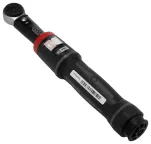
Many mechanical components are held together using bolts, nuts, and other threaded fasteners. While it may be possible to tighten these manually using a standard wrench, some applications require a specific amount of tightening force to ensure that the fastener is neither too loose nor excessively tightened.
A torque wrench is a hand tool designed to apply a controlled amount of torque to a fastener. It is commonly used in applications where tightening accuracy is important, such as automotive repair, machinery maintenance, manufacturing, and equipment assembly.
What Is Torque?
Torque describes the turning effect created when a force is applied to an object around a pivot point. In fastening applications, torque is generated when force is applied through a wrench to rotate a nut or bolt.
The amount of torque applied can depend on the force used and the effective length of the wrench. This is why a torque wrench is used when a fastener must be tightened to a specified value rather than simply tightened by feel.
Why Is Correct Torque Important?
Applying the correct torque can help achieve the intended level of fastening for a component or assembly.
Under-Tightening
If a fastener is not tightened sufficiently, it may loosen during operation due to vibration, movement, or changing loads.
Depending on the application, this could result in:
- Reduced joint stability
- Component movement
- Leakage
- Increased wear
- Equipment malfunction
Over-Tightening
Applying excessive torque can also create problems. It may damage the fastener, strip threads, deform components, or place excessive stress on the assembled parts.
For this reason, manufacturers may provide specific torque requirements for critical fasteners.
Common Types of Torque Wrenches
Different torque wrench designs are available depending on the application and required level of control.
Click Torque Wrenches
A click-type torque wrench is set to a specific torque value. When the selected value is reached, the mechanism produces an audible or tactile click.
This type is commonly used in mechanical maintenance and assembly work.
Beam Torque Wrenches
Beam-style torque wrenches use a mechanical indicator to display the amount of torque being applied.
The user monitors the scale while tightening the fastener until the required value is reached.
Dial Torque Wrenches
Dial torque wrenches use a dial indicator to display the applied torque. They may be useful where direct visual monitoring of the applied value is required.
Electronic Torque Wrenches
Electronic models use sensors to measure applied torque and may provide digital displays, audible alerts, or other indicators when a target value is reached.
Features can vary depending on the tool design.
Common Applications
Torque wrenches are used in many industries and maintenance tasks, including:
- Automotive repair and servicing
- Bicycle maintenance
- Industrial machinery
- Manufacturing and assembly
- Aerospace applications
- Engineering workshops
- Equipment installation
- Mechanical maintenance
The required torque range can vary significantly between applications.
How to Select a Torque Wrench
Choosing a suitable torque wrench involves considering the requirements of the task.
Torque Range
The wrench should cover the required torque value. In general, it is preferable to select a tool whose operating range is appropriate for the torque values that will be used regularly.
Drive Size
Torque wrenches are available with different square drive sizes for use with compatible sockets and accessories.
Common sizes include:
- 1/4 inch
- 3/8 inch
- 1/2 inch
- 3/4 inch
The appropriate drive size depends on the fasteners and torque requirements of the application.
Accuracy
Different tools may have different stated accuracy levels. Applications with stricter fastening requirements may require a tool with suitable accuracy specifications.
Units of Measurement
Torque may be specified in different units, including:
- Newton metres (Nm)
- Foot-pounds (ft-lb)
- Inch-pounds (in-lb)
The wrench should allow the user to work accurately with the units required for the application.
Proper Use of a Torque Wrench
Before tightening a fastener, the required torque value should be confirmed from the relevant equipment documentation or manufacturer specifications.
The fastener should be in good condition, and the correct socket or attachment should be used. When applying torque, steady force should generally be applied according to the operating instructions for the specific wrench.
A torque wrench should not automatically be used as a substitute for every general-purpose loosening or tightening task, particularly if the manufacturer does not recommend it for that purpose.
Calibration and Care
Torque wrenches are precision tools, and their accuracy can be affected by wear, misuse, or improper storage.
Depending on the tool and frequency of use, calibration may be required periodically. Users should follow the manufacturer’s instructions regarding storage, adjustment, maintenance, and calibration.
For adjustable click-type models, storage requirements may include returning the wrench to the recommended setting after use, depending on the manufacturer’s guidance.
Choosing the Right Tool
When comparing different torque wrenches, it is useful to consider the required torque range, drive size, accuracy, measurement units, adjustment mechanism, and intended working environment.
Selecting a wrench that matches the application’s fastening requirements can help support more consistent and controlled tightening.
Conclusion
Torque wrenches are designed for applications where fasteners need to be tightened to a specified torque value. They are available in mechanical and electronic designs, with different ranges and features suited to various maintenance, assembly, and engineering tasks.
By understanding the required torque, selecting an appropriate tool, and following the manufacturer’s operating and maintenance guidance, users can apply fasteners with greater control and consistency.