Modern life is built around convenience. Products are designed to save time, reduce effort, and simplify daily routines. From household cleaning supplies to personal care items, convenience has become one of the most powerful forces shaping consumer behavior.
Yet an interesting shift is taking place.
Many consumers are beginning to question whether convenience always delivers the value it promises. In some cases, products designed to be easier end up creating new challenges: cluttered storage spaces, excessive packaging, complicated disposal requirements, and a growing sense of dependence on highly specialized items.
This reevaluation is leading people toward a different question:
What does real convenience actually look like?
The answer increasingly revolves around simplicity, efficiency, and versatility rather than abundance.
The Evolution of Consumer Expectations
For much of the last century, manufacturers competed by adding features. Bigger packages, larger product lines, and highly specialized formulas became common selling points.
Consumers were encouraged to purchase separate products for increasingly specific needs.
The result was a dramatic expansion of household inventory.
Bathrooms filled with multiple personal care products. Laundry rooms accumulated shelves of cleaning supplies. Kitchen cabinets became storage areas for products used only occasionally.
At first, this seemed efficient.
Over time, however, many people began to recognize that more products often meant more complexity.
The Burden of Excess
Every product added to a household requires attention.
It must be:
- Purchased
- Stored
- Organized
- Maintained
- Eventually replaced
As the number of products increases, so does the effort required to manage them.
This creates what some researchers describe as decision fatigue—the mental burden created by constantly making choices.
A crowded shelf may not seem significant, but every item represents another decision point in daily life.
Consumers increasingly appreciate products that reduce complexity rather than contribute to it.
Why Simplicity Feels Valuable
Simplicity has become attractive because it offers a sense of control.
A simplified household often provides:
- Easier organization
- Reduced visual clutter
- Faster routines
- Less waste
- Lower replacement frequency
Importantly, simplicity does not mean sacrificing functionality.
Instead, it means identifying products that perform their intended purpose efficiently without unnecessary complications.
This distinction helps explain why streamlined product formats continue gaining popularity.
Multi-Purpose Thinking
One characteristic shared by many modern consumer trends is versatility.
Products that serve multiple functions often appeal to consumers because they reduce the need for numerous specialized alternatives.
Versatile products can save:
- Storage space
- Shopping time
- Money
- Mental effort
Rather than maintaining several separate solutions, consumers increasingly favor products capable of addressing multiple needs.
This preference reflects a broader movement toward efficiency in everyday life.
Space as a Valuable Resource
Housing trends have influenced purchasing behavior in important ways.
Apartments, smaller homes, and urban living arrangements often provide limited storage.
As space becomes more valuable, products must justify their presence.
Consumers are asking practical questions:
- How much room does this require?
- How frequently will I use it?
- Does it simplify my routine or complicate it?
Products that maximize usefulness while minimizing storage requirements often perform well under this evaluation.
Packaging and Perception
Packaging has traditionally been used to communicate value.
Larger boxes and containers often create the impression that consumers are receiving more for their money.
However, modern shoppers increasingly distinguish between product volume and product utility.
They recognize that packaging sometimes contributes more to size than to actual usefulness.
This awareness has encouraged interest in concentrated and compact formats.
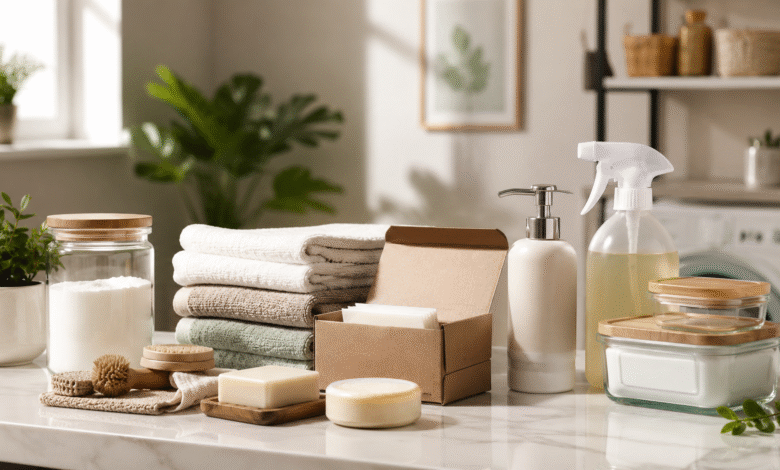
An example can be seen in laundry detergent sheets, which demonstrate how cleaning products can be reformulated to occupy significantly less space while still serving the same essential purpose.
The appeal is not simply environmental. It is practical.
Routines Are Being Redesigned
Consumers are not only changing what they buy; they are changing how they think about routines themselves.
Many people now evaluate products according to questions such as:
- Does this save time?
- Does this reduce clutter?
- Does this simplify daily habits?
- Does this eliminate unnecessary steps?
Products that support streamlined routines often resonate because they reduce friction in everyday life.
Efficiency becomes a form of convenience.
The Return of Tangible Products
Interestingly, some consumers are moving away from products that rely heavily on elaborate packaging and toward simpler physical formats.
This trend reflects a growing appreciation for direct functionality.
For example, a lotion bar represents a format that delivers its intended purpose without relying on pumps, tubes, or large containers.
Again, the appeal is not solely environmental.
Many consumers appreciate the straightforward nature of products designed around utility rather than excess packaging.
Economic Considerations
Simplification can also provide financial benefits.
When consumers purchase fewer products overall, they often spend less on:
- Replacements
- Storage solutions
- Impulse purchases
- Specialized items
Additionally, products designed around concentration or longevity may offer improved value over time.
This economic advantage reinforces the appeal of streamlined consumption.
Consumers increasingly recognize that reducing complexity can also reduce costs.
The Relationship Between Convenience and Control
One reason convenience became so dominant is that it promised to make life easier.
However, some forms of convenience inadvertently reduce control by creating dependence on constant purchasing and replacement.
Consumers are beginning to distinguish between temporary convenience and sustainable convenience.
Temporary convenience prioritizes immediate ease.
Sustainable convenience prioritizes long-term simplicity.
This distinction helps explain many emerging consumer preferences.
People increasingly value products that remain useful without requiring constant attention.
A New Definition of Progress
Historically, progress was often associated with expansion—more products, more options, more features.
Today, many consumers define progress differently.
They appreciate products that:
- Reduce unnecessary complexity
- Improve efficiency
- Save space
- Simplify routines
This perspective does not reject innovation.
Rather, it encourages innovation that removes obstacles instead of adding them.
In many cases, the most effective solutions are not the ones that introduce more elements into daily life. They are the ones that quietly eliminate what was never needed in the first place.
As households continue evolving and consumer priorities shift, products that combine practicality, simplicity, and efficiency are likely to remain influential. The future of convenience may not involve owning more things—it may involve needing fewer of them.