
A laboratory does not buy an image generator in isolation. It buys another step in the route from data to manuscript, and every step creates something that must be checked. That is the useful way to assess PaperFig: not by how quickly an attractive figure appears, but by how much scientific and editorial work remains before that figure can be trusted.
The distinction is easy to miss because speed is visible while review labour is not. A generated mechanism diagram can arrive before a manually drawn draft, yet one misplaced label may send the file through another coauthor round. A lab manager therefore needs to price the correction path, the export options, the handling of sensitive inputs, and the expiry of credits alongside the headline generation count.
Fast Drafts Can Create Slow Review Queues
Scientific figures do more than decorate a paper. A line may mean activation, inhibition, transport, sequence, or a relationship that has not been proved at all. A polished draft increases the risk that reviewers focus on surface quality and overlook a logical error. The better the image looks, the more disciplined the lab’s acceptance gate needs to be.
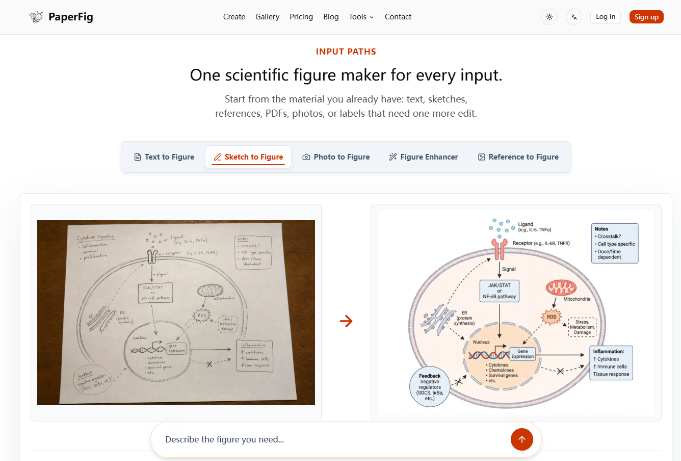
PaperFig is designed to turn text, sketches, photos, PDFs, or reference images into mechanisms, workflows, graphical abstracts, and other journal-style visuals. That breadth shortens the first-layout stage. It also means the same tool can enter projects at very different levels of scientific maturity. A settled pathway and an exploratory whiteboard sketch should not share the same approval route.
A sensible buying case begins with review minutes, not generation minutes. If a draft saves an hour of icon arrangement but creates two extra coauthor calls, the saving has moved rather than appeared. The cost is especially clear when a senior investigator, a postdoctoral researcher, and a designer all review different versions because filenames and acceptance rules were never agreed.
Compare Tools Across The Entire Figure Route
A procurement comparison should follow the file from first brief to final placement. Four questions expose most of the hidden work: what can enter, what can be corrected, what can leave, and who remains responsible for accuracy. The following table compares three common approaches without pretending that one route fits every laboratory.
| Decision point | Generic image generator | Manual design workflow | PaperFig workflow |
| Starting material | Usually a prompt and optional image | Research notes, sketches, and designer brief | Text, sketch, photo, PDF, or reference image |
| Scientific structure | Must be forced into a general prompt | Interpreted through researcher-designer discussion | Drafted around mechanisms, workflows, and graphical abstracts |
| Label correction | May require regeneration or external editing | Directly editable in design software | OCR label editing without full regeneration |
| Early export | Varies by service | Controlled by the designer | Basic PNG on the free tier |
| Later editing | Often flattened | Native editable source file | 4K PNG and editable SVG or PPTX labels on paid plans |
| Scientific approval | Always remains with the research team | Always remains with the research team | Always remains with the research team |
The table reveals the real trade-off. Manual design gives the greatest control but costs skilled time. A general generator may be quick, but scientific figure structure and label correction can feel bolted on. PaperFig sits between them: specialised starting paths and editing features reduce some production work, while the lab still owns every scientific decision.
That middle position is useful when the bottleneck is first-pass composition. It is less compelling when a laboratory already has a designer with reusable vector systems and a stable review process. Procurement should reward the avoided task, not simply the presence of another tool.
Credit Expiry Changes The Shape Of A Pilot
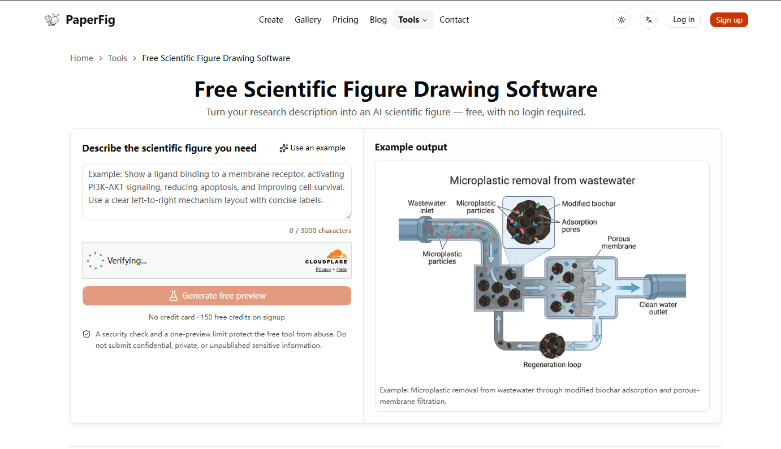
The free tier starts with 150 signup credits, adds a daily claim of 10 credits, and estimates roughly 50 credits per figure. That is enough to test a few representative briefs without a card. It is not enough to infer lab-wide economics from random experimentation. A pilot should use real figure types that recur across the group.
The paid structure splits into subscriptions and one-time packs. Annual Scholar is listed at $120 with 2,000 credits per month, Pro Scholar at $192 with 4,500 monthly credits, and Lab Pro at $528 with 14,500 monthly credits. Subscription credits last 30 days in each cycle. One-time packs last 12 months, beginning at $45 for 3,000 credits and rising through larger bundles.
Test Story Conversion Before Testing Visual Taste
The free allowance should answer one operational question: can the lab turn a typical source package into a scientifically reviewable draft? Choose one settled mechanism, one workflow, and one graphical abstract. Define the essential entities and relationships in advance. A successful pilot does not require everyone to like the same colour palette. It requires the central claim to survive generation and remain easy to correct.
Use a test protocol that records where review time goes. Note whether missing objects, wrong arrows, or unreadable labels caused the delay. A 3/3 pilot means all three figure types reached a reviewable state without reconstructing the whole composition. If one draft is discarded because it invents a relationship, record that as a scientific failure, not a style preference.
Match expiry rules to actual lab rhythm. A monthly allowance suits a group with recurring manuscript, grant, and presentation work. A 12-month pack can suit a lab whose demand arrives in bursts. The wrong match creates a simple waste pattern: unused monthly credits disappear while the lab still buys capacity during the next submission rush.
The headline “figures per month” is therefore only a planning estimate. The keep rate matters more. If half the drafts are exploratory and never reach review, their credits still belong in the cost of the accepted figures. A lab manager should track started drafts, accepted drafts, and the reason for rejection for one billing cycle before moving to a larger plan.
Editable Labels Decide Whether Revisions Stay Cheap
Figure revisions are rarely complete redesigns. A reviewer asks for another pathway, a coauthor corrects a protein name, or a slide needs shorter wording. The expensive failure occurs when a small text change forces a full regeneration and moves approved elements. Every new draft then needs another visual comparison.
Patch One Label Without Moving Approved Objects
PaperFig’s OCR text editor allows one label to be corrected without rebuilding the image. Paid plans also include editable SVG or PPTX label exports and 4K options. Those details are more valuable to an active lab than a dramatic first preview, because they preserve work that has already passed review.
An AI scientific figure maker should be judged at final placement size. A label that looks clear on a large browser canvas may become unreadable in a journal column. Put the exported figure into the actual manuscript or slide template, then inspect text, symbols, arrowheads, and colour separation. This catches the quiet errors that survive a full-screen review.
Version control can stay simple. Keep the approved brief, the current export, and a short change note together. If a label patch also changes an arrow or object position, call it a hard fail and return to the previous accepted version. This modest record keeps a small correction from reopening the whole visual argument.
Lab Policy Needs Clear Pass And Fail Gates
Buying a plan before defining responsibility is an invitation to rework. The person who generates a figure may understand the interface but not own the scientific claim. The principal investigator may approve the claim but never inspect the final-size export. A lightweight policy should connect those roles without creating a committee for every arrow.
Three gates are enough for most teams:
- Scientific gate: every entity, label, relationship, and implied direction matches the manuscript.
- Editorial gate: the figure remains readable at final size and follows the target venue’s current instructions.
- Rights and data gate: every uploaded input can lawfully and safely be processed by an online AI service.
The first gate belongs to someone qualified to defend the science. The second can be handled by an experienced author, editor, or designer. The third must occur before upload, not after generation. Passing moderation does not prove that confidential material was appropriate to share or that a copyrighted reference was authorised.
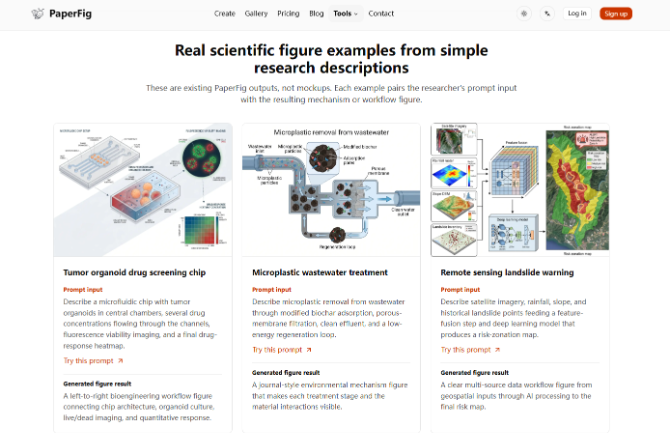
The platform also offers a public library of journal-style examples and a journal figure checker. These can make internal conversations more concrete. They do not replace the live instructions of a journal. Dimensions, file type, colour mode, permissions, and disclosure rules may change, so the final check must use the target venue’s current requirements.
Limits That Procurement Cannot Push Downstream
No plan removes scientific review, and no export format makes an unsupported relationship safe. Uploaded research materials may be processed by third-party services, so confidential or identifiable data can rule out the workflow before price is considered. Availability and model behaviour may also change. These boundaries belong in the buying decision, not in a warning added after adoption.
Buy Reviewability Before Buying More Figure Volume
PaperFig makes the strongest case for groups that repeatedly lose time between a settled scientific story and a clean first draft. Its specialised inputs, OCR label fixes, and editable paid exports can keep small revisions from becoming full rebuilds. The credit model also gives labs a low-cost way to test that claim with their own recurring figure types.
A lab should hold off when source material cannot be shared with third-party AI services, when the science is still too unsettled to brief, or when an existing designer workflow already handles revisions efficiently. The buying decision becomes clearer once review minutes, accepted drafts, and discarded drafts are counted. Volume is easy to advertise; reviewability is what determines whether the tool actually saves work.