Rising utility bills are one of the most persistent challenges facing industrial facilities and commercial operations today. Whether managing a manufacturing plant, a distribution center, or a large commercial building, energy and operational costs can quietly spiral out of control when equipment goes unchecked. The good news? A disciplined approach to routine system maintenance can make a meaningful difference, not just in equipment longevity, but in the bottom line as well. Understanding where costs originate and how smart maintenance practices address them is the first step toward running a genuinely efficient operation.
How Inefficient Systems Drive Up Energy Costs
When mechanical and electrical systems operate outside their optimal parameters, they consume significantly more energy to accomplish the same amount of work. A pump fighting against scale buildup, a motor running with worn bearings, or an HVAC unit with clogged filters will all draw extra power that adds up fast over time. These inefficiencies are often invisible in day-to-day operations, yet they show up clearly on monthly utility statements. Routine inspections allow technicians to catch these performance gaps early, well before they translate into costly overconsumption that strains operating budgets.
The Role of Preventive Maintenance in Reducing Waste
Preventive maintenance is a proactive strategy designed to keep systems running at peak efficiency rather than waiting for something to fail. Scheduled tasks like lubricating moving parts, calibrating sensors, cleaning heat exchangers, and testing electrical connections all contribute to lower energy consumption across the board. Facilities that implement structured preventive maintenance programs typically see a noticeable reduction in utility costs within the first few operational cycles. Beyond energy savings, these programs also reduce unplanned downtime, which carries its own financial consequences through lost productivity and expensive emergency repairs.
Optimizing Automation and Control Systems
Modern facilities rely heavily on automation to manage everything from lighting and climate control to production line sequencing. When control systems are poorly calibrated or running on outdated logic, equipment may operate unnecessarily during off-peak hours, cycle on and off too frequently, or fail to respond to real-time demand changes. Facilities that invest in advanced PLC services ensure that programmable logic controllers and supervisory control systems are properly tuned, updated, and functioning as intended, allowing automation infrastructure to make smart, energy-conscious decisions around the clock without requiring constant human oversight. Regular audits of these systems are essential to preserving the performance gains that modern automation is designed to deliver in the first place.
HVAC and Mechanical System Upkeep
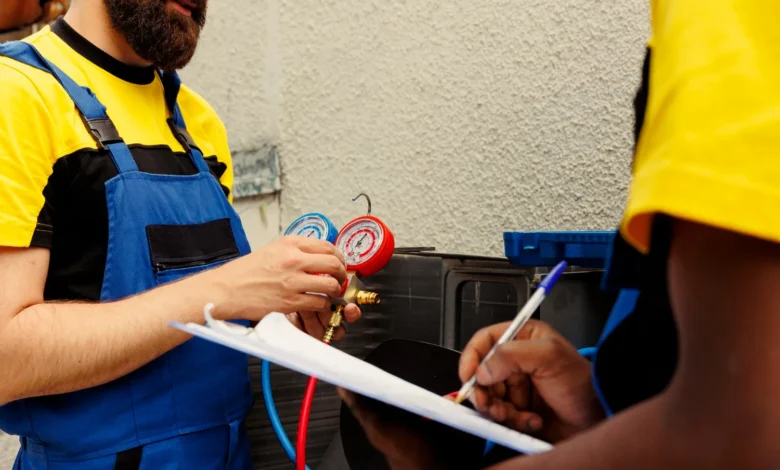
Heating, ventilation, and air conditioning systems are among the largest contributors to utility costs in most facilities, and they deserve serious attention. A well-maintained HVAC system operates efficiently, holds consistent temperature control, and avoids the energy spikes associated with overworked compressors and blowers. Maintenance tasks like coil cleaning, refrigerant checks, belt inspections, and airflow balancing all help the system deliver comfort and air quality without excessive power draw. Neglecting these tasks, even briefly, can cause efficiency ratings to drop considerably, pushing energy consumption higher and accelerating component wear that leads to expensive replacements down the road.
Electrical System Maintenance and Load Management
Electrical infrastructure is another area where routine attention pays real dividends. Loose connections, unbalanced loads, and deteriorating insulation can all cause power losses that inflate utility bills without contributing anything useful to operations. Thermal imaging inspections, power quality testing, and panel maintenance help identify problem areas before they become safety hazards or sources of chronic inefficiency. Load management strategies, often implemented alongside electrical maintenance, allow facilities to shift energy-intensive processes to off-peak hours, taking advantage of lower utility rates and reducing demand charges that appear on monthly bills.
Conclusion
Routine system maintenance is far more than a best practice for extending equipment life. It is a direct, reliable strategy for reducing operational costs, improving system reliability, and keeping utility expenses firmly under control. Facilities that invest in structured maintenance programs consistently outperform those that take a reactive approach, both in energy efficiency and overall operational performance. By addressing inefficiencies before they escalate, maintenance teams protect profit margins, support sustainability goals, and ensure that every dollar spent on utilities is working as hard as it possibly can. The path to lower utility costs is not complicated; it starts with a genuine commitment to keeping systems in their best possible condition.