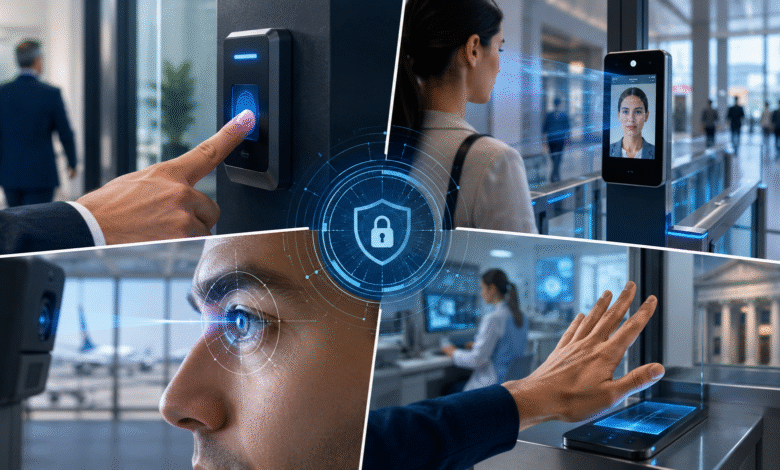
What if the strongest password you own could not be forgotten, guessed, copied from a sticky note, or stolen in a data leak? What if it was already built into your body?
That question explains why biometric scanner devices have moved from high-security government facilities into phones, offices, airports, hospitals, banks, and retail stores. Fingerprints, faces, irises, palms, and even voice patterns now help people prove who they are in seconds. Instead of asking users to remember another password or carry another plastic card, biometric systems use unique physical or behavioral traits to verify identity.
The result is a faster and more secure way to control access, reduce fraud, improve customer experience, and protect sensitive data. As passwords continue to create security risks, biometric technology is becoming one of the most practical tools for modern identity verification.
What Are Biometric Scanner Devices?
Biometric scanner devices are hardware systems that capture a person’s unique biological or behavioral features and compare them with stored identity data. These devices do not simply take a picture or record a sound. They extract measurable patterns, convert them into a digital template, and use that template for authentication or identification.
A fingerprint scanner studies ridge patterns, minutiae points, and surface details on the finger. An iris scanner captures the unique texture around the pupil. A facial recognition camera analyzes distances, contours, and facial landmarks. Palm vein scanners read vein patterns beneath the skin, while voice recognition systems measure tone, pitch, rhythm, and speech characteristics.
Biometric scanners are popular because they connect identity to the person, not to an object or a memorized code. A password can be shared. A card can be lost. A PIN can be guessed. A biometric trait is much harder to misuse when the system includes strong encryption, liveness detection, and proper privacy controls.
Common Types of Biometric Scanner Devices
The most familiar biometric device is the fingerprint scanner. It appears in smartphones, laptops, door locks, attendance systems, banking terminals, and law enforcement tools. Fingerprint systems are popular because they are affordable, compact, fast, and easy for most users to understand. Businesses comparing device options often start with fingerprint scanners on Biometric Supply because fingerprint readers remain one of the most widely used biometric technologies.
Iris scanners are another major category. They capture the unique pattern of the colored ring around the eye. Iris recognition is valued in airports, border control, banking, healthcare, and government identity programs because the iris is highly stable over time and difficult to duplicate.
Facial recognition scanners use cameras and algorithms to verify identity through facial features. These systems are common in smartphones, airports, smart buildings, retail analytics, and public safety applications. Modern systems may include depth sensing and anti-spoofing tools to reduce the risk of photo or video attacks.
Palm and vein scanners are often used where hygiene, accuracy, and contactless authentication matter. A palm vein scanner reads internal vein structures, which makes it useful in hospitals, banks, secure offices, and high-trust payment environments.
Voice recognition systems identify users by their speech patterns. They are especially useful in call centers, remote banking, virtual assistants, and customer support systems where users need to verify identity without visiting a physical location.
Fingerprint Scanners for Everyday Authentication
Fingerprint scanners are the best-known biometric devices because people use them daily without thinking about it. Unlocking a phone, signing into a laptop, accessing a workplace, or approving a payment can happen with one touch.
In business settings, fingerprint scanners reduce the need for cards, passwords, and manual sign-in sheets. Employees can clock in with a finger scan, enter restricted areas, or access shared systems without remembering multiple credentials. This helps reduce buddy punching, where one employee clocks in for another, and it creates a more accurate attendance record.
Fingerprint authentication also works well in banking and financial services. Some ATMs, payment terminals, and mobile banking apps use fingerprint verification to confirm that the account holder is present. This adds a personal security layer that is harder to steal than a card number or PIN.
The main advantage of fingerprint scanners is their balance of cost, convenience, and reliability. They are not perfect for every environment, especially where fingers may be wet, dirty, injured, or covered by gloves. However, for everyday identity checks, they remain one of the most practical biometric options.
Iris Scanners for High-Security Identification
Iris scanners are often used when organizations need a higher level of identity assurance. The iris contains complex patterns that are highly unique, and those patterns usually remain stable throughout adult life. This makes iris recognition especially valuable for border control, national ID programs, healthcare identity systems, and secure financial services.
Airports increasingly use iris and facial scanning to make passenger movement faster and more secure. Instead of repeatedly showing a passport, a traveler may verify identity by looking into a camera. The system can match the passenger with an enrolled profile and help speed up check-in, immigration, lounge access, or boarding.
Hospitals and clinics can also use iris scanning to reduce patient identification errors. In emergency care, accurate identification matters because the wrong record can lead to dangerous treatment mistakes. An iris scan can help medical staff pull up the correct patient file quickly, even when the patient has no ID card or cannot speak.
Iris scanning is also useful in banking, especially in regions where customers may not have traditional identity documents. A person’s eye pattern can help secure account access and reduce fraud in branch banking, ATM networks, and digital onboarding.
Facial Recognition in Phones, Airports, and Smart Buildings
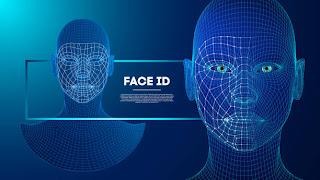
Facial recognition has grown quickly because cameras are already built into phones, laptops, kiosks, gates, and security systems. For users, the process feels natural. They look at a device, and the system confirms their identity.
Smartphones use facial recognition to unlock devices, approve purchases, and protect apps. Airports use it to speed up passenger processing. Offices use it for access control, visitor check-ins, and restricted zone monitoring. Hotels may use face-based check-in to reduce front desk delays, while event venues can use it to manage entry for registered guests.
In smart buildings, facial recognition can work with elevators, doors, lighting, and attendance systems. For example, an employee can enter the lobby, pass through a secure door, and log attendance without touching a card reader or keypad.
However, facial recognition requires careful governance. Organizations should clearly explain how data is collected, where it is stored, how long it is kept, and who can access it. Strong biometric systems need privacy policies, consent processes, bias testing, and security controls. The technology is powerful, but trust depends on responsible use.
Palm and Vein Scanners for Contactless Security
Palm and vein scanners are becoming more popular because they offer contactless or low-contact authentication. A palm vein scanner reads the pattern of veins beneath the skin, usually through near-infrared light. Since vein patterns are internal, they are difficult to copy and useful in high-security environments.
Banks may use palm vein scanners for customer authentication at branches or ATMs. Hospitals may use them for patient identification because the process is quick, hygienic, and reliable. Data centers, laboratories, and corporate offices can use palm scanners to protect rooms where sensitive systems or records are stored.
Palm recognition can also improve the payment experience. Some retail payment systems allow customers to pay by scanning their palm, which removes the need to carry a card or phone. This type of payment can be fast and convenient, but it must be supported by strong privacy controls and secure storage.
The biggest advantage of palm and vein recognition is that it combines convenience with strong identity assurance. It is especially useful where contactless access, hygiene, or anti-fraud protection matters.
Biometric Scanners in Workplace Access Control
One of the most popular use cases of biometric scanner devices is workplace access control. Companies use biometric systems to manage who can enter offices, warehouses, labs, server rooms, and restricted departments.
Traditional access cards are convenient, but they can be lost, stolen, copied, or shared. A biometric scan helps confirm that the authorized person is physically present. This is useful for businesses that handle sensitive documents, expensive equipment, financial data, research materials, or customer records.
In factories and logistics centers, biometric access systems can control entry to machinery zones, inventory areas, and loading docks. In offices, they can secure executive floors, IT rooms, and document storage areas. In coworking spaces, biometric systems can simplify member access while reducing the need for physical keys.
Workplace biometrics can also improve audit trails. If a security incident occurs, management can review access logs and see which verified individuals entered a protected area at a specific time.
Time Attendance and Workforce Management
Biometric scanners are widely used for employee time and attendance tracking. Instead of signing a paper sheet or swiping a card, employees verify attendance with a fingerprint, face scan, or palm scan.
This helps reduce time theft and buddy punching. It also gives managers more accurate records for payroll, shift planning, overtime calculation, and compliance. In large workplaces, even small attendance errors can create major payroll costs over time.
Biometric attendance systems are common in factories, hospitals, schools, construction sites, call centers, warehouses, and government offices. They can also support distributed workforces when paired with mobile apps and GPS-based attendance tools.
For employers, the value is not only security. It is operational efficiency. Automated attendance records reduce manual work, speed up payroll processing, and create clearer accountability.
Banking, Payments, and Fraud Prevention
Banks and fintech companies use biometric scanner devices to protect accounts, verify customers, and reduce fraud. Fingerprint and facial recognition are already common in mobile banking apps. Some financial institutions also use voice recognition in call centers and palm or iris recognition in branch services.
Biometric authentication helps solve a major problem in finance: stolen credentials. A fraudster may obtain a password, card number, or personal information, but it is much harder to pass a strong biometric check with liveness detection.
Biometrics also improve customer experience. Users can log in faster, approve transactions more easily, and complete identity checks without typing long passwords or answering security questions.
In payment systems, biometrics can support cardless ATM withdrawals, palm-based checkout, and secure digital wallet access. The goal is simple: make financial services faster without weakening security.
Healthcare and Patient Identification
Healthcare is one of the most important areas for biometric scanner devices because accurate identity can affect patient safety. Hospitals, clinics, laboratories, and pharmacies need to make sure the right person receives the right care, medication, test result, or medical record.
Biometric patient identification can reduce duplicate records, prevent insurance fraud, and help staff find the correct file quickly. This is especially helpful in emergency rooms, where patients may arrive unconscious, confused, or without identification.
Doctors and nurses can also use biometric authentication to access medical systems. Instead of typing passwords repeatedly during a busy shift, staff can verify identity with a fingerprint, face scan, or badge plus biometric check. This saves time while protecting patient data.
In controlled drug storage, biometric access can help track who opened a cabinet and when. That creates accountability and supports safer handling of sensitive medications.
Airports, Border Control, and Travel
Airports and border agencies use biometric scanners to make identity checks faster and more reliable. Facial recognition, iris scanning, and fingerprint capture can help verify travelers at check-in, bag drop, immigration, security, lounge entry, and boarding gates.
Imagine walking up to an airport gate, looking into a camera, and boarding without showing a paper document at every step. That experience is becoming more common as travel systems move toward biometric identity verification.
For governments, biometrics help detect duplicate identities, fake documents, and watchlist matches. For passengers, the main benefit is speed. Fewer manual checks can mean shorter lines and smoother travel.
Biometric travel systems must also protect passenger privacy. Clear consent, secure storage, limited data use, and transparent policies are essential for public trust.
Law Enforcement and Public Safety
Biometric scanners have long been used in law enforcement. Fingerprint capture remains a core tool for criminal identification, background checks, forensic investigation, and custody processing. Palm print recognition and facial recognition may also support investigations when used under proper legal controls.
Mobile biometric devices allow officers to verify identity in the field. This can help confirm warrants, identify missing persons, or check individuals who cannot provide reliable documents.
Public safety agencies may also use biometrics for secure facility access, evidence room protection, and officer authentication. In these environments, speed and accuracy both matter.
At the same time, law enforcement use requires strict oversight. Biometric systems should follow legal standards, minimize unnecessary data collection, and include review processes to reduce misuse or false matches.
Education, Exams, and Campus Security
Schools, colleges, and testing organizations use biometric scanner devices to protect campuses, verify students, and prevent exam fraud. Fingerprint or face recognition can help confirm that the person taking an exam is the registered candidate.
In universities, biometric systems may control access to labs, dormitories, libraries, and examination halls. They can also support attendance tracking in large institutions where manual roll calls take too much time.
For online learning and remote testing, facial recognition and keystroke behavior may help verify identity during exams. These tools can reduce impersonation, but they must be used carefully to respect student privacy and avoid unnecessary surveillance.
The best education use cases are narrow and transparent. Students should know what data is collected, why it is needed, and how long it will be stored.
Retail, Hospitality, and Customer Experience
Retailers and hospitality businesses use biometric technology to reduce friction and improve customer service. Hotels may use face recognition or fingerprint access for room entry, staff-only areas, and VIP check-in. Retail stores may use palm-based payments or biometric loyalty systems to speed up checkout.
Biometrics can also support employee access to cash rooms, inventory storage, and point-of-sale systems. This helps reduce internal fraud and creates better accountability.
In customer-facing environments, convenience is the key selling point. A shopper can pay without a wallet. A hotel guest can check in faster. A gym member can enter without carrying a card. A theme park visitor can link identity to tickets or memberships.
Still, businesses should avoid collecting biometric data simply because the technology is available. The strongest use cases solve a real problem, such as fraud reduction, faster service, or secure access.
Government ID and Citizen Services
Governments use biometric scanners for national ID programs, voter registration, welfare distribution, passport services, driver licensing, and social benefit management. Biometrics can help confirm that each person has one identity in a system, which reduces duplicate records and fraud.
In citizen service centers, biometric authentication can help people access benefits, pensions, healthcare services, and official documents. This is especially useful in places where paper records are unreliable or where many citizens lack traditional forms of identification.
Fingerprint, iris, and facial biometrics are commonly used in these programs because they support large-scale identity verification. Some projects also combine multiple biometric types for better accuracy.
Government biometric systems require strong public accountability. Data protection, cybersecurity, legal limits, and independent oversight are essential because national identity databases can affect millions of people.
Choosing the Right Biometric Scanner for the Use Case
The best biometric scanner depends on the environment, risk level, budget, user experience, and privacy requirements. A small office may only need fingerprint access control. A hospital may prefer palm vein or iris scanning for hygiene and accuracy. A bank may combine fingerprint, face, and voice recognition across different customer channels.
Fingerprint scanners work well for affordable, everyday authentication. Iris scanners fit high-security identity verification. Facial recognition supports fast, contactless access. Palm vein systems offer strong contactless security. Voice recognition is useful for remote identity checks.
Organizations should also consider device quality, software compatibility, enrollment process, encryption, liveness detection, and support for regulatory compliance. Buyers comparing hardware categories may also look at integrated biometric scanners when they need compact, specialized devices for professional identity systems.
A strong biometric setup is not only about the scanner. It also depends on how the data is stored, how users are enrolled, how false matches are handled, and how the system protects personal information.
Privacy, Security, and Responsible Use
Biometric technology can improve security, but it also creates serious responsibility. A password can be changed after a breach. A fingerprint or iris pattern cannot be replaced in the same way. That is why biometric data must be protected with stronger safeguards than ordinary login details.
Responsible biometric systems store encrypted templates rather than raw images whenever possible. They limit access to authorized personnel, use secure transmission, and apply strict retention policies. Many systems also include liveness detection to confirm that the scanner is reading a real person rather than a photo, mold, recording, or replay attack.
Organizations should collect only the biometric data they truly need. They should also explain the purpose clearly, get consent where required, and offer alternatives when possible. Trust is just as important as technical accuracy.
The future of biometrics depends on balance. The technology should make identity verification safer and easier without turning everyday life into constant surveillance.