Top players in the league need the right training equipment – and the right football shirts to wear in a match. Quality shirts are made to last and look good for a long time. But, if you buy from unknown sellers, you might end up with a counterfeited ‘official’ football kit. While fake shirts might seem attractive due to the low price range or unique designs, fans spot fake football shirts by checking the price against the official retail range, looking at product images for signs of poor stitching and wrong badge details, reading the seller’s feedback and returns policy, and being wary of any offer that seems too good to be true. A genuine current shirt that retails around 60 to 80 being sold brand new for 20 is the single clearest warning sign, because legit sellers are not able to slash the official price that heavily.
Why does it matter? Apart from ending up getting a cheap shirt, counterfeit kits are usually supplied with floaking prints, fabric that doesn’t feel right, sizes that don’t match the label, and no chance of a refund once the seller disappears. Industry bodies have linked counterfeit clothing trades to poor manufacturing conditions amongst other issues, so by spotting a fake you are protecting more than just your money.
What price and the listing itself reveal first
Price is an extremely quick way to filter and it can be applied in both ways. A shirt that features a price well below the official price range should be fake in almost all cases. But, a counterfeit that is priced very close to the genuine retail price is the one that is trickiest because appearance-wise it is quite legitimate while at the same time it is a copy that is being sold to you. Being aware of your desired shirt’s real retail price, which would most likely fall within the 60 to 80 range for a current adult replica one, is your first step in measuring everything else against it.
Most of the time, it is the listing wording that reveal sellers. Words like “Thai quality, ” “AAA version” and “player issue replica, ” or “fan version” are taken from wholesale counterfeit catalogs, which are typical red flags, as are listings containing multiple club names and keywords to manipulate search results. A genuine retailer clearly states the product they are selling rather than filling the title with all the teams that come to their head. It is Of course worth spending time on photos and scrutinizing them. Counterfeit listings are hardly ever able to show the item they are actually selling and usually resort to using an official image for the main photo while the real product, sometimes shown in a lower-quality secondary picture, has obvious differences. Inconsistent or no real product photos or those that look like screenshots rather than photographs all point towards the seller not having a genuine shirt on hand.
The physical details that separate genuine from fake
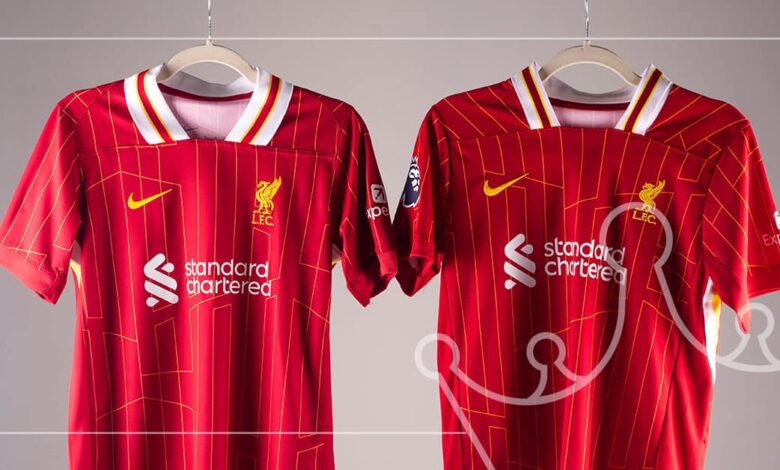
Once you understand what signs to search for, the making of a real shirt will reveal quite a bit, and good product photos enable you to check several of these signs even before you buy. For example, the club badge and manufacturer logo on an authentic shirt are usually embroidered or heat-applied in a precise manner with sharp edges and correct colors, while imitation ones tend to show loose threads, fuzzy outlines, or a color that is slightly off. Counterfeiters achieving the overall look is close, but may fail at replicating the fine detail.
Stitching and finishing will tell you a great deal in a reliable manner. Genuine shirts are characterized by even, tight stitching without stray threads, seams that are properly aligned, and a neat hem, whereas fake ones often feature crooked seams, uneven hems, and threads left hanging. Fabric counts as well since authentic modern kits are made of engineered breathable polyester of a specific weight and texture, So various imitations are thinner, shinier, or rougher to the touch.
Knowing the official authentication features is definitely a good idea. Authentic shirts usually have brand-specific holographic tags, security labels, or QR codes, and a wash-care label inside which is correctly printed with the right sizing and the country of origin. A missing hologram or a label with spelling errors or a sizing tag which does not correspond to the shirt’s real dimensions are very strong indications of a counterfeit. A sizing mismatch is one of the most common grievances from people who unknowingly bought fakes.
How to check the seller before you hand over money
The details about the shirt are important, but the seller is equally important because a reliable seller will be your safety net if something goes wrong. First check the platform they are selling from. It is much safer to buy from an official club store, a well-known sportswear retailer, or a verified marketplace seller with a long history and consistent reviews than from a brand new social media account or a standalone website with no trading history.
Most of the information you need can be found in reviews and the returns policy. A real seller will have real reviews over a period of time, a clear return and refund process, and contact details that actually work, whereas counterfeit sellers usually have either no reviews, a sudden blast of suspiciously perfect ones, or a string of complaints about quality and non-delivery. A seller who doesn’t allow any returns at all on clothing should definitely make you think twice.
Plenty of buyers want a genuine shirt without paying full official price, and that is reasonable, but the safe version of that is an established affordable shop with verifiable reviews and a proper returns policy rather than an anonymous bargain listing that vanishes after payment. The distinction is not cheap versus expensive, it is accountable versus untraceable. A lower price from a transparent seller you can hold to account is very different from the same price from one you cannot.
Why fakes vary across leagues, sellers, and shirt types
The types and extent of counterfeiting depend on the product, and the differences in risk also depend on where you are shopping. Shirts for the biggest clubs and most popular national teams are counterfeited far more heavily than lower-league or obscure kits, simply because demand makes them profitable to fake. If you are buying a top Premier League or Champions League shirt, the market is likely flooded with copies so check carefully.
Besides, the timing of your purchase can also influence the risk exposure. Demand, and As a result counterfeit supply, rises not only during major tournaments but also at the beginning of a new season. Sometimes, fakes of newly released kits can be found online within a few days of the official launch, and in some cases, even before genuine stock is widely available.
Another factor that can impact the likelihood of getting a fake is the type of seller. Platforms that provide buyer protection and have systems for verifying sellers grant you recourse, but those on social media and pop-up sites offer you almost no recourse. Most people fall into the gap between these two extremes. The very same shirt being sold at the very same price may come with a much different risk depending entirely on the seller and what happens when you request a refund.
One of the best things you can do is to get into the habit of looking at a suspiciously good deal as a question rather than a bargain. You should take the time to check out the seller’s reviews, returns policy, and payment options before you buy anything. This short inspection will cost you nothing, and is the kind of thing that saves people from buying a shirt that falls apart after one wash or not getting it at all. Learning the lesson after your money has already been spent is the worst case scenario.