Gisela Stuart: The Independent Voice Who Redefined British Political Debate
From Bavarian Roots to Brexit Prominence and a Lasting Role in Public Life

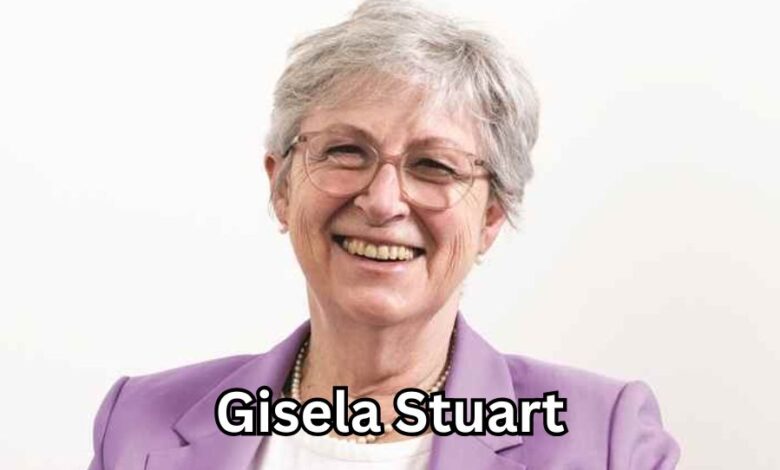
Gisela Stuart is one of the most distinctive figures in modern British politics. Known for her independence of mind, her willingness to challenge party orthodoxy, and her prominent role in the Brexit debate, she has built a career that does not fit neatly into conventional political categories. She served as a Labor MP for Birmingham Edgbaston from 1997 to 2017, was later elevated to the House of Lords as Baroness Stuart of Edgbaston in September 2020, and is currently a member of the House of Lords.
Early Life and Education
A Bavarian Beginning
Born in Velden, Bavaria, in 1955, Stuart spent her youth in West Germany, gaining a perspective shaped by post-war European history and changing state relationships. This background later influenced her complex views on Europe and sovereignty.
Moving to the United Kingdom
In 1974, she moved to the United Kingdom, originally intending to improve her English. What began as a temporary visit became a permanent move that would shape the rest of her life. She continued her education in Britain, studying law at the University of London, laying the intellectual foundation for a future in public affairs and parliamentary life.
Entry into British Politics
Finding a Political Home in Labor
Although born in Germany, Gisela Stuart became deeply engaged with British public life and eventually joined the Labor Party. Her political rise reflected both her intellect and her determination to contribute meaningfully to the country she had made her home. At a time when party loyalties often defined political identity, Stuart gradually became known as someone guided more by principle than by political fashion.
Her election as MP for Birmingham Edgbaston in 1997 placed her at the center of national politics during a transformative period for Britain. Labor under Tony Blair had come to power with a large majority, and Stuart entered Parliament during an era of constitutional reform, public service modernization, and renewed debate about Britain’s place in Europe. She remained MP for Birmingham Edgbaston until 2017, representing the constituency for two decades.
Ministerial and Parliamentary Experience
During her time in the House of Commons, Stuart served as Parliamentary Under-Secretary at the Department of Health from 1999 to 2001. She also served on major parliamentary committees, broadening her expertise and enhancing her reputation as an informed political thinker.
Gisela Stuart and Europe
A European Background with a Different Conclusion
One of the most fascinating aspects of Gisela Stuart’s political identity is that, despite her German birth and European upbringing, she emerged as one of the most recognizable Labor voices in favor of Brexit. This made her stand out sharply in British politics. Many expected someone with her background to support deeper European integration, yet Stuart argued that democratic legitimacy and national accountability mattered more than institutional loyalty to the European Union.
Her pHer position was notable not merely for its controversy, but for its intellectual grounding. She was not easily dismissed as anti-European. On the contrary, her life experience gave her a strong understanding of Europe. While she supported Britain’s departure from the EU, her critique focused on the structure and political direction of the European Union rather than on hostility toward European neighbors. Leading Role in the Brexit Campaign
Gisela Stuart became especially well known to the wider public during the 2016 EU referendum, when she served as a prominent figure in the Vote Leave campaign. Her presence was politically significant because she brought a cross-party dimension to the movement. Brexit was often portrayed as a Conservative cause, but Stuart’s leadership showed that support for leaving the EU also existed on the Labor and center-left side of politics.
Her role in the campaign strengthened her public image as an independent-minded politician willing to stand apart from party consensus. For supporters, this made her credible and courageous. For critics, it made her controversial. Either way, it ensured that her political voice could not be ignored.
A Career Defined by Independence
Crossing Traditional Political Boundaries
Gisela Stuart’s career is unusual because it consistently challenged standard political labels. She was a Labour politician who took a leading role in Brexit, a German-born public figure who argued strongly for British democratic sovereignty, and later a peer who did not settle into easy partisan positioning. This ability to think beyond party lines became one of her defining characteristics.
After leaving the House of Commons in 2017, Stuart’s career continued in public life rather than ending with electoral politics. Her influence shifted from frontline party competition to broader institutional and constitutional roles. This transition reflected the value placed on her experience and judgment.
The House of Lords and Public Appointments
In 2020, she was created Baroness Stuart of Edgbaston and entered the House of Lords. Public records show that she was introduced to the Lords on 17 September 2020 and remains a current member. Her parliamentary listing shows both Labor affiliation during her Commons career and later non-affiliation, underlining once again her independence from rigid party identity.
Continued Public Service
Her later public roles have included serving as the Cabinet Office’s lead non-executive board member and as First Civil Service Commissioner from 2022. Parliamentary and government sources also record other senior responsibilities, including chairing Wilton Park and the Royal Mint Advisory Committee on Coins and Medals. These appointments suggest that her influence has extended well beyond elected politics into the wider machinery of British public life.
Why Gisela Stuart Still Matters
A Rare Political Figure
In an era when politicians are often defined by slogans or factions, Gisela Stuart stands out for the complexity of her public identity. She cannot be easily placed into one ideological category. Her story combines migration, assimilation, democratic engagement, constitutional debate, ministerial work, and leadership.
That is one reason her career continues to attract interest. She represents a kind of public figure who is increasingly rare: someone prepared to hold unpopular views, defend them with seriousness, and accept the consequences of political independence. Whether one agrees with all her positions or not, her contribution to British politics is undeniably significant.
Legacy in British Politics
Gisela Stuart’s legacy lies not only in the offices she has held but also in the example she has set. She showed that political identity need not be narrow, tribal, or predictable. Her journey from Bavaria to Westminster and then to the House of Lords reflects a remarkable story of public service shaped by conviction rather than convenience.
For readers trying to understand modern British politics, her career offers a valuable case study in how ideas, experience, and character can matter more than easy party labels. That is what makes Gisela Stuart an enduring and compelling figure in public life.
(FAQs)
Who is Gisela Stuart?
Gisela Stuart, now Baroness Stuart of Edgbaston, is a British politician and public figure who served as Labor MP for Birmingham Edgbaston from 1997 to 2017 and later became a member of the House of Lords.
Why is Gisela Stuart famous?
She is widely known for her independent political stance and for playing a prominent role in the Brexit campaign as a senior figure in Vote Leave.
Was Gisela Stuart a Labor politician?
Yes, she served for many years as a Labor MP, although she became especially well known for taking positions that did not always align with party expectations.
Is Gisela Stuart in the House of Lords?
Yes, she is currently a member of the House of Lords as Baroness Stuart of Edgbaston.
What makes Gisela Stuart politically unique?
Her German birth, Labor background, pro-Brexit stance, and later non-partisan public roles make her one of the more unusual and independent figures in contemporary British politics.