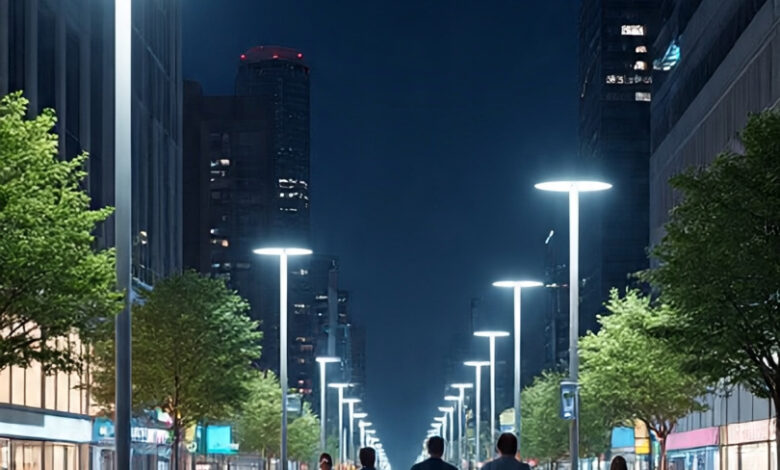
During an especially late shift for the same city’s maintenance team, they find yet another outage: one that occurs on a darkened sidewalk that leads to the busy street intersection nearby. At this point, darkness has already made visibility extremely difficult, prompting citizens to stop using the area altogether. Such situations are much more frequent than many believe. They not only highlight problems with individual light installations but also demonstrate issues within the overall framework of lighting systems and how ineffective they can become in times of greatest need.

And it is precisely such instances that have inspired the development of the Infrastructure Lighting Safety Solutions. As opposed to dealing with problems after the fact, these modern solutions provide an opportunity for the creation of lighting systems that would operate without any issues despite external factors. In this era of increasingly urbanized areas, lighting goes from being an important element to a critical component of infrastructure security.
Why Are Cities Treating Lighting as a Safety System Instead of an Asset?
When city planners look at lighting today, they are no longer thinking in terms of installation alone. The real focus is performance over time. After all, what good is a lighting system if it fails when people rely on it the most?
Visibility at Night: Properly lit spaces will be more convenient. People will enjoy the ability to walk at night without any problems. Similarly, people will feel comfortable driving on such roads, since there will be less confusion caused by darkness.
Decrease of Risk Factors: Lighting not only improves visibility but also helps maintain order. Areas with adequate lighting do not attract any harmful activities, thus becoming more controlled and safe for all its users.
Traffic Security Increase: This feature has a direct correlation with visibility. When streets are properly lit, drivers have enough time to notice any roadblocks and other objects, thus being able to avoid any accident at peak traffic hours.
People’s Increased Trust: This effect is quite subtle but still significant. People are likely to spend more time in spaces that are well-lit, as such spaces create a lot more trust compared to dark streets.
Reliability of the System: It should be noted that this benefit is crucial to consider. Modern lighting systems are reliable and will not require constant maintenance and repair, as they were built specifically for long-term operation.
The Operational Benefits That Quietly Improve Safety Over Time
The use of efficient lighting to ensure public safety has become a prerequisite rather than an amenity. It is well acknowledged today that having consistent illumination makes cities safer places since it helps reduce accidents in dangerous spots. This explains why Infrastructure Lighting Safety Solutions becomes more popular, as it makes both maintenance procedures and results easier.
Less Maintenance Required
A lower number of faults means less frequent need for urgent repairs. In this way, professionals can spend their time on more valuable improvements.
Energy-Efficient System: An effective lighting system allows you to save energy and improve safety at the same time. Thus, an equilibrium may be reached.
Proactive Approach: Remote monitoring of the situation allows for identifying faults at an early stage. Professionals will not have to wait until they receive some complaints because proactive steps may be undertaken.
All those characteristics combine to provide professionals with highly reliable safety solutions that do not require excessive efforts to manage.
Can there be any Limitations in these Safety Solutions?
As is obvious, any Infrastructure Lighting Safety Solutions also have some concerns associated with them. The effective deployment of these solutions requires some considerations to be kept in mind right at the outset.
Sunlight Exposure
As far as solutions based on solar energy are concerned, the availability of sufficient sunlight can be an issue in certain regions.
Higher Initial Cost
While initially the cost might seem high compared to the conventional lights, it pays off later due to lower maintenance and reduced energy costs.
Design Challenges
The design needs will vary depending on the location. Some places might require customized solutions according to their specific needs in terms of performance and aesthetics.
In short, all these limitations can be managed quite effectively by keeping them in mind during the design process.
Conclusion
As urban environments continue to evolve, lighting is taking on a much larger role than it once did. The days of focusing on simply illumination are over; the focus today is on safety, reliability, and efficiency. Infrastructure Lighting Safety Solutions enable cities to evolve from reactive maintenance to proactively designing their systems for longevity. In effect, the outcome is not only increased safety in public spaces but also less stress and more efficient infrastructure for all involved.