Picture this: it’s 10 AM, your meeting ran long, and you’re already overdue for a pumping session. You scan the office floor for an empty conference room, settle for a bathroom stall, and spend the next fifteen minutes balancing your bag, your pump, and your sanity — all while hoping no one notices you’re gone. Sound familiar? For millions of working mothers, this is a daily reality.
Breastfeeding is a deeply personal commitment, but maintaining it while managing a full professional schedule can feel like an uphill battle. The good news is that today’s breast pump technology has caught up with the demands of modern motherhood. Advanced portable and discreet breast pumps now offer genuine freedom — small enough to fit in a handbag, quiet enough to use in a shared space, and powerful enough to support a consistent milk supply.
This article is designed specifically for moms on the go who refuse to choose between their career ambitions and their breastfeeding goals. Whether you’re commuting, working in an open-plan office, or traveling for business, the right pump can give you the discretion, flexibility, and confidence to make it all work. Let’s explore exactly what to look for — and how to use it.
Why Discreet Pumping Matters for Working Moms
Modern working mothers are navigating two full-time responsibilities simultaneously — and the expectation is to do both seamlessly. Professionally, there’s pressure to stay present, focused, and productive. Personally, there’s a deeply held commitment to nourishing a newborn. These two worlds collide in a uniquely challenging way when it comes to pumping at work, where visibility, timing, and environment are rarely within a mother’s control.
Beyond the logistics, there’s an emotional weight that’s easy to underestimate. Feeling the need to “disappear” every few hours, or worse, choosing to skip a session to avoid the inconvenience, creates stress that affects both well-being and milk supply. Over time, these compromises can erode a mother’s confidence and her breastfeeding journey far sooner than she intended.
The Challenge of Finding Private Pumping Locations
Despite legal protections in many workplaces, dedicated lactation rooms remain far from universal. Many mothers make do with converted storage closets, single-occupancy bathrooms, or locked offices borrowed on good faith. Tight break schedules compound the problem — a traditional pump setup requiring assembly, suction adjustment, and cleanup simply doesn’t fit a 15-minute window. This is exactly where a compact, quiet pump transforms the experience from stressful to manageable, giving moms the flexibility to pump wherever their day takes them without drawing attention or falling behind.
Key Features of an Effective Portable Breast Pump
Not all portable pumps are created equal, and when you’re managing a demanding schedule, the difference between a thoughtfully designed pump and a mediocre one becomes very clear, very fast. Before committing to any model, it helps to understand which core features actually move the needle for working mothers — and why each one earns its place on your checklist.
Compact Size for Ultimate Portability
A truly compact pump fits comfortably inside a standard handbag or the side pocket of a diaper bag — no dedicated tote required. When a pump is lightweight and streamlined, it stops feeling like medical equipment and starts blending into your everyday routine. That shift matters more than it sounds. A smaller profile means you can keep the pump at your office desk without it becoming a talking point, tuck it under the seat during a commute, or slip into a parked car between client meetings without any elaborate setup. Wearable and in-bra designs push this further, fitting entirely within a nursing bra so pumping becomes invisible — a game-changer for mothers who travel frequently or work in open-plan environments where privacy is limited.
Quiet Performance for Discreet Operation
Noise is the single feature that determines whether pumping stays private or becomes the center of unwanted attention. Traditional pumps often operate at 50–60 decibels — roughly the volume of a normal conversation — which is impossible to disguise. By contrast, quieter portable models run at or below 45 decibels, closer to the hum of a refrigerator, making them far easier to conceal. In practical terms, this means you could run a session during a low-activity period in a shared office, in the back row of a quiet conference room, or even on a train without alerting anyone nearby. For mothers working in roles where stepping away frequently isn’t always an option, a quiet pump paired with a hands-free bra turns what used to be a logistical interruption into something that can happen almost invisibly in the background of a workday.
How to Choose the Right Portable Breast Pump for You
Choosing a portable pump isn’t about finding the most popular model — it’s about finding the one that fits your specific life. The right pump for a mother commuting two hours daily on public transit looks very different from the one suited to someone working three days a week in a private office. Before you compare specs, take stock of the context in which you’ll actually be using the pump, because that context shapes every decision that follows.
Assessing Your Daily Routine and Pumping Locations
Start by mapping out a typical workday. How many sessions do you need? Where are you most likely to pump — a dedicated room, a parked car, a restroom, or at your desk with a nursing cover? If you’re regularly working in open or shared environments, noise level should jump to the top of your priority list. If your commute involves trains, planes, or long drives, battery life and charging flexibility become non-negotiable. For mothers who travel for work, a TSA-friendly wearable design that fits inside carry-on luggage can eliminate a surprising amount of daily friction. Thinking through these scenarios honestly before purchasing prevents buyer’s remorse and ensures the pump actually gets used.
Balancing Performance with Portability
The most compact, whisper-quiet pump on the market won’t serve you well if it can’t keep up with your output needs. Wearable in-bra pumps are impressively discreet but typically offer lower suction strength, which may be sufficient for mothers with well-established supply but less ideal during the early weeks or for those who respond better to stronger stimulation. Double pumping cuts session time nearly in half compared to single pumping — a meaningful difference when your break windows are tight. If you find yourself choosing between a highly portable single pump and a slightly bulkier double version, consider whether reclaiming ten minutes per session is worth the small trade-off in size. The goal is a pump that’s portable enough to use consistently, because consistency ultimately protects your milk supply far more than any single feature ever will.
Solutions for Discreet Pumping Anywhere: A Practical Guide
Step 1: Choosing the Right Pump and Accessories
The pump itself is only part of the equation. A hands-free pumping bra is arguably the single most valuable accessory you can add — it frees both hands during a session, making it possible to answer emails, take notes, or simply decompress without hovering over your equipment. Brands like Momcozy offer hands-free pumping bras designed to work seamlessly alongside portable pumps, which many working mothers find makes the whole setup noticeably more manageable. Pair your pump with a portable battery pack if it isn’t already battery-powered, so you’re never dependent on finding an available outlet. A compact insulated cooler bag keeps expressed milk safe for up to 24 hours and tucks neatly alongside the pump in your bag, eliminating the need to locate a shared refrigerator every session.
Step 2: Mastering On-the-Go Pumping Techniques
Speed and simplicity come with preparation. Pre-assemble your pump the night before and store it in a clean zip pouch so setup takes seconds, not minutes. Choose clothing strategically — wrap dresses, button-front blouses, and tops with built-in nursing access eliminate the need to fully undress, cutting session time considerably. For timing, aim to pump during natural breaks in your schedule: between back-to-back calls, during a lunch walk, or at the start of a commute before activity picks up. Scheduling sessions at consistent times also signals your body to let down more efficiently, which shortens the session itself.
Step 3: Identifying and Utilizing Discreet Pumping Locations
Think beyond the obvious. A parked car with tinted windows offers complete privacy and requires no reservation. An unbooked conference room, booked under a vague calendar block, gives you a quiet 20-minute window without explanation. If you’re in a pinch in a semi-public space, a lightweight nursing cover or large scarf creates an instant visual barrier. Layer that with a white noise app on your phone — even at low volume, ambient sound masks pump hum effectively. Traveling? Airport family restrooms and airline lounges typically offer far more space and privacy than standard stalls, and most are underused during off-peak boarding times.
Top Picks: Highly-Rated Compact and Quiet Breast Pumps
With so many options on the market, a few standout designs consistently earn high praise from working mothers for their combination of portability, quiet operation, and real-world usability.
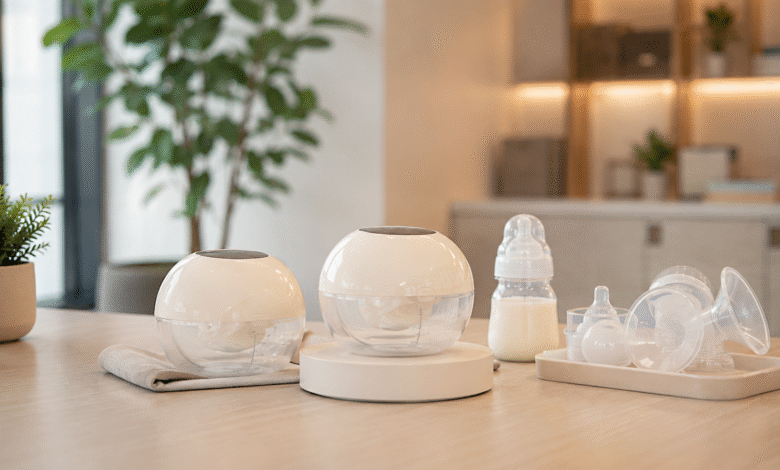
Wearable in-bra pumps lead the category for discretion. These hands-free, tubeless designs fit entirely inside a nursing bra, weigh under half a pound per cup, and operate at whisper-quiet levels — some clocking in below 40 decibels. Models from Momcozy, for instance, are frequently mentioned by working mothers for this combination of compact form and quiet motor, making them a practical choice for desk work and commutes alike. Rechargeable batteries last through multiple sessions on a single charge. The trade-off is moderate suction, best suited to mothers with an established supply.
For mothers who need stronger expression, compact double electric pumps strike the right balance. These models typically fit in a small pouch, offer hospital-grade suction in tiered settings, and run quietly enough for semi-private spaces. Many include app connectivity for session tracking, which helps mothers maintain consistency across a busy week.
Manual pumps deserve mention for ultra-light travel situations. Silicone single-cup designs weigh almost nothing, produce zero motor noise, and fit in a jacket pocket — a smart backup option when charging isn’t available or you only need quick relief between fuller sessions. Keeping one in your work bag as a complement to your primary pump adds a layer of reliability that experienced pumping moms consistently recommend.
Maintenance and Tips for Maximizing Efficiency
A portable pump only stays reliable if it’s consistently maintained. After each session, rinse all milk-contact parts — flanges, valves, and collection bottles — with cold water first, then warm soapy water. Allow everything to air dry completely before reassembling, since trapped moisture degrades silicone over time and creates a hygiene risk. Replace small parts like membranes and valves every four to six weeks; worn valves are one of the most common reasons suction strength drops unexpectedly.
For faster sessions, warm compresses applied for two minutes before pumping encourage faster letdown, which can shave meaningful time off each session. Staying well hydrated and keeping a small snack nearby during pumping also supports output. On especially hectic days, resist the urge to skip sessions entirely — even a shorter five-to-ten minute expression maintains supply signals and prevents discomfort. Building a simple end-of-day cleaning routine, rather than tackling it mid-session, keeps maintenance from feeling like one more task competing for your attention.
Making Breastfeeding Work for Working Moms
Modern portable breast pumps have genuinely changed what’s possible for working mothers. The challenges haven’t disappeared — tight schedules, limited privacy, and the constant balancing act between professional and personal commitments are still very real. But the right pump, paired with the right strategies, means those challenges no longer have to derail your breastfeeding goals.
Compact size and quiet performance aren’t just nice-to-have features — they’re the practical foundation that makes consistent pumping achievable outside the home. When your pump fits in your bag without a second thought, runs quietly enough to use in shared spaces, and works with your schedule rather than against it, breastfeeding stops being a daily logistical crisis and becomes simply part of how your day flows.
The strategies in this article — from self-assessing your routine and choosing the right accessories to identifying creative pumping locations — give you a real starting point, not just aspirational advice. You don’t have to choose between your career and your commitment to your baby. With the right tools in hand and a workable plan, discreet, effortless pumping