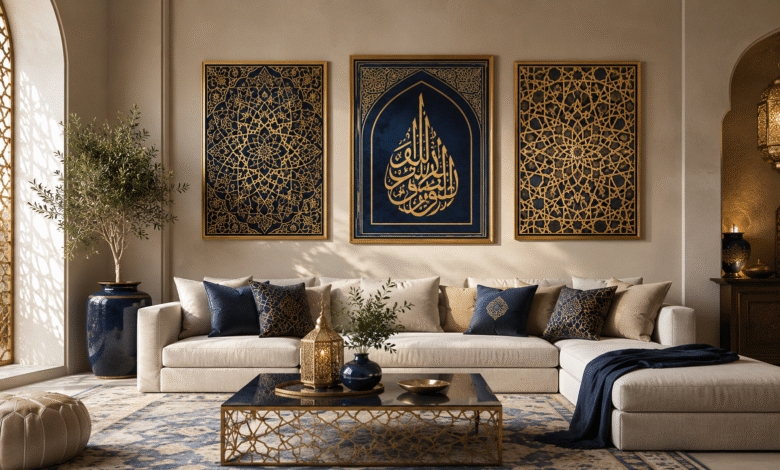
There’s something quietly powerful about art that carries meaning beyond the visual. Islamic art has done exactly that for over a thousand years—telling stories of faith, culture, and craftsmanship through every carefully placed line, curve, and pattern.
Today, more people are turning to spiritually inspired décor not just for aesthetic reasons, but because they want their living spaces to feel intentional. A home that reflects your values and beliefs has a different kind of warmth to it. That’s a big part of why Islamic Wall Art has seen such a resurgence in modern interior design.
This post breaks down what makes this artistic tradition so enduring, what to look for when choosing a piece, and how to incorporate it meaningfully into your space.
The History and Meaning Behind Islamic Art
Islamic art is one of the richest visual traditions in human history. Spanning over fourteen centuries, it encompasses architecture, calligraphy, geometric design, and decorative arts from across the Muslim world—from the grand mosques of Istanbul to the intricate tile work of Persia.
A few key elements define the tradition:
- Arabic Calligraphy: Words from the Quran rendered in flowing, elegant script. Calligraphy holds a particularly sacred place in Islamic culture, as it is considered the visual representation of divine speech.
- Geometric Patterns: Repeated shapes and tessellations that reflect the mathematical precision and infinite nature of creation. These patterns are not merely decorative—they carry philosophical depth.
- Architectural Imagery: Depictions of mosques, minarets, courtyards, and sacred spaces that evoke a sense of reverence and spiritual calm.
- Nature and Reflection: Water, gardens, mountains, and light appear frequently, often used to symbolize peace, paradise, and the relationship between the earthly and the divine.
Each of these elements carries cultural and spiritual weight. When you hang a piece of Islamic art on your wall, you’re not just adding color to a room—you’re inviting centuries of meaning into your home.
How Islamic Art Works in Modern Interiors
One of the most compelling things about this artistic tradition is how seamlessly it translates into contemporary spaces. The clean lines of geometric patterns complement minimalist design. Rich gold tones and deep blues pair beautifully with neutral or earthy color schemes. And the reflective quality of mosque imagery—a minaret mirrored in still water, a courtyard bathed in golden light—creates a sense of visual calm that works in almost any room.
Here are a few ways people are incorporating this style into their homes today:
Living Rooms: Large framed pieces featuring mosque architecture or panoramic scenic compositions make a striking focal point above a sofa or fireplace.
Prayer Rooms and Meditation Spaces: Calligraphy prints and spiritually themed compositions naturally lend themselves to dedicated prayer areas, creating an atmosphere of focus and devotion.
Hallways and Entryways: Smaller geometric prints or architectural studies create a considered first impression—welcoming guests with both beauty and intention.
Bedrooms: Softer compositions, such as twilight mosque scenes or garden reflections, bring a sense of serenity to personal spaces.
The key is choosing pieces that feel cohesive with the rest of your space rather than trying to fill every wall. One well-chosen, high-quality artwork will do more for a room than several mismatched prints.
What to Look for When Buying Islamic Art
Not all art is created equal, and when you’re buying something that carries cultural and spiritual significance, quality matters. Here’s what to consider:
Subject and Symbolism
Think about what resonates with you personally. Are you drawn to the grandeur of mosque architecture? The meditative quality of geometric patterns? The sacred weight of calligraphy? Each subject carries a different emotional register, so choose something that genuinely speaks to you.
Print Quality and Framing
A beautifully designed artwork can be let down by poor printing or cheap framing. Look for pieces printed on high-quality materials with attention to color accuracy and detail. Framing should complement rather than compete with the artwork itself.
Authenticity and Craft
Seek out collections that are designed with genuine respect for the tradition—pieces that reflect real knowledge of Islamic aesthetics rather than generic imitations. The difference is usually visible in the details.
Scale
Consider the size of your wall and the room’s proportions. A small print can get lost on a large wall, while an oversized piece can overwhelm a smaller space. Most quality suppliers offer multiple size options to suit different settings.
Finding the Right Collection
Platforms like Zoom Into Art offer curated collections of Islamic Wall Art that blend traditional aesthetics with contemporary presentation. Their range includes everything from mountain mosque compositions to mirrored minaret studies and Ottoman palace reflections—each designed to work in both traditional and modern interiors.
The variety available means you don’t have to compromise between artistic quality and personal taste. Whether you prefer muted, contemplative tones or bold, dramatic compositions, there’s something to suit most homes and preferences.
Bringing It All Together
Decorating with intention takes thought. Choosing art that reflects your faith, heritage, or values adds a layer of meaning that purely decorative pieces simply can’t offer. Islamic architectural and calligraphic art does this with remarkable elegance—it’s visually stunning, culturally rich, and spiritually resonant all at once.
Start with one statement piece that genuinely moves you, place it where it will be seen and appreciated daily, and build from there. The goal isn’t to fill your walls—it’s to create a space that feels like home in the deepest sense.