A business card usually gets judged long before anyone reads the details printed on it.
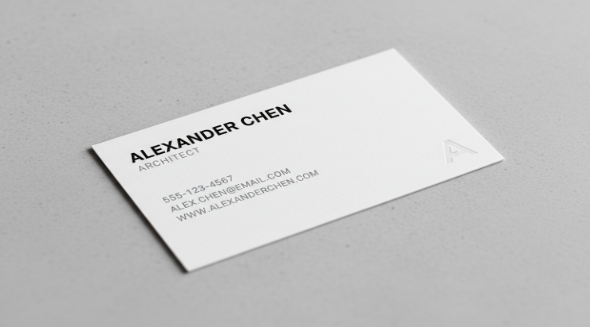
People notice the texture first. Then the thickness. Then how confidently does the design carry the brand. A flimsy card with crowded typography quietly signals hesitation. A well-designed card feels deliberate before a single conversation even starts.
That matters more than most businesses realise.
In London especially, networking has become visually competitive. Professionals exchange dozens of cards during exhibitions, meetings, property events, hospitality launches, trade shows, and client introductions. Most are forgotten within hours. The memorable ones rarely rely on loud graphics. They succeed because every design choice feels intentional, from paper stock to spacing, finish, colour balance, and print quality.
Why Modern Business Card Design Matters More in 2026
Digital communication has increased the value of physical branding rather than replacing it.
Emails disappear into inboxes. LinkedIn requests become background noise. Printed business cards still create a physical reminder people carry away from meetings. That tactile interaction changes perception.
The design approach has also changed. Older business card templates often relied on excessive gradients, cluttered icons, and cramped information. Current business card designs lean towards cleaner typography, strategic whitespace, stronger paper choices, and carefully selected finishes.
This stage is where many businesses make expensive mistakes.
They focus entirely on artwork previews on-screen without considering how print behaves in real life especially under lighting, fingerprints, handling, wallets, or repeated use.
That difference becomes obvious rapidly.
Business Card Size and Dimensions UK Buyers Should Know
One of the most overlooked decisions in business card printing is sizing. Businesses often upload artwork without understanding bleed areas, trim lines, or how dimensions affect readability.
The standard UK business card size remains practical because it fits wallets, card holders, tills, and hospitality counters comfortably.
| Business Card Type | Standard Dimensions | Best Use Case |
| Standard UK Business Card | 85mm x 55mm | General professional use |
| Square Business Card | 55mm x 55mm | Creative industries |
| Folded Business Card | 85mm x 110mm folded | Menus, appointments, loyalty details |
| Slim Business Card | 85mm x 40mm | Luxury minimalist branding |
Modern Business Card Design Trends UK Businesses Are Choosing
Textured business cards are increasingly chosen by premium hospitality brands, interior designers, property consultants, and luxury retail businesses. Texture influences perception subconsciously. Slightly tactile finishes create a stronger memory response during networking.
Meanwhile, 300 GSM business cards continue to balance affordability with professionalism. They offer enough rigidity without pushing costs too high for startups or high-volume ordering.
Triplex Business Cards appeal to brands wanting thickness and visual layering. The colored center layer creates a premium edge profile that standard cards cannot replicate.
Plastic business cards remain useful in environments where durability matters, such as gyms, salons, restaurants, delivery services, and businesses handling moisture or frequent handling.
Choosing the Right Finish for Your Brand Identity
Many buyers searching for cheap business cards online accidentally choose finishes that undermine their branding.
Luxury businesses sometimes order glossy cards that look too reflective. Meanwhile, fast-moving retail brands occasionally choose thick-textured stock that slows production unnecessarily.
The right finish depends less on trends and more on customer interaction.
| Finish Type | Visual Effect | Best For |
| Matt Laminated | Smooth, modern, understated | Corporate and professional services |
| Gloss Laminated | Vibrant colours and shine | Promotional and retail businesses |
| Spot UV | Selective gloss highlights | Premium branding |
| Uncoated | Natural and writable surface | Cafés, creatives, appointment cards |
| Soft Touch | Velvet-style premium feel | Luxury and hospitality sectors |
The quality of business card printing is often judged within seconds through touch alone. That is why professional printers for business cards focus heavily on stock selection rather than only artwork.
At I YOU PRINT Business Cards, businesses can choose finishes based on actual brand behaviour instead of generic recommendations.
Why Digital Business Cards Haven’t Replaced Printed Cards
Digital business cards have grown in popularity, particularly for networking events and contactless sharing. QR codes, NFC technology, and mobile integrations make updates easier.
Yet physical business cards continue outperforming digital-only alternatives in face-to-face environments.
People still remember physical interaction more effectively than screen transfers.
A printed card sitting on a desk keeps your brand visible long after meetings end. Digital business cards rarely achieve that same passive visibility. In many industries hospitality, trades, property, legal services, recruitment, education, healthcare, and retail printed cards still feel more credible.
The strongest modern approach combines both.
Restaurants often combine this approach with professionally printed Menus, while retailers extend campaigns using matching Flyers and promotional Leaflets to maintain visual consistency across all printed materials.
Common Business Card Design Mistakes Professionals Still Make
One recurring issue in business card printing near me searches is that buyers prioritise speed over usability.
Cards overloaded with information almost always perform worse.
A business card should create continuation, not completion. It should encourage the next step — website visit, phone call, booking, or conversation.
Some businesses attempt to include the following:
- multiple phone numbers
- several email addresses
- crowded service lists
- oversized logos
- low-resolution graphics
The result usually feels confusing.
Modern business cards design works best when hierarchy is clear. The eye should know exactly where to look first. Typography spacing matters. Margins matter. Paper feel matters. Even the reverse side matters.
Mockups of business card designs can also mislead buyers. Certain colours appear richer digitally than when printed, especially neon tones or very dark backgrounds. Professional print preparation helps avoid disappointment after production.
Business Cards Online vs Local Printing Decisions
Many UK buyers searching “business cards near me” simply want reassurance around reliability, delivery, and print quality.
Online printing has improved dramatically, but not all providers operate equally.
Turnaround speed means very little if colour consistency, cutting precision, or stock quality feels inconsistent. Professional print suppliers should help customers understand artwork setup, sizing, and finishing rather than simply processing uploads automatically.
- straightforward ordering
- multiple premium stock options
- modern finishes
- reliable UK delivery
- support for custom artwork requirements
That guidance becomes especially valuable for startups creating business cards for the first time.
Conclusion: Modern Business Cards Should Feel Deliberate
The strongest business cards rarely rely on gimmicks.
They work because every detail feels considered: the finish, the stock, the spacing, the print quality, and the overall brand confidence they communicate in seconds.
Modern professionals’ businesses need business cards that survive real-world handling, represent their brand accurately, and leave a memorable impression after meetings end.