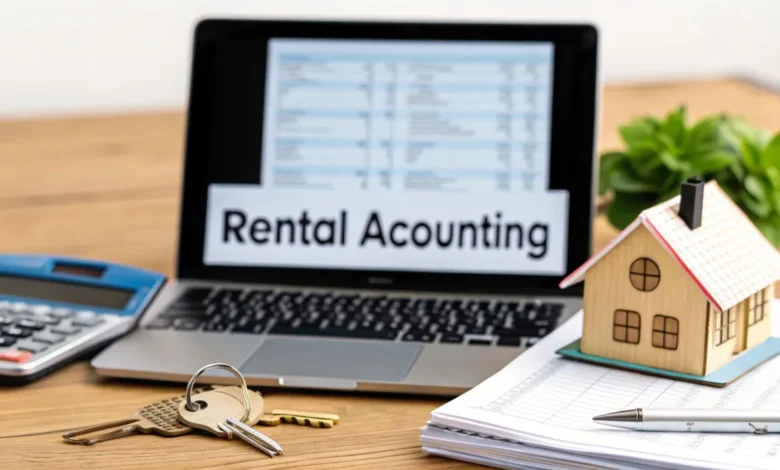
Managing rentals is a business, not a side chore. The moment you collect rent, pay for repairs, track deposits, or plan for tax season, you’re doing accounting—whether you call it that or not. And when you’re juggling multiple units or properties, financial organization can quickly become the most stressful part of landlording.
That’s why many landlords are moving away from spreadsheets and manual bookkeeping. The right real estate management accounting software helps you organize rental finances in one place, reduce errors, and stay ready for reporting and tax filing—all without spending hours reconciling transactions by hand.
What Real Estate Management Accounting Software Actually Does
Rental property accounting tools are designed specifically for the financial side of property operations. Instead of forcing you to adapt a generic bookkeeping workflow to rental real estate, this type of software consolidates the core processes landlords deal with every month, including:
- Tracking income (like rent payments)
- Tracking expenses (repairs, utilities, services, and supplies)
- Preparing for tax season with organized records and reports
- Managing tenant payment documentation in a consistent, searchable format
As the Ledgre article explains, these platforms aim to streamline everyday accounting tasks and support accurate financial management so landlords can stay compliant and organized.
The Biggest Benefits for Landlords (and Why Manual Tracking Breaks Down)
You can absolutely “make it work” with spreadsheets—until you can’t. Manual accounting tends to fail when your workload increases, when you need clean reports quickly, or when small mistakes snowball into bigger financial confusion.
Here are the most practical ways accounting software for real estate investors changes the day-to-day experience.
Automated Tasks that Free Up Real Time
A core advantage is automation. The article highlights that accounting software can automate routine bookkeeping tasks that landlords commonly repeat month after month, such as:
- Documentation for rent payments
- Applying (and tracking) automatic late fees
- Generating financial reports like profit and loss statements
This matters because automation doesn’t just speed things up—it standardizes your workflow. Instead of reinventing your process every month, the software helps you follow the same repeatable steps.
Fewer Errors from Less Manual Entry
If you’ve ever had to fix a typo in a spreadsheet, hunt down a duplicate entry, or reconcile a missing transaction, you’ve already seen the downside of manual tracking.
The Ledgre post explains that accounting software reduces the need for manual data entry by allowing imports (like spreadsheets) and syncing transactions through APIs connected to bank accounts, credit cards, and other financial services. That helps keep records current and accurate.
In short: fewer hand-typed entries usually means fewer avoidable mistakes.
Smoother Tax Preparation (and Better Deduction Tracking)
Tax season is where disorganized books get expensive—either in money, time, or both.
Accounting software supports tax prep by generating tax forms, tracking deductible expenses, and sorting expenses into IRS categories. The article also stresses that landlords need accurate records to claim deductions correctly, and software helps by producing tax-ready reports.
Just as important, the IRS emphasizes detailed recordkeeping for rental income and deductions, and accounting software supports that level of documentation—reducing the risk of non-compliance and potential audit headaches.
Cost Effectiveness Compared to Paying for Help Every Time
Landlords often reach a tipping point: either subscribe to software or keep paying for one-off accounting services (or spend weekends doing the work themselves).
The article points to reported CPA pricing from 2023: an average of $319 for a basic, non-itemized Form 1040 and $377 for an itemized return, plus $145 to add Schedule E (rental income and loss reporting).
Compared with that, the article notes that some accounting platforms cost less than $30 per month, giving year-round value rather than a single tax-time service.
The Key Features to Look for in Real Estate Investment Accounting Software
Not every platform fits every portfolio. But the Ledgre article outlines several features that tend to matter most when choosing real estate investment accounting software.
A User-friendly Interface
If the software is hard to navigate, you’ll avoid using it—and your books won’t stay current. A user-friendly design makes it easier to handle rent tracking, expense entry, and report generation even without an accounting background.
Tailored Reports That Match How You Evaluate Performance
You shouldn’t have to dig through generic reports to answer basic questions like: “How is this property performing?” or “Where is my cash going?”
The article recommends tools that let you tailor reporting to the metrics you care about, such as cash flow, net income, and detailed expense breakdowns.
Mobile Access for On-the-go Management
Landlords don’t always work from a desk. Mobile access lets you review financial data, tenant information, and reports from wherever you are.
Scalability As You Add Units
Even if you’re small today, you may not stay small. The article highlights scalability as a long-term necessity, so your software can grow with additional properties and more advanced workflows.
Legal Compliance and Risk Management Support
How you file depends on how you own the rental property. The article gives examples like filing on Schedule E for individuals, versus different forms (like Form 8825) for certain entity structures, with income distributed through Schedules K-1.
The point isn’t just the forms—it’s that different ownership setups have different requirements, and accounting software helps by keeping clean records and generating the reports you need.
How to Choose the Right Tool for Your Rental Business
The “best” platform depends on your situation. The article recommends focusing on a few practical factors:
- Property size: Basic tools may work for small portfolios, but growing portfolios tend to need more advanced reporting and scalability.
- Budget: Options range from free versions to subscriptions from $15 to $298 per month.
- Required features: Prioritize what matters most—tax features (like deductions and 1099s) or multi-unit reporting and customization.
It also lists several examples “at a glance,” including REI Hub, QuickBooks, AppFolio, and Ledgre.
Accounting Software is a Gamechanger for Landlords
Staying organized is not optional in rental real estate—it’s how you protect your time, keep accurate records, and make decisions based on real numbers.
Whether you’re managing bookkeeping monthly or getting ready for tax season, accounting software for real estate investors helps you simplify financial management, improve accuracy, and stay one step ahead instead of playing catch-up.