When developers, publishers, and investors discuss the most popular video game genres, they are usually looking beyond simple entertainment trends. They want to understand where player attention, revenue, and long-term engagement are concentrated. Studying genre popularity helps identify which mechanics, visual styles, and player expectations define successful projects.
Popularity in gaming can be measured in several ways: active player count, total revenue, streaming visibility, community engagement, and long-term cultural impact. A genre that dominates mobile downloads may differ significantly from one leading PC esports or console sales.
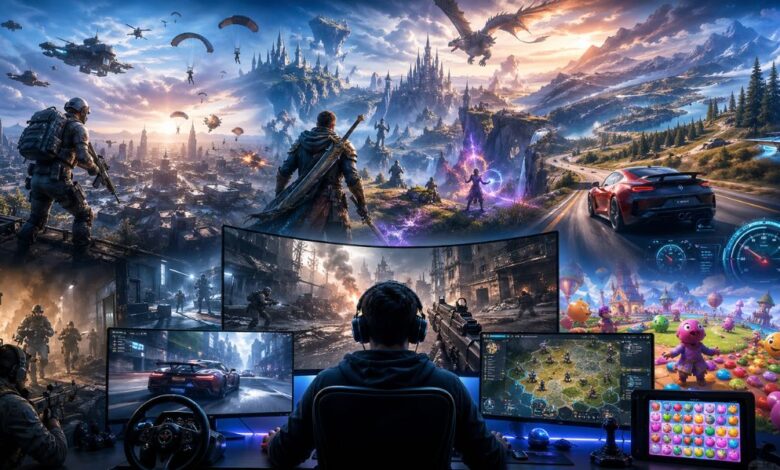
Battle royale, RPGs, simulation games, shooters, strategy games, and casual mobile games all perform differently depending on platform and audience. Understanding these differences is critical for studios planning new releases. Genre selection influences everything from monetisation models to environment design, UI systems, and character development.
At RocketBrush Studio, analysing most popular video game genres is part of building effective visual production pipelines. Great game art is not only about aesthetics — it must support market fit, audience expectations, and long-term product strategy.
Why Genre Trends Matter More Than Individual Titles
Asking about the most successful games often leads to a more important question: which genres consistently perform well over time? Individual hits may rise and fall quickly, but genres reveal stable market demand.
For example, multiplayer shooters and battle royale games rely heavily on fast readability, strong visual contrast, and scalable cosmetic systems. RPGs demand deep worldbuilding, memorable environments, and strong narrative-driven character design. Casual mobile games depend on accessibility, bright visual feedback, and intuitive UI.
This is where professional game art becomes strategically important. Genre expectations shape how players judge quality within seconds. A fantasy RPG with weak environment storytelling or a competitive shooter with unclear silhouettes can lose players before gameplay systems have a chance to engage them.
RocketBrush works across multiple genres, supporting mobile games, PC titles, stylised fantasy projects, and live-service production needs. Their focus on custom art pipelines helps each game maintain a distinct visual identity while still aligning with genre expectations.
Understanding the Business Behind Popular Genres
The most popular video game genres often succeed because they support repeatable business models. Mobile simulation games, competitive shooters, sandbox games, and live-service multiplayer titles remain strong examples because they combine accessibility, strong retention loops, and scalable content systems.
Games like Fortnite, Minecraft, Roblox, and League of Legends demonstrate how genre strength supports long-term franchise value. Their success depends not only on gameplay but also on content scalability: seasonal events, skins, props, environments, icons, UI systems, and live-ops visuals.
These projects require enormous volumes of assets, making internal production difficult even for large studios. This is why outsourcing becomes a practical part of the production model.
For producers evaluating most popular video game genres, scalability matters as much as design quality. A game can only remain competitive if the production pipeline supports constant player expectations.
RocketBrush supports these production demands through concept art, UI design, casual game art, 3D assets, environments, and animation for mobile and PC titles. Their work helps studios scale visual production without sacrificing consistency.
How Visual Style Shapes Genre Success
A successful game is rarely built around graphics alone, but visual style strongly influences discoverability and retention. Players decide quickly whether a game feels polished, readable, and emotionally engaging.
Stylised art often performs especially well because it creates stronger recognition and longer visual lifespan. Hyper-realism may impress technically, but stylisation often delivers better production efficiency and stronger brand identity, particularly for mobile, casual, and live-service games.
This is why style guides are essential in outsourcing. Without a clear visual system, scaling production creates inconsistency that damages both player experience and monetisation potential.
RocketBrush places strong emphasis on style guides, mood boards, and milestone approvals before full production begins. This ensures that every character, environment, and UI asset supports one coherent visual direction.
For studios analysing most popular video game genres, the better question is often not which game is winning today, but which visual system allows a project to stay relevant for years. Consistency answers that better than short-term visual trends.
Why Outsourcing Supports the Next Successful Game
The next breakout title will likely come from teams that combine strong gameplay decisions with scalable art production. Modern development demands speed, flexibility, and visual quality at the same time.
Building every art pipeline internally is expensive and often slows production during critical milestones. Outsourcing allows teams to stay focused on gameplay systems, publishing strategy, and live operations while specialised partners handle asset production with predictable delivery.
A reliable outsourcing partner must offer more than execution. They need transparent communication, realistic scheduling, internal quality control, and dedicated project management.
RocketBrush positions itself around this long-term production reliability. Dedicated art directors, milestone-based approvals, and production-ready workflows help clients maintain quality across large asset pipelines. This is especially valuable for studios working within the most competitive and most popular video game genres.
Looking Beyond Rankings
Ultimately, studying the most popular video game genres is not about finding one universal winner. It is about understanding why certain categories succeed repeatedly while others disappear quickly.
Scalable art pipelines, recognisable visual style, strong retention systems, and long-term production planning all play a role. Studios that understand these systems build games that last.
The success of a popular game depends on far more than a strong launch. It depends on the ability to sustain player attention over time.
That is where expert art production becomes a business advantage. With the right outsourcing partner, studios can create visuals that support not only release-day performance but long-term franchise growth.