Inter Miami vs Tigres UANL Timeline: A Dramatic Leagues Cup Clash Decided by Luis Suárez
How Inter Miami Survived Tigres’ Pressure and Reached the Semifinals Without Lionel Messi

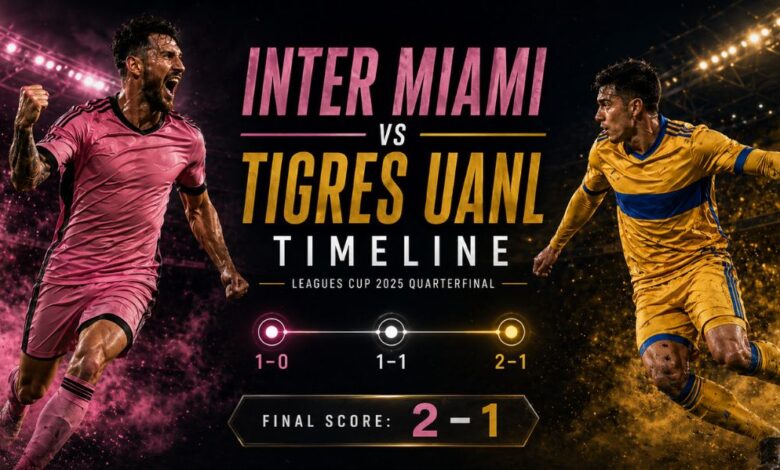
The Inter Miami vs Tigres UANL Timeline tells the story of one of the most tense and memorable matches of the 2025 Leagues Cup. Played on August 20, 2025, at Chase Stadium in Fort Lauderdale, the quarterfinal pitted two ambitious clubs with very different football cultures against each other. Inter Miami entered the match carrying the global attention that follows Lionel Messi, while Tigres UANL arrived as one of Mexico’s strongest and most experienced teams.
What made the night even more dramatic was Messi’s absence. The Argentine superstar missed the match because of injury, leaving Inter Miami without their most creative player and emotional leader. Many feared Tigres would seize the moment, especially given their experience in high-pressure knockout games. Instead, Inter Miami found hope—and another hero—in Luis Suárez.
Suárez scored twice from the penalty spot, including a late winner, to give Inter Miami a 2–1 victory. Ángel Correa scored Tigres’ only goal, making the second half tense. The match featured penalties, pressure, controversy, and late drama, exemplifying the drama of knockout football.
Pre-Match Context: Why This Game Mattered
The Leagues Cup has grown into a major competition between Major League Soccer and Liga MX clubs. For Inter Miami, this match was not just about reaching another semifinal. It was about proving that the team could still compete without Messi on the field. Since Messi’s arrival, Miami has become one of the most-watched clubs in North America, but his absence raised questions about the team’s depth and mentality.
Tigres UANL came into the match with a strong reputation. The Mexican club is known for its technical quality, physical strength, and ability to manage big games. Against Inter Miami, Tigres had the chance to eliminate one of the tournament’s biggest names and send a message about Liga MX’s strength.
For fans, the Inter Miami vs Tigres UANL matchup was more than a quarterfinal. It was a meeting between MLS ambition and Mexican football tradition. That made every moment of the timeline important.
First Half Timeline: Inter Miami Starts with Energy
Opening Minutes: Miami Tries to Control the Rhythm
Inter Miami began the match with urgency. Without Messi, the team needed quick passing, wide movement, and aggressive pressing to prevent Tigres from settling into the game. Miami looked determined to show that they were not simply dependent on one player, setting the tone from the opening whistle.
Tigres, however, did not panic, and their response followed soon after. The Mexican side tried to slow the rhythm, hold possession, and test Miami’s defensive shape. In these early stages, both teams were feeling out the game and searching for spaces.
Luis Suárez Gives Inter Miami the Lead
The first major turning point arrived midway through the first half when Inter Miami earned a penalty. Luis Suárez stepped forward with the confidence of a veteran striker who has faced pressure in some of football’s biggest stadiums. His finish gave Miami a 1–0 lead and changed the emotional direction of the match.
That goal was important for more than the scoreline. It gave Inter Miami belief. It also forced Tigres to become more adventurous, which created a more open contest. Suárez’s leadership became central to Miami’s approach, especially since Messi was unavailable to guide the attack.
Tigres Respond with Possession
After falling behind, Tigres began to take more control of the ball, a shift that defined the next segment of the timeline. Their midfield tried to move Miami from side to side, searching for gaps between the lines. Inter Miami had to stay compact and disciplined.
The first half became a test of patience for both teams. Miami had the lead, but Tigres kept applying quality pressure. Every clearance, tackle, and transition mattered until halftime, where Inter Miami remained ahead but still far from safe.
Second Half Timeline: Tigres Fight Back
Tigres Increase the Pressure
The second half began with Tigres showing greater attacking intent. They pushed higher up the field and forced Inter Miami to defend deeper. Miami’s challenge was clear: protect the lead without becoming too passive, marking the start of a tense half.
Tigres’ pressure eventually created problems. Their attacking players found more room, and Miami had to rely on defensive organization. The game became more physical and emotional as the semifinal place came closer.
Ángel Correa Equalizes for Tigres
Tigres found their breakthrough through Ángel Correa, whose goal brought the match level at 1–1. It was a major moment in the timeline because it shifted momentum toward Mexico. Suddenly, Inter Miami’s early advantage was gone, and the pressure returned.
For Tigres, the equalizer confirmed that they were fully alive in the contest. For Inter Miami, it was a test of character. Without Messi, Miami needed someone else to take responsibility in the decisive minutes.
Late Drama: Suárez Delivers Again
The Final Minutes Become Nervous
As the match entered its closing stages, both teams knew that one mistake could decide everything. Tigres looked dangerous and confident after equalizing, while Inter Miami searched for a way to regain control.
Knockout matches often turn on small details. A handball, a late tackle, or a moment of poor positioning can change the result. That is exactly what happened as Inter Miami earned another penalty late in the game.
Luis Suárez Scores the Winning Penalty
In the 89th minute, Luis Suárez stepped up again. The pressure was enormous. A miss could have sent the game toward more uncertainty, while a goal would put Inter Miami on the edge of the semifinals.
Suárez scored, making it 2–1. It was a classic striker’s moment: calm, ruthless, and decisive. His second penalty became the defining image of the match. In Messi’s absence, Suárez carried the attacking responsibility and delivered when Miami needed him most.
Tactical Analysis: How Inter Miami Survived
Miami’s Compact Defensive Shape
Inter Miami did not dominate every phase of the match, but they defended with commitment. The team stayed compact for long periods and tried to limit the spaces Tigres could use in central areas. This was especially important because Tigres had enough technical quality to punish open gaps.
Miami’s defensive work was not always comfortable, but it was effective enough. They accepted that Tigres would have spells of possession and focused on surviving those moments.
Suárez as the Emotional Leader
Luis Suárez was more than a goal scorer in this match. He became the emotional center of the team. His experience helped Inter Miami manage pressure, and his penalty-taking showed the value of having a proven winner in knockout football.
With Messi unavailable, Suárez gave Miami personality in attack. His performance reminded fans that Inter Miami’s strength is not limited to one superstar.
Tigres UANL Performance: Strong but Not Clinical Enough
Tigres UANL played with quality and confidence, especially in the second half. Their equalizer through Ángel Correa was well deserved, as they had pushed Miami back and created pressure. However, the problem was efficiency.
In knockout football, controlling possession or creating pressure is not always enough. Tigres needed to be sharper in decisive moments. They had chances to cause more damage, but Inter Miami survived. The late penalty punished Tigres and ended their hopes of reaching the semifinals.
Why This Match Was Important for Inter Miami
This victory was important because it proved Inter Miami could win a major knockout match without Lionel Messi. That does not reduce Messi’s importance, but it does show that the squad has other leaders capable of handling pressure.
The win also sent Inter Miami into the Leagues Cup semifinals, keeping their tournament ambitions alive. For a club still building its modern identity, nights like this matter. They create belief, strengthen team culture, and give fans memorable moments.
Inter Miami vs Tigres UANL Timeline: Key Legacy of the Match
The legacy of this game will be remembered through Luis Suárez’s two penalties, Messi’s absence, Tigres’ second-half fightback, and Miami’s ability to survive late pressure. It was not a perfect performance from Inter Miami, but it was a winning performance.
For Tigres, the match showed both their strength and frustration. They competed well, equalized, and pushed Miami hard, but the fine margins went against them.
For neutral fans, the game offered everything expected from a high-stakes Leagues Cup quarterfinal: tension, star power, emotion, and a dramatic finish.
Conclusion
The Inter Miami vs Tigres UANL Timeline is the story of a match shaped by relentless pressure and decided by veteran composure. Inter Miami entered the game without Lionel Messi, faced a fierce Tigres side, lost control at times, but still found a way to triumph. Luis Suárez’s two penalties—each moment heavy with expectation—gave Miami a 2–1 victory and sent the club into the Leagues Cup semifinals.
This match proved that Inter Miami has more than one source of leadership. It also showed that Tigres remain a dangerous and respected opponent, even in defeat. In the end, the difference came down to composure in decisive moments, and Suárez had exactly that.
(FAQs)
What was the final score of Inter Miami vs Tigres UANL?
Inter Miami defeated Tigres UANL 2–1 in their Leagues Cup quarterfinal match on August 20, 2025.
Who scored for Inter Miami against Tigres UANL?
Luis Suárez scored both goals for Inter Miami. Both goals came from penalty kicks.
Who scored for Tigres UANL?
Ángel Correa scored Tigres UANL’s goal, bringing the match level before Inter Miami scored the late winner.
Did Lionel Messi play against Tigres UANL?
No, Lionel Messi did not play in the match because of an injury.
Why was this match important?
The match was important because Inter Miami advanced to the Leagues Cup semifinals despite playing without Lionel Messi. It also showed the team’s depth and Luis Suárez’s leadership in a major knockout game.