What Happens to Your Content Calendar When Video Production Takes Minutes Not Weeks

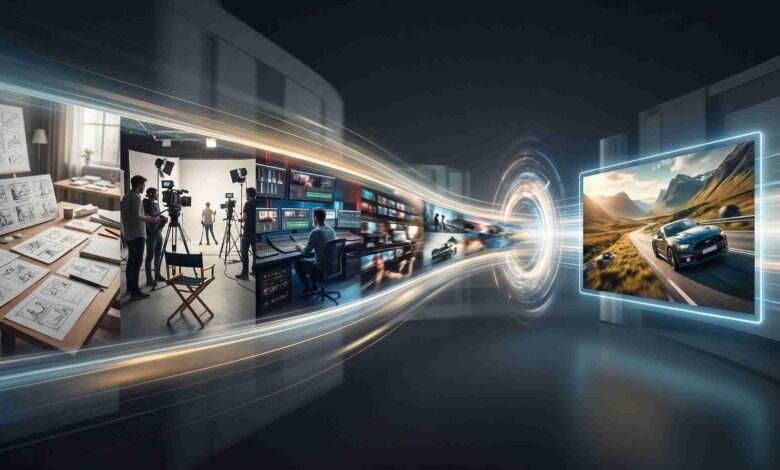
Most content calendars are not built for speed.
They are built for coordination.
Weeks are blocked for production. Days are reserved for editing. Publishing schedules depend on when assets are ready, not when ideas are relevant. This has been the default workflow for years, especially when video is involved.
But that model is starting to break.
When video production shifts from weeks to minutes, the entire logic of a content calendar changes. Not slightly. Fundamentally.
This is exactly what is happening with tools like Seedance 2 inside Higgsfield’s ecosystem.
The Traditional Content Calendar Was Built Around Delays
Before AI-driven video, content calendars had one primary constraint: production time.
Every piece of video content required:
- Pre-production planning
- Shooting schedules
- Editing timelines
- Feedback and revisions
Because of this, marketers had to plan content far in advance.
This created a rigid structure:
- Monthly campaigns planned weeks ahead
- Limited flexibility for trending topics
- Heavy dependency on production teams
The calendar was not about creativity. It was about logistics.
And that limited how fast brands could respond.
When Production Time Shrinks, Planning Logic Changes
Now imagine removing the biggest bottleneck.
If video can be created in minutes instead of weeks, planning no longer needs to revolve around production.
It shifts toward:
- Ideas
- Timing
- Relevance
This is where Seedance 2 starts to influence not just content creation, but content strategy itself.
Instead of asking “Can we produce this?”, teams start asking:
“Should we publish this right now?”
That is a completely different mindset.
From Fixed Calendars to Dynamic Content Systems
Traditional calendars are fixed.
They are built in advance and rarely change.
But when production becomes fast, calendars become flexible.
Teams can now:
- Add content based on trends
- Adjust messaging in real time
- Experiment with multiple variations
This transforms the content calendar into a dynamic system rather than a static plan.
With Seedance 2, this becomes practical.
Because content can be generated quickly, teams are no longer locked into decisions made weeks earlier.
How Seedance 2 Enables This Shift
Seedance 2 simplifies video creation by allowing multiple inputs to work together.
Text, images, video references, and audio can be combined into a multi-shot video with synchronized output.
This reduces the need for traditional production workflows.
Instead of coordinating teams, creators can:
- Upload references
- Define the narrative
- Generate video instantly
If you explore seedance 2.0, the focus is clearly on turning ideas into structured video content without delays.
This is what makes real-time content planning possible.
Real-Time Content Becomes the New Advantage
In a fast-moving digital environment, timing matters more than ever.
A trend can peak and disappear within days.
Traditional production cycles cannot keep up with this pace.
But when video can be produced instantly, brands can:
- Respond to trends as they happen
- Create timely campaigns
- Stay consistently relevant
This shifts competitive advantage from budget to speed.
And speed is something AI enables at scale.
Content Volume Increases Without Increasing Effort
Another major shift is volume.
Previously, creating more video content meant increasing resources.
Now, with faster production, teams can generate more content without expanding budgets.
This allows for:
- Multiple content variations
- A/B testing of creatives
- Platform-specific formats
Instead of one video per campaign, brands can create several versions tailored to different audiences.
This level of output was not practical before.
The Calendar Becomes Idea-Driven, Not Asset-Driven
Earlier, content calendars were built around available assets.
If a video was ready, it got scheduled.
Now, the process is reversed.
Calendars are built around ideas.
If an idea is strong, it can be turned into content instantly.
This leads to:
- More creative experimentation
- Faster iteration cycles
- Better alignment with audience behavior
Seedance 2 supports this by removing the dependency on pre-produced assets.
Better Alignment Between Strategy and Execution
One of the biggest gaps in traditional marketing is the delay between strategy and execution.
A campaign idea might be perfect today but gets published weeks later.
By then, the context may have changed.
With faster video production, that gap disappears.
Teams can:
- Execute ideas immediately
- Test performance quickly
- Refine messaging based on feedback
This creates a tighter feedback loop.
And that leads to better results over time.
The Role of AI in Efficient Video Processing
This shift toward speed is not accidental.
It reflects a broader trend in how AI handles video.
Instead of processing entire frames uniformly, modern approaches focus on what actually matters within a scene. This improves efficiency and output quality without increasing computational load.
Research on perceptual video processing and region-focused analysis shows how identifying key visual areas can significantly enhance both accuracy and performance in video systems.
This same principle applies to tools like Seedance 2.
They are designed to deliver meaningful output without unnecessary complexity.
Smaller Teams Can Operate Like Large Studios
When production becomes faster, team structure changes.
Previously, large teams were required to handle:
- Shooting
- Editing
- Post-production
Now, much of that process is simplified.
With Seedance 2, a small team can:
- Create high-quality video content
- Maintain consistency across campaigns
- Execute multiple ideas simultaneously
This levels the playing field.
Smaller teams can now compete with larger organizations in terms of output.
Consistency Without Burnout
One of the hidden problems with traditional content calendars is burnout.
Producing high-quality content repeatedly is resource-intensive.
This leads to:
- Irregular posting schedules
- Decline in content quality
- Reduced audience engagement
With faster production, consistency becomes easier to maintain.
Teams can produce content regularly without overloading resources.
This leads to:
- Better audience retention
- Stronger brand presence
- More predictable performance
Higgsfield’s ecosystem supports this by making content creation more efficient and repeatable.
What This Means for Content Strategy Moving Forward
The shift from slow production to instant creation is not just a technical upgrade.
It is a strategic transformation.
Content calendars are evolving from:
- Fixed schedules to flexible systems
- Production-driven plans to idea-driven execution
- Limited output to scalable content ecosystems
Seedance 2 plays a key role in enabling this shift by removing the biggest constraint in video creation.
Conclusion
When video production takes minutes instead of weeks, the content calendar stops being a schedule.
It becomes a system.
A system that adapts, evolves, and responds in real time.
Seedance 2 is not just speeding up content creation. It is redefining how content is planned, executed, and scaled.
Within Higgsfield’s ecosystem, this shift becomes even more powerful because it integrates seamlessly into modern workflows.
The result is simple.
Faster execution. Smarter planning. Better outcomes.
And for teams that understand this early, the content calendar becomes more than a tool.
It becomes a competitive advantage.