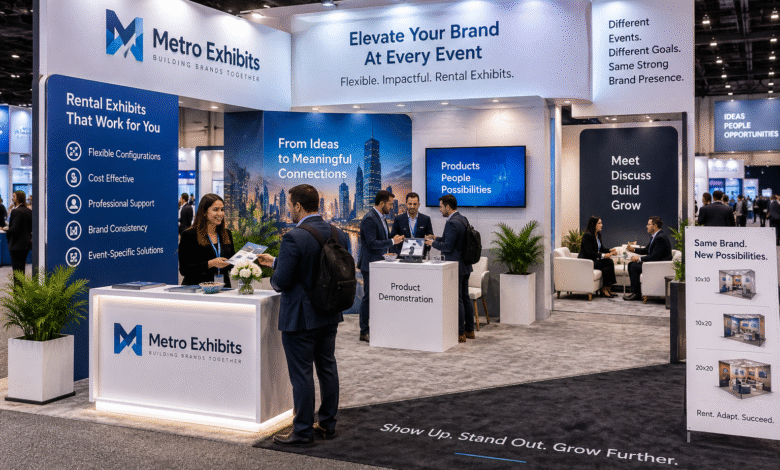
Companies often approach trade shows with different objectives. One organization may want to generate leads, another may focus on launching a product, while another may simply want to strengthen relationships with existing customers. Because objectives vary from event to event, the physical exhibit should be flexible enough to support different marketing strategies. This is one reason rental trade show displays have become a practical option for many exhibitors.
A rental exhibit allows businesses to adapt their presentation according to the event. Booth size, graphics, product placement, meeting areas, and demonstration spaces can all be considered when planning the exhibit. This flexibility can be especially valuable when a company participates in conferences with different audiences and venue requirements.
Brand consistency should not be overlooked. Although the physical configuration may change, the company’s visual identity should remain recognizable. Logos, typography, messaging, imagery, and brand colors should work together to create a cohesive experience. Consistent branding helps visitors identify the company quickly and can reinforce familiarity among repeat attendees.
The layout should also reflect the intended visitor journey. A booth can have an area that attracts attention from the aisle, a central zone for demonstrations, and a quieter space for conversations. Creating different functional areas can help staff manage both casual interactions and more detailed business discussions.
Rental exhibits can also help businesses experiment. A company that has traditionally used a simple tabletop display may want to test a larger presentation at a major industry event. Renting provides a way to evaluate the impact of a different format without immediately purchasing an expensive permanent structure.
Cost management is another important consideration. Trade show budgets typically include registration, travel, shipping, promotional materials, staffing, and other expenses. A rental exhibit can help businesses avoid tying too much of the budget to physical booth ownership. This may leave more resources available for pre-show marketing, customer entertainment, digital campaigns, or post-show follow-up.
The practical side of exhibit management is equally important. Companies should consider how the booth will be delivered, assembled, maintained, and dismantled. Reliable coordination can reduce the burden on employees who might otherwise spend valuable time managing exhibit logistics.
Pre-event planning can make a rental experience more successful. Businesses should establish goals, determine their target audience, prepare graphics, and train staff before arriving at the venue. The exhibit should support those goals rather than becoming the strategy itself.
After the event, performance should be reviewed. Lead quantity is useful, but lead quality is often more important. Companies can evaluate whether visitors matched their target customer profile, whether meetings were generated, and whether sales opportunities developed after the show.
Ultimately, rental exhibits can give businesses the flexibility to create event-specific experiences without committing to a single permanent booth configuration. When combined with clear objectives, strong branding, engaging content, and effective staff preparation, a rental strategy can help companies make their trade show investment more productive.